
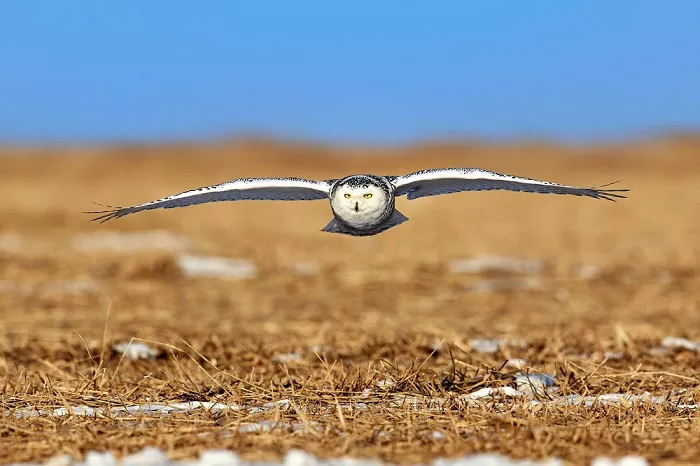
About 40 additional migratory species have been proposed for global protection under the Convention on the Conservation of Migratory Species of Wild Animals (CMS), a United Nations environmental treaty. The proposal covers land, air and marine animals whose populations are declining due to habitat loss and fragmentation, overexploitation, climate change and pollution. Newly proposed species include the snowy owl, the great hammerhead shark and the striped hyena.
CMS brings together governments and stakeholders to coordinate international efforts to conserve migratory species and the habitats they depend on. The legally binding convention includes two appendices: Appendix I, which covers species threatened with extinction, and Appendix II, which lists species that require international cooperation for their conservation. The proposed changes to the appendices will be reviewed at the 15th Meeting of the Conference of the Parties (COP15), scheduled to take place in Campo Grande, Brazil, from March 23 to 29, 2026.
Migratory species are animals that move regularly—often seasonally—as part of their natural life cycles and cross at least one national border. They play a critical role in maintaining healthy ecosystems by supporting processes such as pollination, seed dispersal, carbon storage and pest control. Many communities also depend on them for food and livelihoods. These species include antelopes, whales, bats, birds and sea turtles.
The 42 species proposed for listing highlight the serious threats facing migratory wildlife worldwide. The striped hyena (Hyaena hyaena), an important scavenger that helps recycle nutrients and reduce disease by consuming carrion, now has an estimated global population of fewer than 10,000 mature individuals.
The snowy owl (Bubo scandiacus) has lost about one-third of its global population over the past 30 years and has been declared extinct in Sweden by conservation organization BirdLife International. As a top predator, it is a key indicator of the health of the Arctic tundra ecosystem.
The great hammerhead shark (Sphyrna mokarran) has experienced sharp population declines due to overfishing, affecting individuals at all life stages in both coastal and open-ocean waters. As an apex predator, its decline threatens the balance of marine food webs and the overall health of ocean ecosystems.
Other species proposed for inclusion under the CMS appendices include the cheetah; striped hyena; 26 species of gadfly petrels; the flesh-footed shearwater; Hudsonian whimbrel; Hudsonian godwit; lesser yellowlegs; Iberá seedeater; giant otter; three species of thresher sharks; Patagonian narrownose smooth-hound; scalloped hammerhead shark; angular angelshark; and the spotted sorubim.
“As the pressures on our planet’s migratory species intensify, international commitment to effective conservation measures has never been more important,” said CMS Executive Secretary Amy Fraenkel. “The proposal to list 42 additional species reflects the urgent need for coordinated global action. COP15 offers governments a critical opportunity to strengthen efforts to protect these species.”
 Facebook
  Instagram
  Youtube
 Spanish
  English