
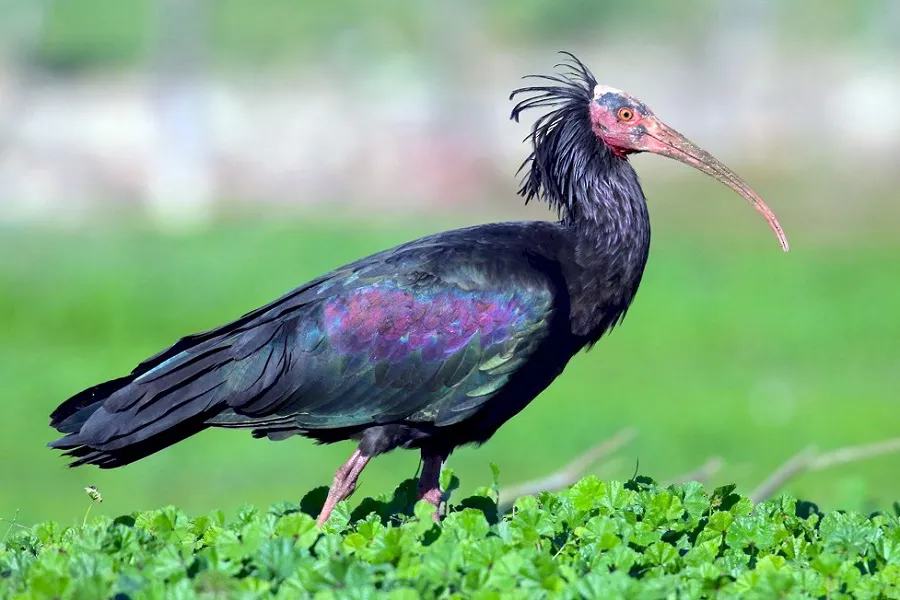
The National Zoological Garden of Rabat in Morocco is leading a crucial effort to bring the northern bald ibis, a rare migratory bird, back from the edge of extinction. Through a program of captive breeding and gradual release into the wild, the zoo is working to rebuild the bird’s population, as reported by Africa News.
Once widespread across North Africa, the Arabian Peninsula, and parts of Europe, the northern bald ibis saw its numbers drastically decline due to hunting and loss of habitat. By the 17th century, most of its colonies had disappeared. Today, Rabat has become one of the main locations working to secure the future of this endangered species.
At the zoo, a dedicated team of veterinarians and technicians care for the birds daily. They ensure the birds are well-fed, monitor their health, and prepare them for both breeding and reintroduction into the wild. The ibis is easily recognizable by its black feathers with a green sheen, bare red head, and long, curved beak.
“The zoo rescued around 20 northern bald ibises in 2015,” says Saad Azizi, head of the zoo’s veterinary and zoological services. “Ten years later, we have more than doubled that number.”
To encourage breeding, the team has recreated the ibis’s natural habitat within the zoo. Quiet spaces have been set aside for mating, and branches are provided for the birds to build their own nests. Each pair selects its nesting site, and the species forms strong bonds, often breeding with the same partner for years.
Breeding begins at the end of March, with eggs hatching by early June. Each couple raises one or two chicks, which are closely monitored by veterinary staff. Hafid Ouchtarmoun, a bird breeding technician at the zoo, explains, “We ensure the chicks receive the care they need to grow strong and healthy.”
At feeding time, keepers provide a special mix of small meat pieces, carrots, and rice, closely mimicking the birds’ diet in the wild. The ibises drink water from the ground and spend their time perched in trees inside a spacious enclosure.
To keep the birds safe, the enclosure is surrounded by protective netting, which prevents them from escaping and minimizes contact with other migratory birds, thus reducing the risk of disease. Veterinarians also conduct regular health checks.
When the time is right, the team releases the birds into their natural habitats in stages, aiming to boost the wild population and ensure their long-term survival. Each bird is fitted with an identification ring on its leg, allowing experts to track its movements and adaptation after release.
In Europe, similar conservation efforts have helped shift the northern bald ibis from “critically endangered” to “endangered,” according to recent data. The work being done in Morocco is another step forward in securing the future of this remarkable bird species.
 Facebook
  Instagram
  Youtube
 Spanish
  English