
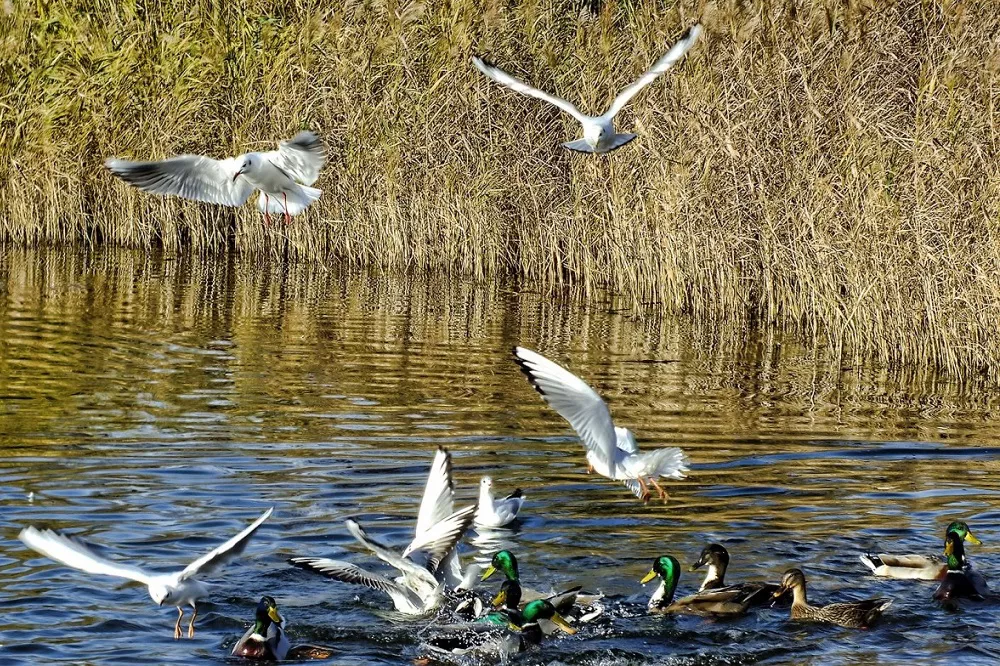
KANCHANPUR, January 3 — The annual census of aquatic and water birds began today in Kanchanpur district, aiming to assess the population and status of both indigenous and migratory bird species that depend on wetlands and water bodies.
The census is being conducted under the initiative of Shuklaphanta National Park, in coordination with Bird Conservation Nepal (BCN). According to senior ornithologist Hirulal Dagaura of the Nepal Birds Conservation Association, more than 20 trained enumerators have been deployed across reservoirs, lakes, ponds, wetlands, and rivers both inside and outside the park.
Representatives from various organizations, including the National Trust for Nature Conservation, Nepal Ornithologists’ Association, the Connect Project, ZSL, the Park Buffer Zone Management Committee, and Himalayan Culture, are participating in the effort. Members of the Nature Guide Association and the Kanchanpur Birds Conservation Group have also joined the census.
Dagaura said the enumerators are using equipment such as binoculars, cameras, and GPS devices to accurately record bird species and numbers. Elephants are also being used to access lakes and ponds that are difficult to reach on foot.
The bird count is currently underway at several ponds, including Sikari Taal, Baba Taal, Tara Taal, Rani Taal, Badhani Taal, Bandaa Taal, and Puraini Taal, as well as along the Chaudhar River. Wetlands in Radhapur, Jhiljhila, and Ratanpur are also being surveyed. In addition, aquatic bird counts will be conducted in wetland areas outside the park, including the Mahakali River.
The census, which will continue until January 18, will collect data on aquatic bird species, population trends, potential threats, human activities, and habitat-related challenges.
Dagaura noted that in the past, more than 70 species of aquatic birds were observed in a single lake. However, he expressed concern that the number has now declined by nearly half due to factors such as habitat loss from urbanization, poor conservation of wetlands, reduced food availability, and increased pesticide use.
He also emphasized that Nepal lies along the Central Asian Flyway and plays a crucial role as a winter refuge for migratory birds arriving from Asia, Europe, and Siberia.
 Facebook
  Instagram
  Youtube
 Spanish
  English