
Blue-footed Booby
 The blue-footed booby (Sula nebouxii) is a striking seabird native to the eastern Pacific Ocean. It is most commonly found along the coastlines of Mexico, Ecuador and the Galápagos Islands. Blue-footed boobies nest in colonies and are skilled at diving for fish. This bird is known for its distinctive bright blue feet and has become a symbol of the Galápagos archipelago.
Blue-footed Booby Size
The Blue-footed Booby is a medium-sized seabird known for its striking turquoise-blue feet. Adults typically measure 32–34 inches (81–86 cm) in length, with a wingspan of around 5 feet (1.5 meters), and weigh between 3 and 3.5 pounds (1.4–1.6 kg).
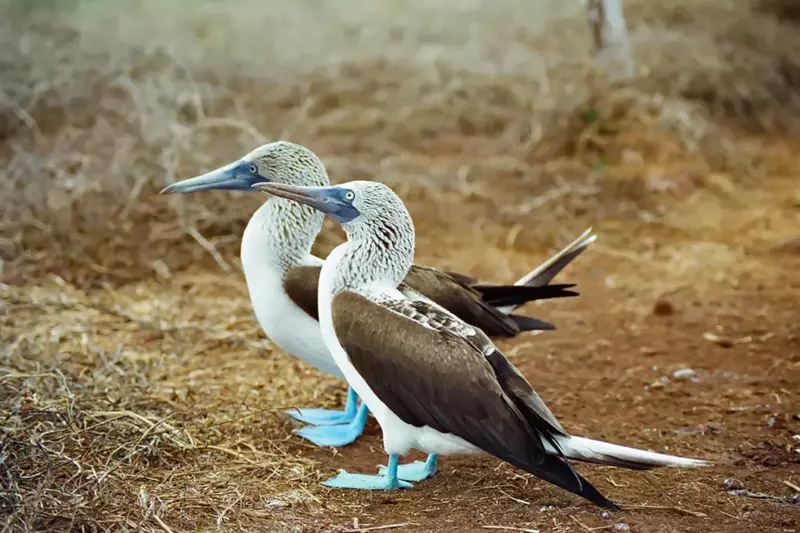
The Blue-footed Booby plumage is predominantly white with dark brown wings and back. The head and neck often have streaked or mottled grayish-brown feathers. Their long, pointed bill is grayish-blue, and their facial skin has a bluish tint. The bright blue feet, used in courtship displays, are the most distinctive feature and vary in vibrancy based on health and age.
Male and female Blue-footed Boobies are similar in appearance, though females are generally slightly larger with deeper blue feet and a broader pupil. Males have a higher-pitched call, while females emit a deeper honk. These subtle differences help distinguish genders in the wild.

Behavior and Diet
Diet: Blue-footed boobies are carnivorous and primarily feed on fish, particularly sardines and anchovies. They hunt by diving into the water from great heights, using their sharp beaks to catch prey.
Breeding and Courtship: One of the most fascinating aspects of their behavior is their courtship ritual. Males perform an intricate dance to impress females, which includes raising their blue feet, lifting them in unison, and calling out to display their strength and stamina. The more vibrant the blue color of the male’s feet, the more likely he is to attract a mate.
During the breeding season, they build simple nests on the ground, usually made of stones and branches. The female usually lays two eggs, which the parents incubate in turn. The incubation period is approximately 45 days.
Habitat and Range
The Blue-footed Booby lives in tropical and subtropical regions, mainly along the coasts of Central and South America. These seabirds are often seen on islands like the Galápagos, where they breed and nest. They prefer rocky shores and cliffs near the ocean, as these areas provide a safe space for their eggs. The ocean nearby is rich in fish, their main food source. With their striking blue feet, they thrive in coastal environments full of warmth and abundant resources. For more information, please visit: Where Does the Blue-Footed Booby Live.
The blue-footed booby’s feet
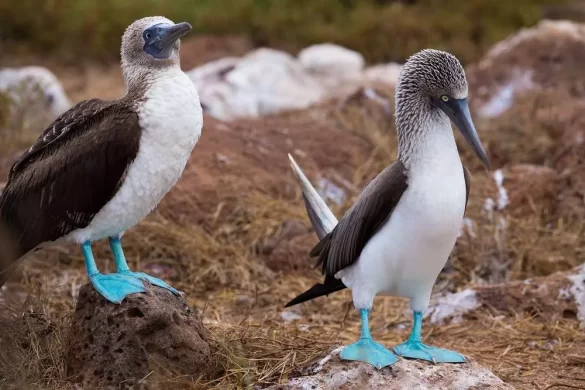
The blue-footed booby (Sula nebouxii) is renowned for its striking blue feet, a distinctive feature that plays a crucial role in its mating rituals and overall survival. Here’s an in-depth look at the characteristics and significance of their unique feet.
Characteristics of Blue Feet
Coloration and Diet
The blue color of the blue-footed booby’s feet results from carotenoid pigments, which are derived from their diet primarily consisting of fresh fish. These pigments accumulate in the skin of their feet, giving them their vibrant hue. The intensity of the blue coloration can vary; brighter feet indicate a higher concentration of these pigments, which correlates with the bird’s health and vitality.
Sexual Selection
The coloration of the feet serves as a signal during courtship. Males perform elaborate foot-flaunting displays to attract females, and those with brighter feet are generally more successful in securing mates. This is because the brightness of their feet is perceived as an indicator of overall health and genetic quality. Females tend to prefer males with more vivid blue feet, as this suggests they are better at foraging and have a robust immune system.
Age and Maturity
Interestingly, blue-footed boobies do not have blue feet at birth; their feet turn blue as they mature. This change in coloration is one way to distinguish between mature and immature individuals2. Females typically exhibit deeper blue hues compared to males, making it easier to differentiate between the sexes.

9 Interesting Facts about the Blue-footed Booby
Here are 10 interesting facts about this unique bird:
1. Blue Feet Are a Sign of Health
The Blue-footed Booby’s vibrant blue feet are not just for show; they serve as a signal of the bird’s fitness. Males with brighter blue feet are considered more attractive to females, as the coloration is an indicator of good health and strong genes.
2. Unique Mating Dance
Blue-footed Boobies perform an elaborate courtship dance to attract mates. The male shows off his blue feet by lifting them alternately in a high-stepping motion, known as the “foot-raising display.” He also presents nesting materials like twigs to impress the female.
3. Monogamous Birds
Blue-footed Boobies form long-term monogamous bonds. Once a pair mates, they often return to the same nesting site year after year, reinforcing the strength of their relationship.
4. Impressive Dive-Bombing Fishing Technique
These birds are skilled hunters and can dive at incredible speeds—up to 60 miles per hour (96 km/h)—into the water to catch fish. They use their keen eyesight to spot prey from the air before diving.
5. They Can Hold Their Breath
Blue-footed Boobies are excellent divers, capable of holding their breath for extended periods while hunting underwater. This adaptation allows them to search for fish without coming up for air every few seconds.
6. They Have Excellent Vision
Blue-footed Boobies have exceptional eyesight, which is crucial for spotting fish while soaring at high altitudes. They rely on this sharp vision to hunt effectively in the ocean.
7. Named for Their “Clumsy” Walk
The term “booby” is derived from the Spanish word bobo, meaning “fool” or “clown.” The Blue-footed Booby earned this name due to its somewhat comical, uncoordinated walking style on land, which contrasts with its graceful movements in the air and water.
8. They Have a Three-Part Nesting Strategy
The Blue-footed Booby uses a three-step process for nesting:
- They build a simple nest on the ground using twigs, stones, and seaweed.
- The female lays one to three eggs.
- Both parents take turns incubating the eggs until they hatch.
9. Great at Coping with Hot Climates
Their feet have evolved to be blue, which actually helps with heat dissipation. The coloration comes from pigments that are more heat-resistant, helping the birds regulate their body temperature in hot climates.
FAQs about Blue-footed Booby
Q: Where do you find a blue-footed booby?
A: The Blue-footed booby is primarily found along the Pacific coasts of Central and South America. The largest and most famous populations live in the Galápagos Islands, but they’re also common along the coasts of Peru, Ecuador, and Mexico.
Q: Why did blue-footed boobies go extinct?
A: They haven’t gone extinct. The blue-footed booby is still very much alive. However, some populations—especially in the Galápagos—have declined at times due to changes in food availability (like sardine shortages), climate effects such as El Niño, and shifting ocean ecosystems. Conservation monitoring is ongoing, but the species is not currently classified as extinct.
Q: Can a blue-footed booby fly?
A: Yes. Blue-footed boobies are strong fliers. They use their wings to travel long distances over the ocean and are especially known for their dramatic plunge-diving behavior—spotting fish from the air and diving headfirst into the water at high speed to catch prey.
Q: Why is it called a blue-footed booby?
A: The name comes from two features:
“Blue-footed” refers to their bright blue feet, which are a result of carotenoid pigments from their diet. The brighter the blue, the healthier and more attractive the bird is to potential mates.
“Booby” comes from the Spanish word bobo, meaning “fool” or “clown.” Early sailors gave them this name because the birds are clumsy on land and unusually unafraid of humans.
Q: Do blue-footed boobies migrate?
A: Blue-footed booby are generally non-migratory. They tend to stay close to their breeding colonies year-round, especially in regions with stable food supplies. However, they may make short-range movements in response to changes in ocean conditions, such as shifts in fish availability caused by events like El Niño.
Related Species
-
Red-footed Booby
-
Brown Booby
-
Peruvian Booby
-
Masked booby
-
Nazca booby
 Facebook
  Instagram
  Youtube
 Spanish
  English