
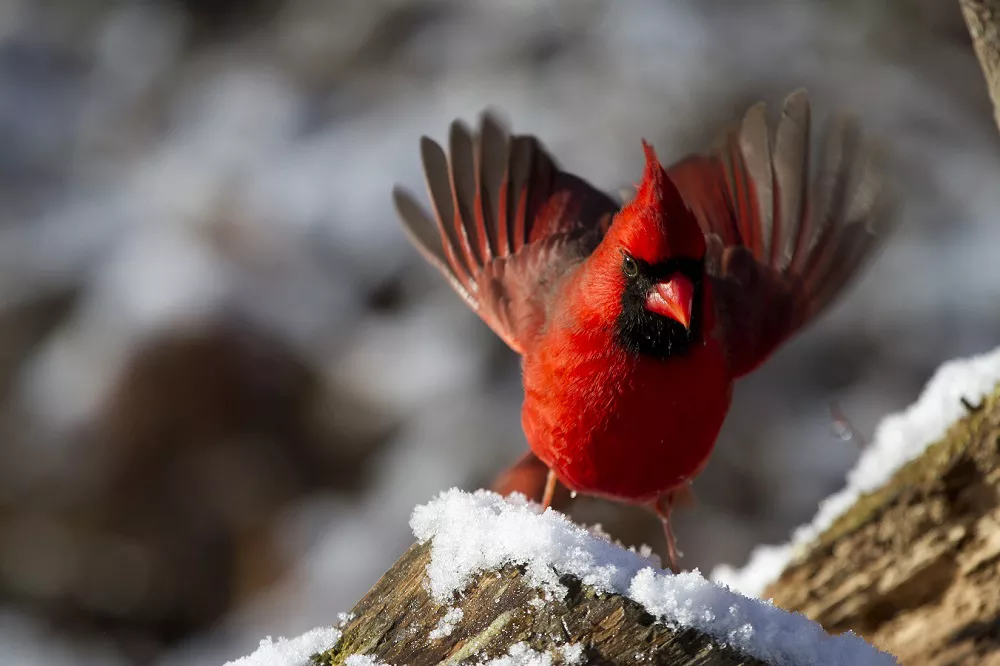
Residents who feel they have been seeing more birds than usual in Loveland this winter are not mistaken. The city’s annual Christmas Bird Count, conducted Jan. 1, recorded more than 46,000 birds in and around Loveland — far above the typical range of 25,000 to 29,000.
A surge in waterfowl played a major role in the high numbers, according to Denise Bretting, who compiles the local count results.
“We had a lot of geese — around 21,000,” Bretting said. “There were more ducks than usual, and I think we had a high count for red-winged blackbirds. We also saw quite a few robins. When you add it all up, it’s remarkable.”
A total of 113 volunteers took part in this year’s count, including 30 first-time participants. Together, they recorded 107 bird species on count day, plus one additional species during the three days before and after the event, bringing the total to 108 species. Participants logged 173 miles on foot and another 378 miles by vehicle, contributing nearly 275 combined hours of bird observation.
Loveland’s Christmas Bird Count is part of the Audubon Society’s long-running community science program, which began in 1900. Each winter between Dec. 14 and Jan. 5, volunteers survey birds within more than 2,400 designated 15-mile-wide circles across the United States, Canada and Latin America. The data is used by scientists to track long-term trends in bird populations, migration patterns and geographic distribution.
Loveland joined the nationwide effort in 2000, making this year’s count the 26th locally. The Loveland count circle is centered near U.S. 34 and County Road 23 and includes diverse habitats ranging from foothills to reservoirs.
This year’s count produced three species never before recorded locally during the event: American white pelican, orchard oriole and golden-crowned sparrow. Volunteers also documented record-high local counts for several species, including pied-billed grebe, great horned owl, merlin, Say’s phoebe, bushtit, white-crowned sparrow, spotted towhee and red-winged blackbird.
Bretting said unusually mild winter weather likely contributed to both the high number of birds and the variety of species observed. With no snow cover, open water and readily available food sources, some birds may have had little reason to migrate farther south or leave higher elevations.
“If they can stay warm and find food, maybe they don’t want to leave yet,” she said.
Residents interested in learning more about birdwatching can explore field trips offered by the Northern Colorado Bird Alliance, formerly the Fort Collins Audubon Society, as well as the city’s monthly bird walks, which typically resume in spring and continue through October. In May, Loveland will also host the Colorado Field Ornithologist convention at the Embassy Suites.
 Facebook
  Instagram
  Youtube
 Spanish
  English