
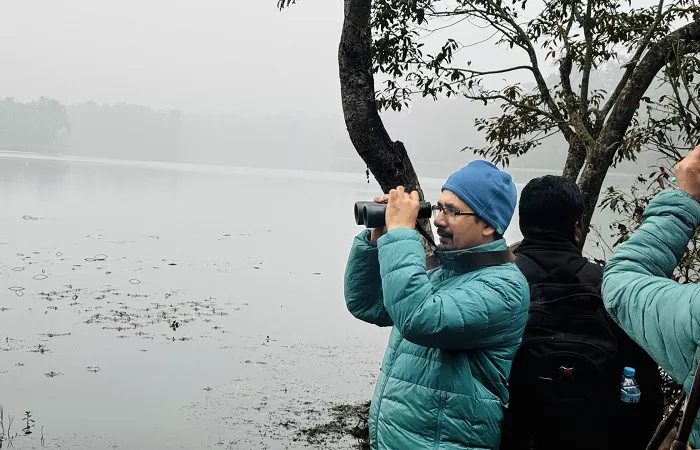
KAILALI: The number of water birds in the Ghodaghodi Wetland of Kailali has declined sharply in recent years, causing growing concern among ornithologists and conservationists.
Experts attribute the decline mainly to unsafe habitats and a lack of adequate food sources, warning that the situation signals serious threats to the wetland’s overall ecological health. Poaching has also played a significant role in reducing bird populations.
According to Dayaram Chaudhary, Chair of Bird Conservation Network Kailali, the most recent bird count recorded around 1,100 water birds in the Ghodaghodi wetland last year. This figure marks a significant drop compared to the numbers documented in 2022.
Chaudhary noted that the population of Harihans—a small duck species regarded as an indicator of the wetland’s environmental condition—has also been steadily declining in recent years.
Conservation stakeholders have emphasized the urgent need to protect Ghodaghodi’s biodiversity. The wetland complex consists of 24 lakes, including Ghodaghodi Lake, which is the largest natural lake in Nepal’s Terai region.
In recognition of its ecological importance and its role as a habitat for both resident and migratory birds, the Sudurpashchim Province Government declared Ghodaghodi Lake as Nepal’s first Bird Sanctuary on March 11, 2022.
The Ghodaghodi wetland is known to support up to 381 bird species. Meanwhile, the annual water bird census in the area began on Saturday, according to Bird Conservation Network Kailali.
The census is scheduled to conclude on January 5.
 Facebook
  Instagram
  Youtube
 Spanish
  English