
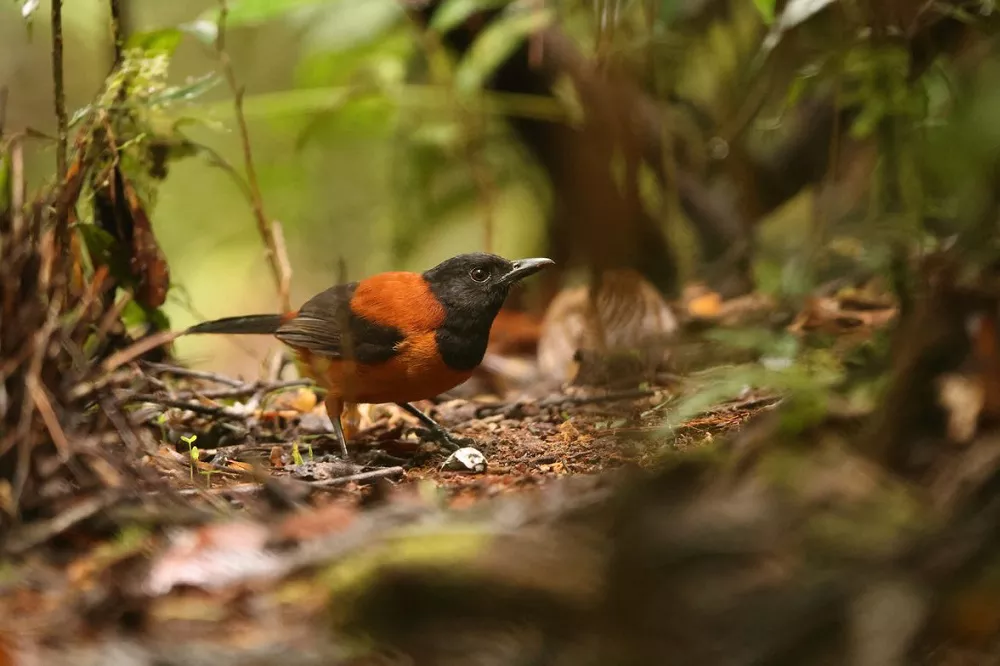
The Hooded Pitohui (Pitohui dichrous) is one of the most remarkable birds on Earth. It looks beautiful, sings like many tropical songbirds, and lives deep inside the rainforests of New Guinea. However, this bird has one feature that makes it famous around the world—it is poisonous.
Unlike snakes or spiders, the Hooded Pitohui does not inject venom. Instead, it carries a powerful toxin called batrachotoxin in its skin and feathers. This chemical can cause numbness, burning, and tingling when touched. Scientists believe the bird gets this toxin from poisonous beetles in its diet rather than producing it itself.
In this article, you’ll learn everything about the Hooded Pitohui, including its appearance, habitat, diet, poisonous defense, behavior, breeding habits, conservation status, and many interesting facts.
Hooded Pitohui Quick Facts
| Feature | Information |
|---|---|
| Common Name | Hooded Pitohui |
| Scientific Name | Pitohui dichrous |
| Family | Oriolidae |
| Order | Passeriformes |
| Length | 22–23 cm (8.7–9 in) |
| Weight | 65–85 g |
| Lifespan | Estimated 8–12 years in the wild |
| Diet | Insects, beetles, fruits, berries |
| Habitat | Tropical rainforests |
| Distribution | New Guinea |
| Conservation Status | Least Concern |
| Special Feature | Poisonous feathers and skin |
What Is a Hooded Pitohui?
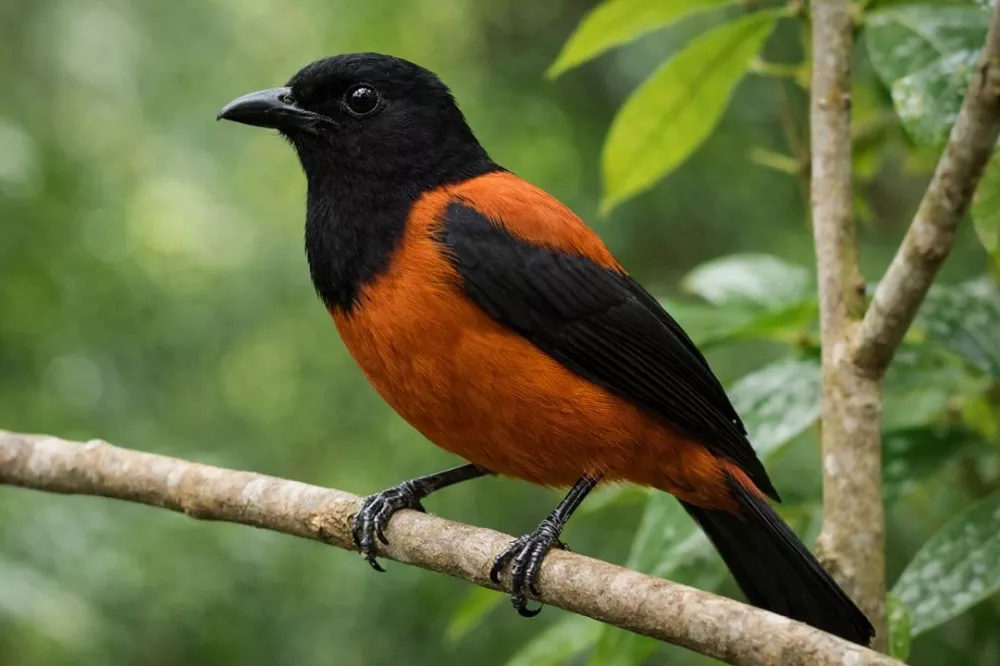
The Hooded Pitohui is a medium-sized songbird found in the tropical forests of New Guinea. The bird has striking orange and black feathers. These colors warn predators to stay away.
The bird is unique because of a powerful toxin found in its skin and feathers. This toxin is batrachotoxin. The same chemical toxin is also found in poison dart frogs in Central and South America. Few animals can tolerate batrachotoxin, so the toxin protects the Hooded Pitohui from predators.
Western scientists first confirmed the toxin scientifically in 1989. The discovery happened when researchers felt numbness after touching the bird. Later laboratory studies confirmed the toxin in the feathers and skin.
Scientists believe the bird does not produce the toxin itself. Instead, it obtains the chemical from its diet, especially certain beetles belonging to the genus Choresine.
The toxin accumulates in the bird’s:
- Feathers
- Skin
- Body tissues
When predators bite or touch the bird, they may experience:
- Burning sensation
- Tingling lips
- Numb mouth
- Temporary paralysis
- Strong bitter taste
Fortunately, the amount found in the bird is usually not dangerous to healthy humans, although direct handling should always be avoided.
Where Does the Hooded Pitohui Live?
The Hooded Pitohui lives only on the island of New Guinea, which includes parts of Papua New Guinea and Indonesia.
Its preferred habitats include:
- Lowland tropical rainforest
- Mountain forests
- Forest edges
- Secondary forests
- Mature woodland
It usually lives from sea level up to elevations of around 2,000 meters (6,560 feet).
The bird spends much of its time moving through the middle and upper layers of the forest canopy.
Hooded Pitohui Appearance
The Hooded Pitohui has one of the most striking color patterns among rainforest birds.
Adult Appearance
Adults have:
- Glossy black head
- Black wings
- Black tail
- Bright orange body
- Strong black bill
- Dark brown eyes
- Gray legs
The bold orange-and-black coloration serves as a warning signal to predators. This type of warning coloration is called aposematism.
Male vs Female
Male and female Hooded Pitohuis look very similar.
Males are usually:
- Slightly larger
- Slightly heavier
- More brightly colored
However, the differences are subtle and often difficult to notice in the field.
Hooded Pitohui Diet
The Hooded Pitohui is an omnivore.
Its diet changes with the seasons and food availability.
Common foods include:
Insects
The bird eats many forest insects, including:
- Beetles
- Caterpillars
- Ants
- Spiders
- Grasshoppers
Scientists believe poisonous beetles are the source of its toxins.
Fruits
It also enjoys:
- Small berries
- Wild figs
- Forest fruits
Fruit provides energy and water.
Other Foods
Occasionally, the bird also eats:
- Seeds
- Small invertebrates
- Flower nectar
Hooded Pitohui Behavior and Lifestyle
The Hooded Pitohui is an active forest bird.
It often travels alone or in pairs but may also join mixed-species feeding flocks.
Typical behaviors include:
- Searching tree bark for insects
- Flying between forest branches
- Calling loudly to communicate
- Defending its territory
Although not aggressive toward humans, it may chase away other birds entering its territory.

Hooded Pitohui Calls and Sounds
The Hooded Pitohui has loud, clear whistles that travel well through dense rainforest.
Its vocalizations help:
- Mark territory
- Attract mates
- Keep family members together
- Warn other birds of danger
Birdwatchers often hear the bird before seeing it.
Breeding and Reproduction
Scientists still know relatively little about the breeding habits of the Hooded Pitohui.
Current knowledge suggests:
Breeding Season
Breeding mainly occurs during periods when food is abundant.
Nest
The female builds a small cup-shaped nest using:
- Twigs
- Moss
- Leaves
- Plant fibers
The nest is usually hidden among dense branches.
Eggs
Typical clutch size: 2–3 eggs.
Parenting
Both parents appear to help care for the chicks.
Young birds leave the nest after several weeks but remain dependent on their parents for some time.
Is the Hooded Pitohui Dangerous to Humans?
For most people, the Hooded Pitohui is not highly dangerous.
However, handling the bird may cause:
- Tingling fingers
- Numb skin
- Burning sensation
- Sneezing
- Eye irritation
People should never intentionally touch wild Hooded Pitohuis.
Researchers handling the birds usually wear gloves.
Do Predators Eat Hooded Pitohuis?
Very few predators choose to attack them.
Their poison discourages many mammals, reptiles, and birds.
Scientists also believe the toxins reduce parasites like lice and ticks, giving the birds another survival advantage.
Conservation Status
According to the International Union for Conservation of Nature (IUCN), the Hooded Pitohui is currently listed as Least Concern.
Its population is considered relatively stable.
Interesting Facts About the Hooded Pitohui
Here are some amazing facts:
- It is one of the world’s few poisonous birds.
- Scientists discovered its toxicity only in the 1990s.
- Indigenous people knew about its poison long before scientists.
- Its orange-and-black feathers warn predators.
- The poison probably comes from beetles.
- Not every individual bird contains the same amount of toxin.
- It belongs to the oriole family.
- It helps scientists study chemical defenses in birds.
Conclusion
The Hooded Pitohui is one of the world’s most extraordinary birds. Its vivid orange-and-black plumage, fascinating behavior, and unique chemical defense make it unlike almost any other bird species.
Beyond its reputation as the “poisonous bird,” the Hooded Pitohui reminds us how much there is still to learn about rainforest ecosystems and the complex relationships between animals, plants, and insects. By protecting the forests of New Guinea, we also help preserve one of nature’s most remarkable evolutionary stories.
Frequently Asked Questions
Is the Hooded Pitohui the only poisonous bird?
No. Scientists have identified several bird species with toxic chemicals, but the Hooded Pitohui remains the best-known example.
Can touching a Hooded Pitohui kill you?
No.
Healthy adults are unlikely to suffer serious effects. Most people experience only mild numbness or irritation after direct contact.
Why doesn’t the Hooded Pitohui get poisoned?
Scientists believe the bird has evolved resistance to the toxin stored in its own body.
Where can I see a Hooded Pitohui?
The best place is the tropical rainforests of New Guinea. Birdwatching tours sometimes encounter this species in protected forest reserves.
What does the Hooded Pitohui eat?
Its diet includes insects, beetles, caterpillars, fruits, berries, seeds, and other small forest invertebrates.
 Facebook
  Instagram
  Youtube
 Spanish
  English