
The terms “budgie” and “parakeet” are often used interchangeably, but they do not always refer to the same thing. A budgie, short for budgerigar, is a specific type of parakeet with the scientific name Melopsittacus undulatus. In the United States, the word “parakeet” commonly refers to this particular species, the budgerigar. However, parakeet is actually a broader term used to describe more than 115 species of small to medium-sized parrots with long tail feathers. This means that all budgies are parakeets, but not all parakeets are budgies. Other parakeet species include ringneck parrots, Quaker parrots, mustache parrots, rosellas, and kakarikis, to name a few, which are different from budgies.
In this article, we will explore everything about budgies vs parakeets, including their appearance, behavior, care requirements, and differences.
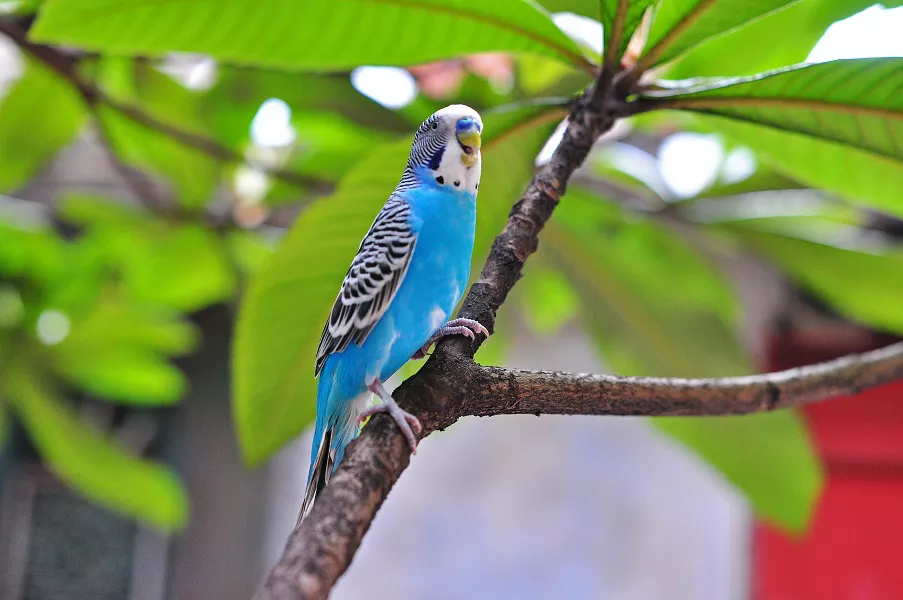
What Is a Budgie?
A budgie, also called a budgerigar, is a small parrot native to Australia. Its scientific name is Melopsittacus undulatus.
In the wild, budgies live in large flocks across Australia’s grasslands and open woodlands. They are highly social birds that spend much of their day flying, feeding, and communicating with each other.
Today, budgies are one of the world’s most popular pet birds because they are:
- Small size
- Friendly
- Intelligent
- Bright colors
- Affordable
- Ability to learn words
- Relatively easy care requirements
In the United States, people often call budgies parakeets, while in many other countries, especially the United Kingdom, Australia, and New Zealand, the term budgie is more commonly used.
What Is a Parakeet?
The word parakeet is not a specific species name. Instead, it is a general term used to describe many small to medium-sized parrots with long tails.
The word usually refers to birds that share similar characteristics:
- Slim body shape
- Long tail feathers
- Small to medium size
- Strong curved beaks
- High intelligence
Examples of parakeets include:
- Budgerigar (Melopsittacus undulatus)
- Monk Parakeet (Myiopsitta monachus)
- Indian Ringneck Parakeet (Psittacula krameri)
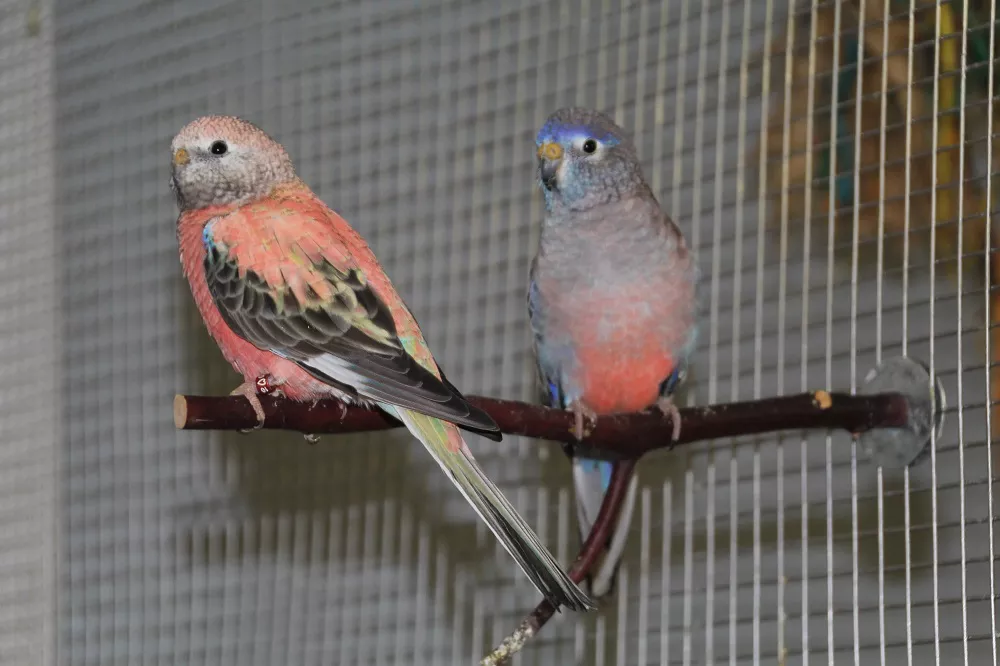
- Bourke’s Parakeet (Neopsephotus bourkii)
- Lineolated Parakeet (Bolborhynchus lineola)
Therefore, all budgies are parakeets, but not all parakeets are budgies.
Are Budgies and Parakeets the Same Bird?
The answer is: sometimes yes, sometimes no.
In many pet stores, especially in North America, the word parakeet usually refers specifically to the budgerigar.
In Australia, People almost always say: Budgie.
Since wild budgies are native there, everyone knows exactly which bird they mean.
In the United Kingdom, People usually say budgie instead of parakeet.
Scientifically, A budgie is one species of parakeet.
So both terms can be correct depending on the context.
Main Differences Between Budgies and Other Parakeets
Although budgies are parakeets, they look different from many other species.
1. Size
Budgies are among the smallest parakeets.
Typical budgie size:
- Length: 6–8 inches (18–20 cm)
- Weight: 30–40 grams
Other parakeets can be much larger.
For example:
Indian Ringneck Parakeets can reach around 16 inches (40 cm)
Monk Parakeets are about 11–12 inches (28–30 cm)
Alexandrine Parakeets are about 22–24 inches (56–60 cm)
2. Color
Budgies are famous for their incredible variety of colors.
Common budgie colors include:
- Green and yellow
- Blue and white
- Gray
- Violet
- White
- Yellow
Wild budgies are mainly green with black markings, but selective breeding has created hundreds of color variations.
Other parakeets often have their own unique patterns:
- Ringnecks usually have bright green bodies with colorful neck markings.
- Bourke’s Parakeets have soft pink and brown tones.
- Monk Parakeets have green bodies with gray faces.
3. Personality
Budgies are known for being:
- Friendly
- Curious
- Energetic
- Social
- Easy to train
They enjoy:
- Interacting with humans
- Playing with toys
- Exploring their environment
- Learning sounds and words
A well-socialized budgie can become a very affectionate companion.
Other parakeets vary greatly.
Some examples:
Often:
- Highly intelligent
- Independent
- Strong-willed
- Excellent talkers
Monk Parakeet
Usually:
- Very social
- Playful
- Confident
- Sometimes noisy
Bourke’s Parakeet
Often:
- Gentle
- Calm
- Less demanding
Talking Ability: Budgie vs Parakeet
Budgies are surprisingly talented talkers.
Despite their small size, many budgies can learn:
- Words
- Short phrases
- Household sounds
- Whistles
Some individual budgies have learned hundreds of words.
However, talking ability depends on:
- Individual personality
- Training
- Human interaction
- Age
Other parakeets may also talk well.
For example:
- Indian Ringneck Parakeets are considered excellent talking birds.
- Monk Parakeets can develop large vocabularies.
- Some smaller parakeets may be quieter.
Care Requirements: Budgie vs Parakeet
Since parakeets include many species, care needs vary. Budgies are generally easier for beginners.
Cage Requirements
Budgies need:
- A spacious cage
- Horizontal space for flying
- Safe toys
- Perches of different sizes
Larger parakeets usually require:
- Bigger cages
- Stronger toys
- More climbing space
Diet
A healthy diet for budgies includes:
- Quality pellets
- Fresh vegetables
- Limited seeds
- Fresh water
Popular vegetables include:
- Leafy greens
- Carrots
- Broccoli
- Bell peppers
Different parakeet species may have slightly different dietary needs.
Lifespan Comparison
| Bird | Average Lifespan |
|---|---|
| Budgie | 7–15 years |
| Indian Ringneck Parakeet | 20–30 years |
| Monk Parakeet | 15–25 years |
| Bourke’s Parakeet | 10–15 years |
Budgies generally have shorter lifespans compared with larger parakeets.
Which Makes a Better Pet?
For most beginners, budgies are an excellent choice.
Budgies Are Great For
- First-time bird owners
- Families
- Apartment living
- Smaller budgets
- People who want an interactive pet
Larger Parakeets Are Better For
- Experienced bird keepers
- Owners with more space
- People seeking a longer-lived companion
- Those prepared for louder vocalizations and greater daily interaction
Choose a bird whose needs match your lifestyle.
Final Thoughts
The confusion between budgies and parakeets comes from the way these names are used in different countries. Remember the simple rule:
- Every budgie is a parakeet.
- Not every parakeet is a budgie.
If you’re looking for a friendly, intelligent, and beginner-friendly companion, a budgie is an excellent choice. If you’re interested in larger parrots with unique personalities, exploring other parakeet species may be the right path.
Frequently Asked Questions
Is a budgie the same as a parakeet?
A budgie is a type of parakeet. However, the word parakeet refers to many different species, while budgie refers only to the Budgerigar.
Do budgies live in the wild?
Yes. Wild budgies are native to Australia, where they travel in flocks across grasslands and semi-arid regions in search of food and water.
Are budgies easy to train?
Yes. With patience and positive reinforcement, budgies can learn to:
- Step onto your finger
- Recall to your hand
- Speak words
- Perform simple tricks
Are all parakeets good pets?
Many parakeets make wonderful pets, but different species have different care needs, lifespans, noise levels, and personalities. Research the species before bringing one home.
 Facebook
  Instagram
  Youtube
 Spanish
  English