
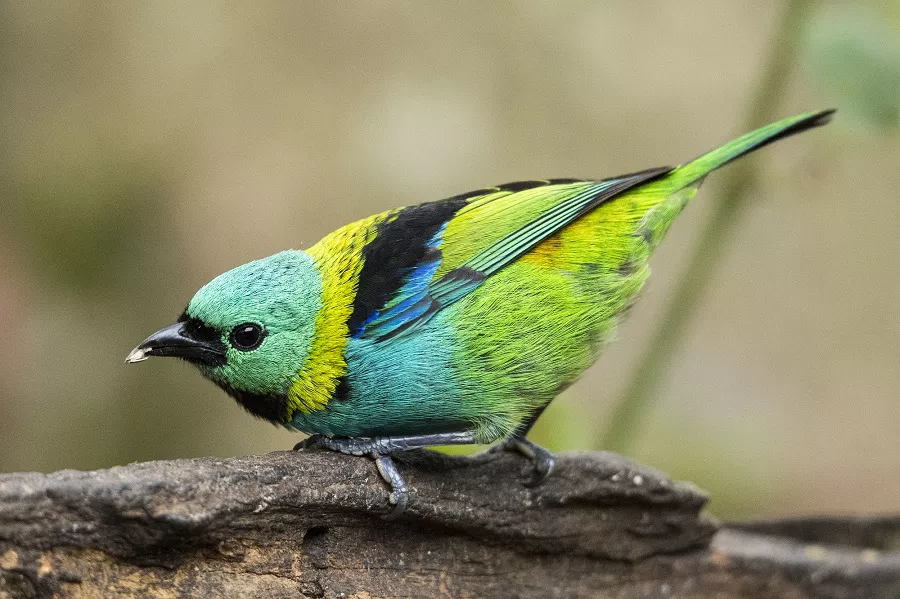
The Green-headed Tanager (Tangara seledon) is one of the most colorful birds found in South America. Its bright green head, turquoise-blue wings, black back, golden-yellow underparts, and brilliant orange-red rump make it look almost unreal. Birdwatchers often consider it one of the most beautiful members of the tanager family.
This tropical songbird lives mainly in Brazil’s Atlantic Forest. Although it is common in some protected forests, habitat loss continues to threaten its future.
In this complete guide, you’ll learn everything you need to know about the Green-headed Tanager, including its appearance, habitat, diet, behavior, breeding habits, lifespan, conservation status, and much more.
Green-headed Tanager Overview
| Feature | Details |
|---|---|
| Common Name | Green-headed Tanager |
| Scientific Name | Tangara seledon |
| Family | Thraupidae |
| Order | Passeriformes |
| Size | 13–14 cm (5.1–5.5 in) |
| Weight | Approximately 18 g (0.6 oz) |
| Wingspan | About 20 cm (7.9 in) |
| Diet | Fruits, insects, nectar |
| Habitat | Atlantic rainforest, forest edge, secondary forest |
| Distribution | Brazil, Paraguay, Argentina |
| Lifespan | Around 6–10 years in the wild |
| Conservation Status | Least Concern (IUCN) |
What Does a Green-headed Tanager Look Like?
The Green-headed Tanager is famous for its incredible mix of bright colors. Unlike many birds that rely on a single dominant color, the Green-headed Tanager combines several vivid shades across its body, creating a unique “rainbow-like” appearance.
Its plumage is highly distinctive:
- Head: Bright green crown and forehead
- Face: Turquoise-blue to blue-green cheeks and ear coverts
- Throat: Deep blue or greenish-blue coloration
- Back: Green with darker tones and contrasting markings
- Wings: Black wings with vivid green, blue, and yellow patches
- Chest and belly: Bright yellow to golden-yellow
- Lower body: Often shows orange or reddish tones near the belly and flanks
The combination of these colors gives the species its common name — the Green-headed Tanager.
Male vs Female Appearance
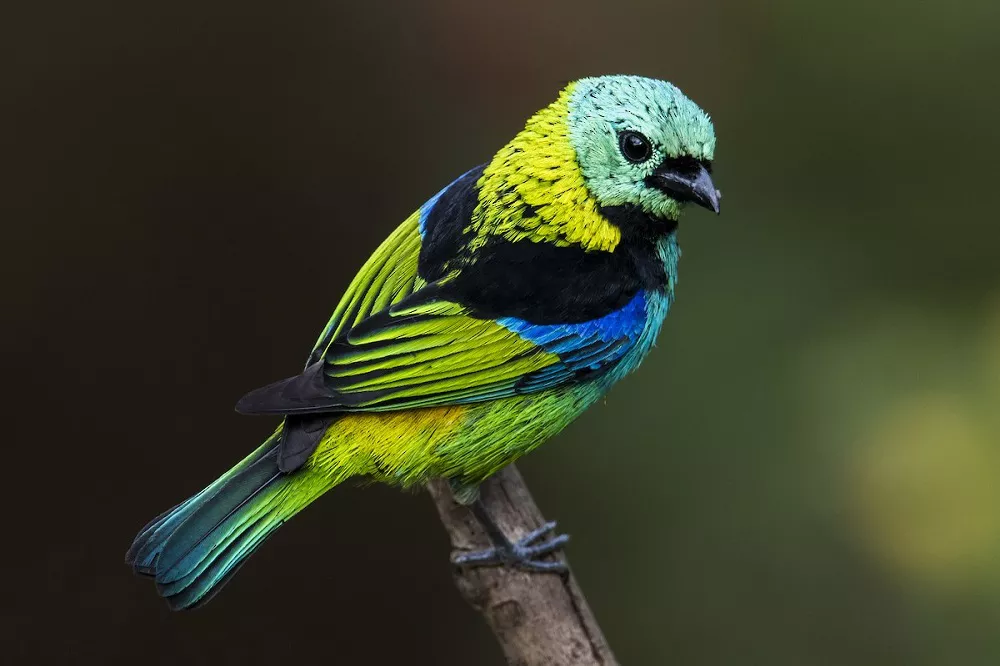
Male and female Green-headed Tanagers look very similar, which is common among many tropical tanager species.
However:
- Males often have slightly brighter and more intense colors, especially on the head and breast.
- Females may appear a little duller, with less saturated green and yellow tones.
The difference is subtle, and identification usually requires close observation.
Juvenile Appearance
Young Green-headed Tanagers are less colorful than adults.
Juveniles typically have:
- Duller green and yellow feathers
- Less defined blue facial markings
- A more uniform appearance
As they mature, their bright adult plumage gradually develops.
Where Does the Green-headed Tanager Live?
The Green-headed Tanager (Tangara seledon) lives primarily in the Atlantic Forest region of eastern and southeastern Brazil, where it inhabits humid tropical forests, forest edges, and areas with abundant fruiting plants.
Geographic Distribution
The Green-headed Tanager is found mainly in:
Brazil — especially the states along the Atlantic coast, including:
- Bahia
- Espírito Santo
- Rio de Janeiro
- São Paulo
- Paraná
- Santa Catarina
- Rio Grande do Sul
Its range extends through much of the southeastern Atlantic Forest, one of the most biodiverse ecosystems in the world.
Natural Habitat
Green-headed Tanagers prefer a variety of forest habitats, including:
1. Atlantic Rainforest
Their main habitat is the Mata Atlântica (Atlantic Forest), where they live in:
- Lowland tropical forests
- Mountain forests
- Evergreen forests
- Secondary forests recovering from disturbance
These forests provide a rich supply of fruits, insects, and nesting locations.
2. Forest Edges and Clearings
Unlike some forest specialists, Green-headed Tanagers often occur along:
- Forest borders
- Woodland gaps
- Gardens near forests
- Parks with mature trees
- Rural areas with native vegetation
They are relatively adaptable and can survive in partially modified landscapes if enough vegetation remains.
3. Coastal and Subtropical Forests
In southern Brazil, they can also be found in more subtropical forest habitats where temperatures are cooler but food resources remain available.
What Does a Green-headed Tanager Eat?
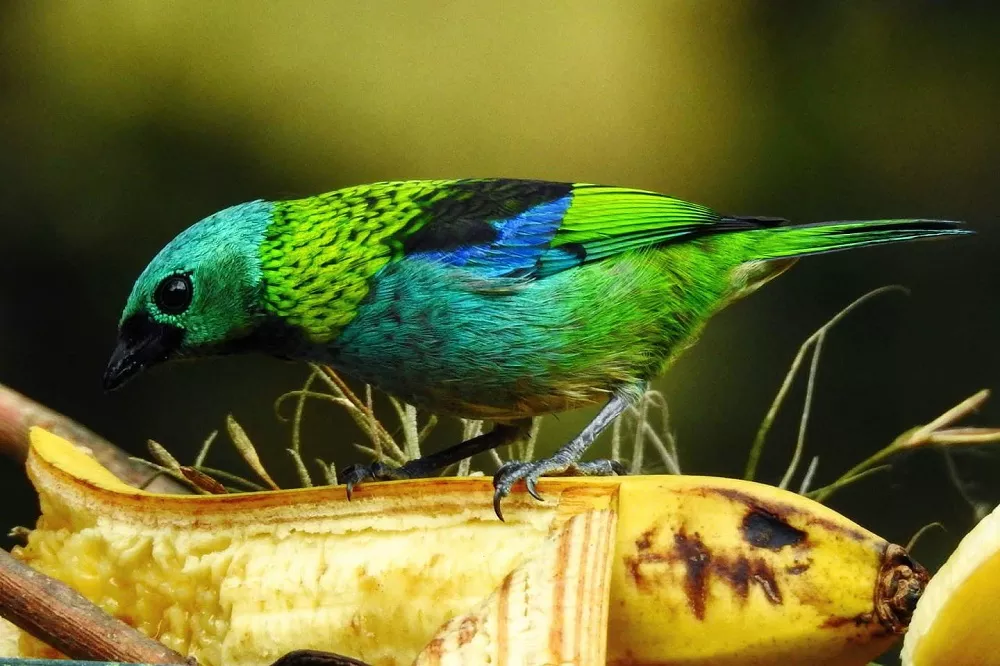
The Green-headed Tanager (Tangara seledon) is an omnivorous tropical songbird that feeds mainly on fruits, but it also eats insects, nectar, and other small food sources when available. Its varied diet helps it survive in the diverse ecosystems of the Atlantic Forest in eastern and southeastern Brazil.
1. Fruits — The Main Part of Their Diet
Fruit makes up a large portion of the Green-headed Tanager’s diet. These birds are important seed dispersers because they swallow many small fruits and later spread the seeds through their droppings.
Common fruits they eat include:
- Berries
- Small tropical fruits
- Figs
- Native forest fruits
- Soft, fleshy fruits from shrubs and trees
Their strong, pointed beak allows them to pick and consume small fruits efficiently while moving through forest vegetation.
2. Insects and Small Invertebrates
Although they are often considered fruit-eaters, Green-headed Tanagers also consume animal protein, especially during the breeding season when adults need extra energy for raising chicks.
They may feed on:
- Small insects
- Beetles
- Caterpillars
- Ants
- Spiders
- Other tiny arthropods
Insects provide essential protein and nutrients needed for chick development.
3. Nectar and Flowers
Green-headed Tanagers sometimes visit flowering plants to drink nectar, particularly when fruit availability is lower.
While they are not specialized nectar feeders like hummingbirds, nectar provides a quick source of energy. Their visits to flowers may also contribute to incidental pollination.
4. Feeding Behavior
Green-headed Tanagers usually forage in:
- The middle and upper layers of forests
- Forest edges
- Gardens and plantations with fruiting plants
They are often seen in small groups or mixed-species flocks, searching through leaves and branches for food. These active birds hop between branches, picking fruits and catching insects from vegetation.
5. Diet Changes Throughout the Year
Their diet changes depending on seasonal food availability:
| Season | Main Foods |
|---|---|
| Fruit-rich periods | Berries and other soft fruits |
| Breeding season | More insects and protein-rich prey |
| Flowering periods | Nectar and flower resources |
This flexible diet allows the Green-headed Tanager to adapt to changing conditions in its rainforest habitat.
Behavior and Personality
These birds are active, curious, and constantly moving.
Common behaviors include:
- Short flights between trees
- Quiet contact calls
- Following mixed bird flocks
- Searching leaves for insects
- Visiting fruiting trees
They are generally peaceful and rarely aggressive.
Vocalizations
Green-headed Tanagers are not known for loud songs.
Their calls include:
- Thin whistles
- Soft chirps
- High-pitched contact notes
Most vocalizations help flock members stay together while feeding.
Breeding and Nesting
Breeding usually occurs during the warmer months when food is abundant.
Courtship
Males perform:
- Wing fluttering
- Short chases
- Singing
- Displaying colorful plumage
Nest
The female builds a small cup-shaped nest using:
- Moss
- Fine roots
- Leaves
- Plant fibers
The nest is usually hidden in dense vegetation.
Eggs
Typical clutch:
- 2–3 eggs
Eggs are pale with brown speckles.
Incubation
- Lasts around 13–15 days.
- The female performs most incubation.
- Both parents feed the chicks after hatching.
Young birds usually leave the nest after about two weeks.
Lifespan
A Green-headed Tanager typically lives:
- Wild: 6–10 years
- Captivity: Rarely kept, so reliable data are limited
Survival depends on habitat quality and predator pressure.
Predators
Natural predators include:
- Hawks
- Falcons
- Tree snakes
- Small mammals
- Large arboreal lizards
Nestlings face the greatest risk from predators.
Migration
Green-headed Tanagers are non-migratory.
Most remain within the same forest throughout the year.
Some local movements occur when fruit availability changes.
Conservation Status
According to the International Union for Conservation of Nature (IUCN), the Green-headed Tanager is classified as Least Concern (LC).
Interesting Facts About the Green-headed Tanager
- It is considered one of the world’s most colorful songbirds.
- Every feather contains different pigments and structural colors.
- It belongs to a family with more than 370 tanager species.
- Its bright plumage helps birdwatchers identify it quickly.
- Despite its colorful appearance, it blends well into tropical foliage.
- It frequently joins mixed-species feeding flocks.
- The Atlantic Forest, where it lives, has lost much of its original area, making habitat protection especially important.
Conclusion
The Green-headed Tanager is one of the Atlantic Forest’s most dazzling birds. Its vivid colors, gentle behavior, and important ecological role make it a favorite among bird enthusiasts and conservationists alike. Although it is currently listed as Least Concern, the long-term survival of this remarkable species depends on protecting the remaining Atlantic Forest.
Frequently Asked Questions
Is the Green-headed Tanager rare?
No. It is considered fairly common in suitable Atlantic Forest habitats, especially inside protected areas.
Are males and females different?
Only slightly. Both sexes have similar colorful plumage, with males generally appearing somewhat brighter.
What fruits do Green-headed Tanagers eat?
They commonly eat figs, berries, palm fruits, and many small native rainforest fruits.
Does the Green-headed Tanager migrate?
No. It is a resident species that stays within its forest range throughout the year, making only short local movements in search of food.
 Facebook
  Instagram
  Youtube
 Spanish
  English