
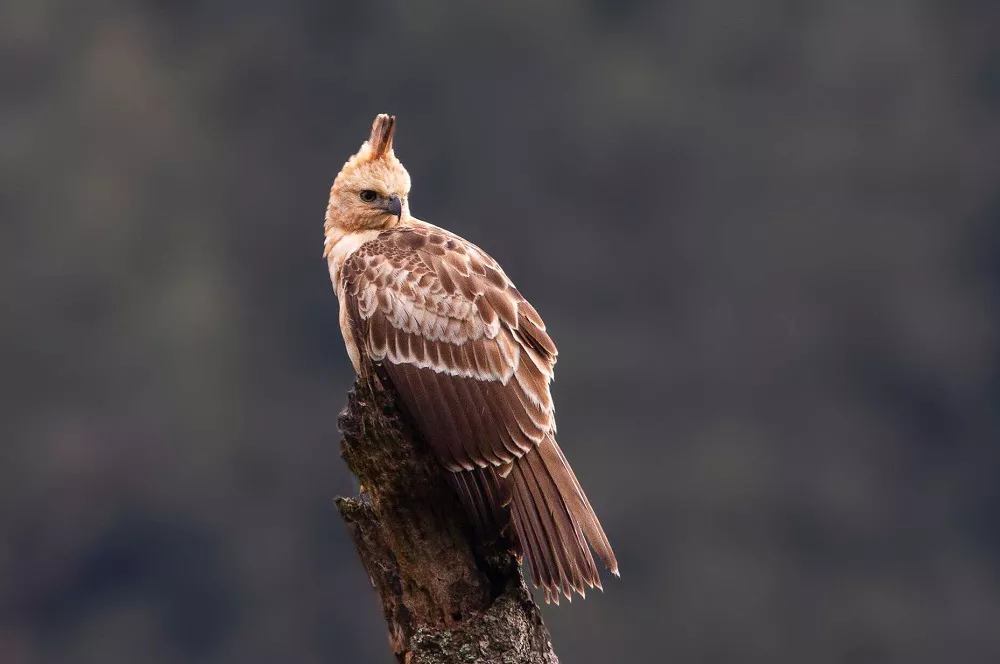
The Javan Hawk-Eagle (Nisaetus bartelsi) is one of the most remarkable birds of prey in Southeast Asia and a symbol of Indonesia’s unique biodiversity. Endemic to the island of Java, Indonesia, this magnificent raptor is known for its striking appearance, powerful hunting skills, and strong connection with the remaining tropical forests of Java.
With its long crest, broad wings, sharp eyesight, and impressive aerial ability, the Javan Hawk-Eagle represents the beauty and fragility of Indonesia’s natural heritage. However, habitat loss, forest fragmentation, and illegal capture have made this species one of the most threatened eagles in the world.
Quick Facts About Javan Hawk-Eagle
| Category | Information |
|---|---|
| Common Name | Javan Hawk-Eagle |
| Scientific Name | Nisaetus bartelsi |
| Family | Accipitridae |
| Order | Accipitriformes |
| Distribution | Java Island, Indonesia |
| Habitat | Tropical forests, mountain forests, forest edges |
| Diet | Small mammals, birds, reptiles |
| Average Lifespan | Estimated several decades in suitable conditions |
| Conservation Status | Endangered |
| Population Trend | Declining due to habitat pressures |
What Is a Javan Hawk-Eagle?
The Javan Hawk-Eagle is a medium-sized eagle species belonging to the genus Nisaetus, a group of forest-dwelling raptors found across tropical Asia. Unlike many open-country eagles that hunt over grasslands or wetlands, the Javan Hawk-Eagle is highly adapted to dense forest environments.
This eagle was first scientifically described in 1924 and has since become recognized as one of Java’s most important endemic birds. Because it exists naturally only on Java Island, the survival of this species is closely linked to the protection of Java’s remaining forests.
The Javan Hawk-Eagle is also considered a national bird of Indonesia. Its appearance, especially its distinctive feather crest, is believed to have inspired the design concept of the mythical Garuda, Indonesia’s national emblem.
Appearance and Identification
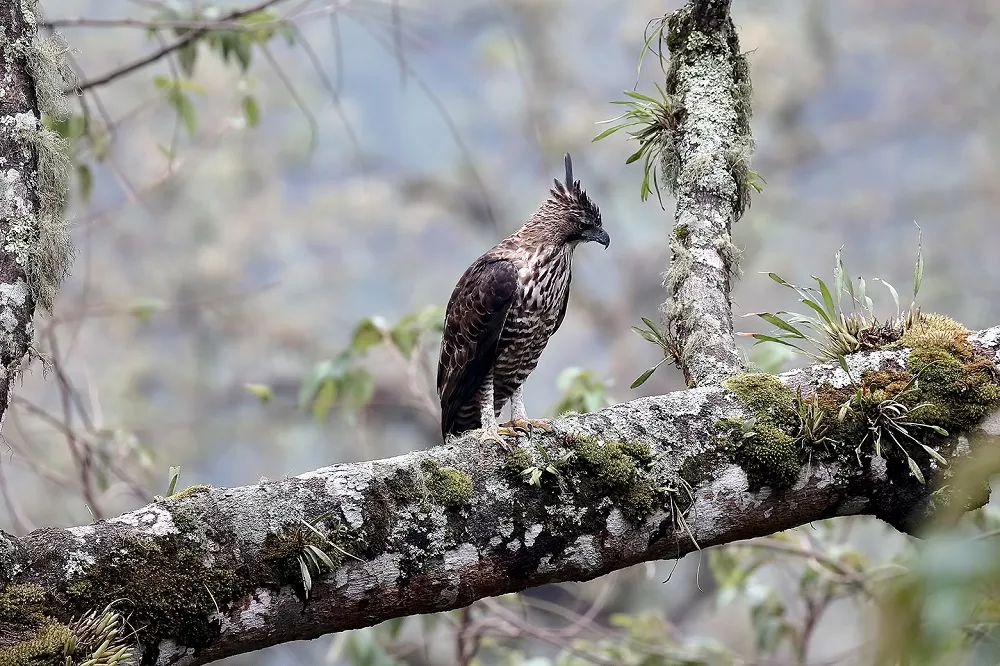
The Javan Hawk-Eagle is famous for its elegant and powerful appearance.
Size and Body Features
Adult Javan Hawk-Eagles typically have:
- A strong, hooked beak designed for tearing prey
- Broad wings adapted for forest flight
- Long tail feathers that provide excellent maneuverability
- Powerful legs and sharp talons
- A distinctive upright crest on the head
The crest is one of the easiest ways to identify this species. When alert or excited, the eagle can raise its long feathers, creating a unique silhouette that separates it from many other raptors.
Plumage
Adult birds generally display a combination of dark brown, black, and cream-colored feathers. The upper body is darker, while the underside often shows lighter coloration with patterns that help camouflage the bird among forest branches.
Juvenile Javan Hawk-Eagles usually have lighter plumage compared with adults, and their appearance gradually changes as they mature.
Where Does the Javan Hawk-Eagle Live?
The Javan Hawk-Eagle is found only on Java Island, Indonesia. It inhabits some of the island’s remaining tropical forests, particularly mountainous and forested regions.
Its preferred habitats include:
- Primary tropical rainforest
- Mountain forests
- Evergreen forests
- Forest fragments with sufficient prey availability
The species is often associated with rugged terrain, hills, and mountainous landscapes. Researchers have found that many populations survive in protected forest areas and isolated forest blocks across Java.
Important habitats include areas such as:
- Gunung Halimun-Salak National Park
- Gunung Gede Pangrango National Park
- Other protected forest regions throughout Java
Because Java has experienced rapid population growth and land-use changes, suitable forest habitat for this eagle has become increasingly limited.
Javan Hawk-Eagle Diet and Hunting Behavior
The Javan Hawk-Eagle is a carnivorous predator that plays an important role in maintaining ecological balance within forest ecosystems.
Its diet includes:
- Tree shrews
- Squirrels
- Rats and other small rodents
- Bats
- Small birds
- Lizards
- Snakes
Unlike some large eagles that rely mainly on soaring above open landscapes, the Javan Hawk-Eagle usually hunts from forest perches. It patiently watches for movement before launching a rapid attack through the trees.
Its broad wings and long tail allow it to navigate between branches and dense vegetation with remarkable agility.
Behavior and Lifestyle
The Javan Hawk-Eagle is generally solitary or found in pairs. Like many large birds of prey, it maintains a territory and uses vocal calls to communicate with its mate or defend its area.
Flight Ability
Although it spends much of its time inside forests, the Javan Hawk-Eagle is an excellent flyer. It can glide above forest canopies and perform powerful wingbeats when pursuing prey.
Territorial Nature
A breeding pair usually occupies a specific territory containing suitable nesting trees and enough food resources. Protecting these territories is essential because fragmented forests may not provide enough space for successful breeding.
Adaptation to Forest Environments
The species has evolved several features that help it survive in forests:
- Excellent eyesight for detecting prey
- Strong talons for capturing animals
- Flexible flight for maneuvering through trees
- Camouflage coloring for remaining hidden
Breeding and Nesting Habits
The breeding behavior of the Javan Hawk-Eagle is relatively slow compared with many smaller birds. This makes population recovery more difficult when numbers decline.
A breeding pair usually builds a large nest high in a tree. The nest is often constructed from branches and vegetation and reused over multiple breeding seasons.
Key breeding characteristics include:
- Usually one egg per breeding attempt
- Long parental care period
- Both parents involved in raising the young
- Young birds require significant time before becoming independent
Research indicates that Javan Hawk-Eagles may breed between certain periods of the year depending on environmental conditions, with parents investing considerable energy in raising a single offspring.
Because reproduction is slow, protecting adult birds and nesting sites is especially important for conservation.
Why Is the Javan Hawk-Eagle Endangered?
The Javan Hawk-Eagle faces several serious threats.
Habitat Loss
The greatest challenge is the destruction and fragmentation of forests. Java is one of the most densely populated islands in the world, and many natural habitats have been converted for agriculture, settlements, and infrastructure.
When forests become smaller and separated, eagle populations become isolated, reducing opportunities for breeding and genetic exchange.
Illegal Capture
Because of its beauty and rarity, the Javan Hawk-Eagle has historically attracted illegal wildlife collectors. Removing individuals from the wild directly harms already vulnerable populations.
Reduced Food Availability
Forest degradation can reduce populations of prey animals, making it harder for adult eagles to successfully raise young.
Climate Change
Future climate changes may also influence suitable habitats for the species by altering forest conditions and reducing available areas.
Conservation Efforts for the Javan Hawk-Eagle
Protecting the Javan Hawk-Eagle requires cooperation between governments, conservation organizations, scientists, and local communities.
Important conservation actions include:
Protecting Forest Habitat
Maintaining existing forests and restoring degraded areas are among the most important steps. Protected national parks provide essential refuge for remaining populations.
Monitoring Wild Populations
Researchers conduct surveys, habitat studies, and population monitoring to better understand where the species survives and how conservation programs can be improved.
Community Education
Local communities play a key role in protecting this eagle. Conservation programs often focus on increasing awareness and encouraging people to value native wildlife.
Preventing Illegal Wildlife Trade
Strong enforcement against illegal capture and trade is necessary to prevent further population decline.
Interesting Facts About Javan Hawk-Eagle
1. It Is Found Only on Java Island
The Javan Hawk-Eagle is an endemic species, meaning it naturally occurs nowhere else in the world except Java, Indonesia.
2. It Is Indonesia’s National Bird
The Javan Hawk-Eagle was officially chosen as Indonesia’s national bird in 1993. It represents strength, courage, independence, and the beauty of Indonesia’s natural heritage.
3. It Has a Unique Crown-Like Crest
One of the easiest ways to recognize the Javan Hawk-Eagle is its impressive upright feather crest on its head. This distinctive feature gives the eagle a majestic appearance and makes it different from many other eagle species.
4. It Is One of the World’s Rarest Eagles
The Javan Hawk-Eagle is classified as Endangered species.
5. It Is Sometimes Called the “Garuda of Java”
Because of its powerful appearance and cultural importance, the Javan Hawk-Eagle is often associated with the legendary Garuda, a mythical bird-like figure in Indonesian culture.
Conclusion
The Javan Hawk-Eagle is more than a beautiful bird of prey—it is a symbol of the remaining wild forests of Java. Its survival depends on preserving natural habitats, preventing illegal capture, and ensuring that future generations can experience this remarkable eagle in the wild.
 Facebook
  Instagram
  Youtube
 Spanish
  English