
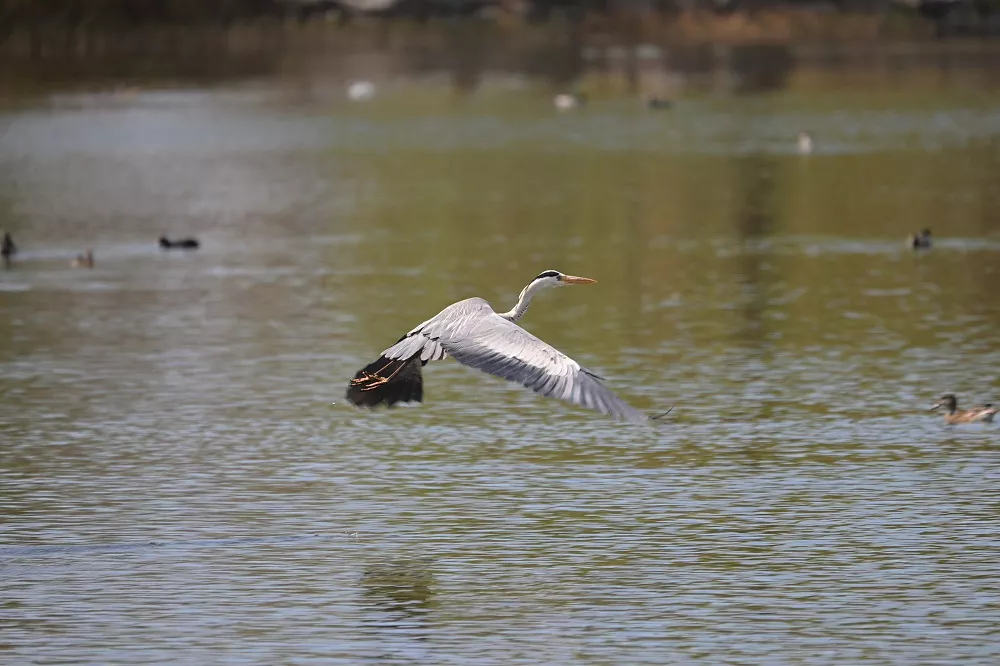
Louisville has become the seventh city in Colorado to earn the prestigious Bird City designation, joining a nationwide network that includes communities across the U.S., Mexico, Colombia, and Brazil. This recognition, granted by the nonprofit organizations Environment for the Americas and the American Bird Conservancy, acknowledges Louisville’s efforts to create a bird-friendly environment through various conservation initiatives.
The Bird City designation signifies that a community has met specific criteria aimed at protecting birds and their habitats. Louisville’s recognition comes as a result of its work in habitat restoration, wildlife and pollinator support, community science programs, and partnerships that promote local biodiversity.
At a meeting on December 10, local environmental advocate Dave Sutherland presented the Bird City award to Susan McEachern, chair of the Louisville Open Space Advisory Board.
The Bird City program evaluates communities based on four key areas: habitat protection and restoration, threat reduction (such as minimizing window collisions and light pollution), community education, and sustainability efforts that benefit bird populations. Cities must meet minimum requirements in each category and earn enough points to achieve the Bird City designation. Higher point totals qualify for the “High Flyer” level, a recognition given to communities with outstanding efforts.
Other Colorado cities with Bird City designations include Boulder, Broomfield, Fort Collins, Lafayette, Superior, and Westminster, all located along the Front Range. Several of these cities, including Boulder, have earned the “High Flyer” recognition.
Ember Brignull, Open Space Superintendent for Louisville’s Parks Department, expressed pride in the designation, saying, “This honor highlights the incredible work our community has done to support birds and their habitats. Louisville is a wonderful place for birds to thrive, thanks to the efforts of our Open Space staff, advisory board, and residents.”
Louisville’s Open Space Division has collaborated with the Colorado Avian Research and Rehabilitation Institute to offer public birdwatching opportunities, including live streaming footage of nests belonging to species like the American kestrel and great horned owl. The city also provides information on bird species visible at Hecla Lake.
According to Nathaniel Goeckner, an ecologist with the city’s Open Space Division, Louisville regularly conducts bird surveys during migration and breeding seasons, updating a biodiversity database that tracks the location and species found in local open spaces. This year, staff conducted a BioBlitz, a community science program, to document local wildlife.
Louisville’s efforts to protect grassland birds—some of the most at-risk species in the U.S.—are also notable. Through initiatives like reseeding native plants and using regenerative grazing, the city has worked to improve habitat quality for these birds.
In addition to the Bird City recognition, Louisville holds other environmental designations, including Bee City USA, Tree City USA, and Audubon Cooperative Sanctuary certification for the Coal Creek Golf Course.
 Facebook
  Instagram
  Youtube
 English
  Spanish