
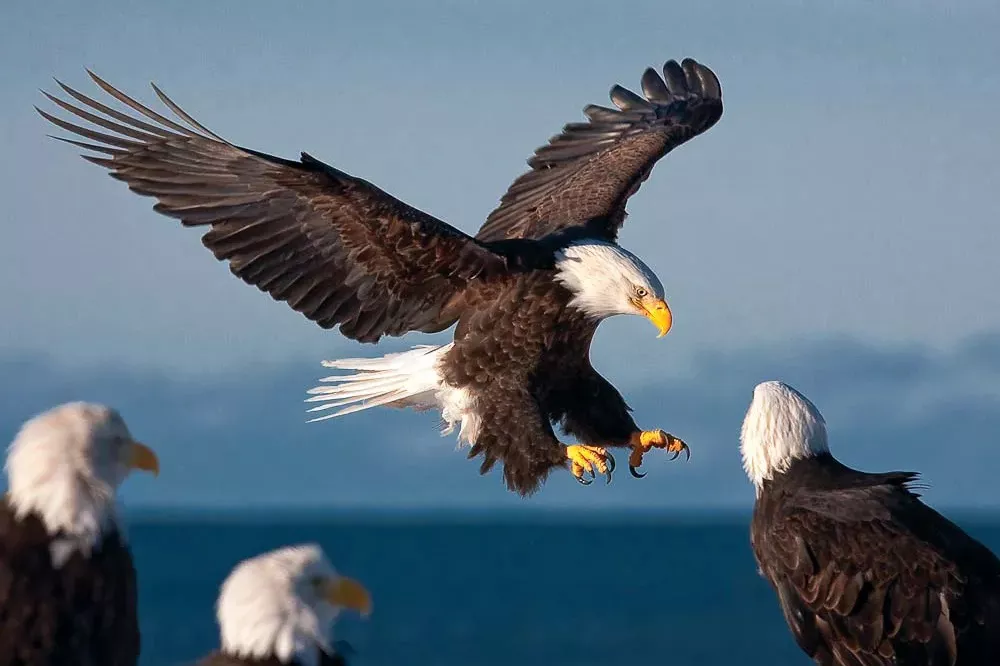
COLUMBUS, Ohio — A midwinter citizen survey recorded 715 bald eagles across Ohio, based on 391 public reports submitted between Jan. 7 and Jan. 21, according to the Ohio Department of Natural Resources (ODNR) Division of Wildlife.
The survey was conducted as the United States enters its 250th anniversary year in 2026, with the Division of Wildlife inviting the public to help count sightings of the nation’s bird. During the 15-day period, participants reported seeing 592 adult bald eagles and 123 immature birds.
The Division of Wildlife thanked all residents who submitted sightings through the Wildlife Reporting System. The 10 counties reporting the highest number of bald eagle observations were:
- Delaware County (26 eagles)
- Franklin County (26)
- Erie County (24)
- Lucas County (20)
- Ross County (20)
- Sandusky County (20)
- Huron County (18)
- Muskingum County (18)
- Knox County (17)
- Wood County (16)
Ohio’s bald eagle population has grown significantly in recent years. A 2025 nest census documented 964 active bald eagle nests statewide, up from 707 recorded during the 2020 census. In 2025, nests were found in 87 of Ohio’s 88 counties.
January and February are considered prime months for observing bald eagles in Ohio. Eagles are most often seen near rivers, wetlands, and lakes, where food is readily available. The absence of leaves during winter improves visibility, and courtship and nest-building activities typically begin during this time. Eagles in Ohio usually lay and incubate eggs in February and March, nesting in large trees such as sycamores, beeches, oaks, and cottonwoods.
Winter also offers opportunities to observe immature bald eagles. Adult eagles are easily recognized by their white heads and tails, which contrast with their dark bodies. Immature eagles, however, have mottled brown and white feathers and may take four to five years to develop adult markings. Wildlife officials recommend using binoculars or a spotting scope to observe eagles from a safe distance.
Bald eagles can be found in all 88 Ohio counties, with the largest concentrations near Lake Erie and other major waterbodies. Popular viewing locations include Magee Marsh Wildlife Area (Lucas and Ottawa counties), Pickerel Creek Wildlife Area (Sandusky County), Sheldon Marsh State Nature Preserve (Erie County), Mosquito Creek Wildlife Area (Trumbull County), and Killdeer Plains Wildlife Area (Wyandot and Marion counties). In southern Ohio, sightings are common along major rivers such as the Muskingum, Hocking, Scioto, and Great Miami.
Supporting Bald Eagle Conservation
Bald eagles depend on specific habitat conditions to survive. Conservation and research efforts are supported through the sale of bald eagle conservation license plates, income tax donations to the Endangered Species and Wildlife Diversity Fund, and purchases of the Ohio Wildlife Legacy Stamp. Funding from hunting and fishing licenses also helps the Division of Wildlife manage habitats for eagles and other wildlife.
Once listed as endangered, bald eagles had only four nesting pairs in Ohio in 1979. Through long-term conservation efforts and partnerships among the Division of Wildlife, Ohio zoos, wildlife rehabilitators, landowners, and conservation groups, the species rebounded. Bald eagles were removed from the federal endangered species list in 2007 and from Ohio’s list in 2012.
Bald eagles remain protected under state law and the federal Bald and Golden Eagle Protection Act. It is illegal to disturb the birds, particularly near nest sites. Wildlife officials advise observers to stay at least 100 yards away, as disturbances can cause nesting pairs to abandon their eggs.
The Division of Wildlife continues to manage bald eagles through habitat conservation focused on wetlands and wooded river corridors, cooperation with wildlife rehabilitators, and enforcement of state and federal protections.
 Facebook
  Instagram
  Youtube
 English
  Spanish