
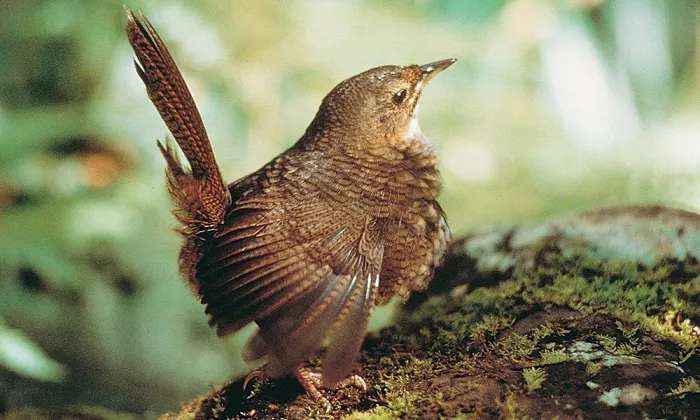
A rare Australian songbird that has survived since the age of the dinosaurs is the focus of a new DNA sequencing project aimed at preventing its extinction.
Scientists are sequencing the DNA of the Rufous scrub-bird, one of the world’s oldest surviving songbird species, as its population continues to decline. Researchers estimate that fewer than 2,000 birds remain, living in small, isolated pockets of high-altitude rainforest.
Brian Hawkins, senior threatened species officer with the NSW Department of Climate Change, Energy, Environment and Water, said the project will examine genetic differences between five separate colonies of the bird.
The Rufous scrub-bird is notoriously difficult to find. It lives deep within dense understorey vegetation in ancient Gondwanan rainforest, making sightings rare and capture even more challenging.
The known colonies stretch from Barrington Tops National Park, north-west of Newcastle, through to Border Ranges National Park in north-east New South Wales and south-east Queensland.
Dr Hawkins said the 2019–2020 Black Summer bushfires burned through parts of the bird’s habitat, destroying rainforest areas and killing an unknown number of birds.
Researchers from the North East Ecosystems and Threatened Species team, based in Coffs Harbour, are working to collect high-quality DNA samples from each colony. The aim is to understand whether birds from different regions could be safely bred together in the future to strengthen the species and increase its numbers.
“If genetic analysis shows they are all one subspecies, it could allow us to breed northern and southern birds together without compromising the species’ genetic identity,” Dr Hawkins said.
Elusive and difficult to catch
Although the science behind the project is clear, capturing the birds is extremely difficult.
The process involves locating a male bird’s territory, recording its song, and playing it back to trick the bird into thinking a rival has entered its area. If successful, the bird may fly toward the sound and be caught in a mist net set close to the ground.
Dr Hawkins said researchers have only a brief moment to secure the bird before it escapes, as Rufous scrub-birds are highly agile and adapted to moving through thick vegetation.
Last spring, a research team led by Australian National University spent a week attempting to capture birds in Werrikimbe National Park. Within the first day, they successfully caught two males, allowing scientists to fully sequence the genome of that local population.
“We went in with very low expectations,” Dr Hawkins said. “Only a handful of these birds had ever been caught before.”
Safeguarding against future fires
Dr Hawkins warned that another severe fire season could push the Rufous scrub-bird to extinction, making the DNA research vital to its long-term survival.
Samples have already been collected from populations at Barrington Tops and Werrikimbe, with plans to next target birds from the Border Ranges or Gibraltar Range regions.
If bushfire risks continue to increase, a captive breeding program may be considered as a last resort.
“We may need to establish an insurance population in captivity,” Dr Hawkins said. “This genetic research is the foundation for that kind of intensive conservation effort if it becomes necessary in the future.”
 Facebook
  Instagram
  Youtube
 English
  Spanish