
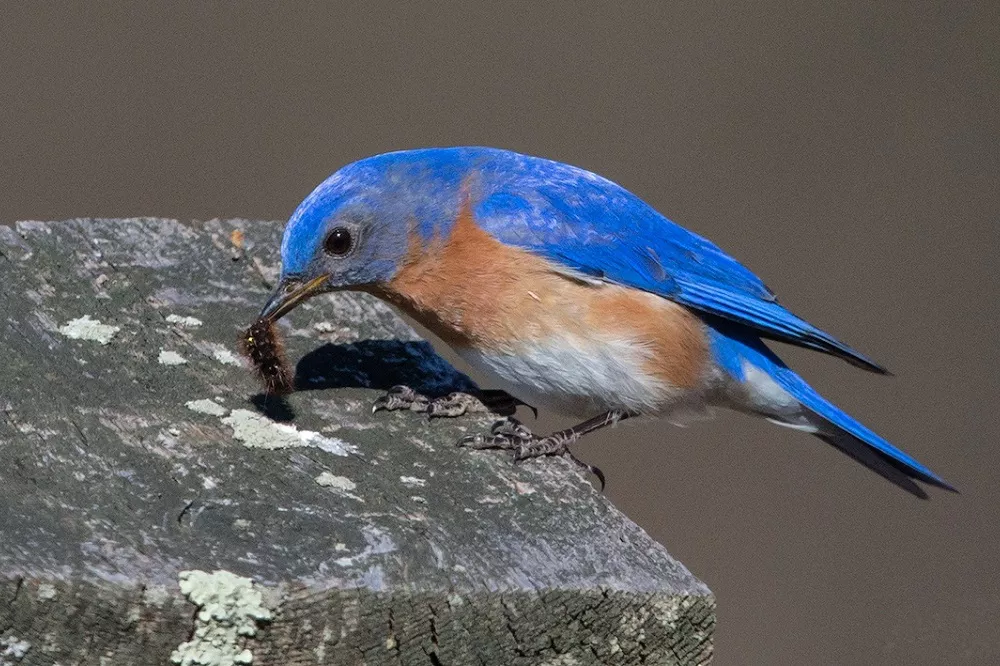
Attracting bluebirds requires more than simply putting up a nesting box. The direction your bluebird house faces plays a major role in temperature control, predator protection, and overall nest success. Many homeowners overlook this detail, but research from bluebird conservation groups shows that the right orientation can significantly improve fledging rates.
This guide explains the best direction for a bluebird house to face, why orientation matters, common mistakes, and expert placement tips based on field observations, bluebird biology, and environmental factors.
Whether you’re a beginner or an experienced birder, this comprehensive guide will help you make informed decisions and improve your bluebird nesting outcomes.
Why the Direction of a Bluebird House Matters
Bluebirds are sensitive to changes in temperature, wind, and habitat conditions. The direction you choose affects:
- Nest temperature stability
- Protection from rain and harsh winds
- Early-morning sunlight exposure
- Increased comfort for hatchlings
- Reduced risk of predators and other bird competitors
A well-placed bluebird house can mean higher nesting success, healthier chicks, and reduced abandonment.
The Best Direction for a Bluebird House to Face
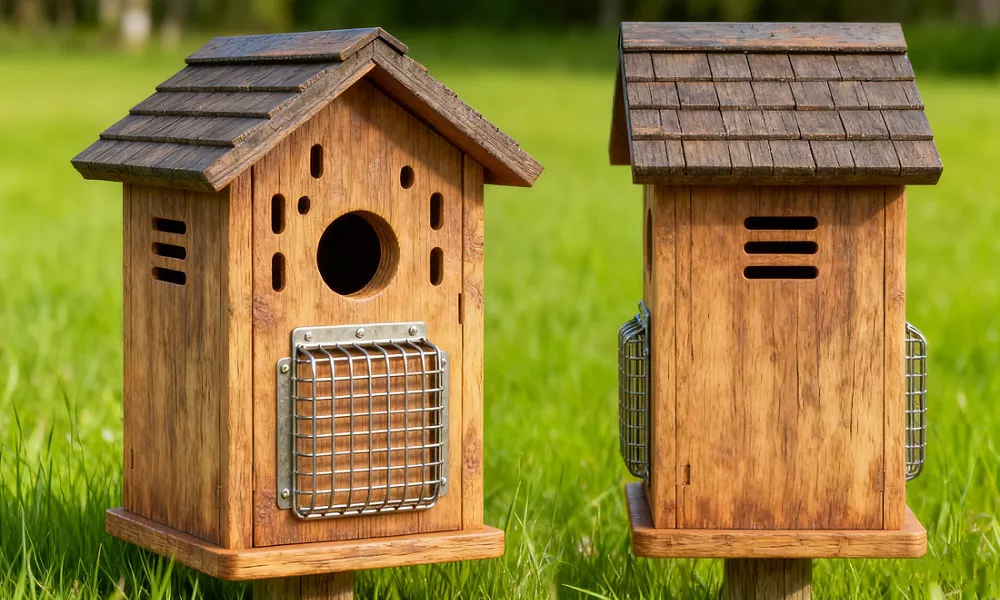
Most bluebird experts, including the North American Bluebird Society (NABS), recommend facing a bluebird house east or southeast.
Why East or Southeast Works Best
1. Morning Sunlight
Bluebirds benefit from gentle morning sunlight, which warms the box after the cooler night. This helps adults begin feeding earlier and keeps chicks warm without overheating.
2. Protection from Harsh Weather
In most regions, storms and prevailing winds come from the west or northwest. Facing the entrance eastward reduces water intrusion and wind chill.
3. Optimal Temperature Control
East-facing houses avoid intense afternoon heat from the west, preventing the interior from becoming dangerously hot for nestlings.
4. Higher Nesting Success Rates
Field observations show that east-facing boxes attract more mating pairs, have better egg survival, and reduce stress on chicks.
Should a Bluebird House Ever Face South or North?
Facing South
A southern orientation can work in northern climates where temperatures remain cool throughout the nesting season.
Advantages:
- Maximum sunlight for warmth
- Helps prevent hypothermia in early spring
Disadvantages:
- In warmer states, boxes may overheat
- Increased risk of nestling mortality during heatwaves
Use only in regions with short summers and mild temperatures.
Facing North
Generally not recommended, as north-facing boxes receive:
- Minimal sunlight
- Lower internal temperatures
- Slower chick growth
- Higher nesting failure in cold springs
However, northward placement may work in:
- Southern states with intensely hot summers
- Shaded habitats with high humidity
When facing north, heat management becomes critical.
See Also: 5 Best Bluebird House Plans for Backyard Birdwatching
Factors That Influence the Best Direction for Your Bluebird House
While east is ideal for most situations, orientation can vary based on:
1. Your Geographic Region
- Northern U.S. & Canada: East or south for extra warmth
- Midwest & Northeast: East or southeast
- Southern U.S.: East or north to avoid overheating
- Desert regions: East with added shade is best
Understanding your climate helps you avoid extreme temperatures inside the nest box.
2. Prevailing Winds in Your Area
Wind direction varies by region. Always avoid facing the entrance:
- Directly into strong winds
- Toward frequent storm directions
- Toward open fields that magnify gusts
Use local weather patterns or your own observations to choose the calmest direction.
3. Sunlight Exposure and Shade Patterns
Observe your yard throughout the day:
- Does the box get morning sun?
- Does it get too much afternoon heat?
- Is there partial shade during hot months?
Aim for:
- Morning sun
- Afternoon shade during peak summer heat
This balance keeps nest temperatures optimal.
4. Habitat and Landscape Features
The direction may shift based on:
- Nearby trees
- Predator activity
- Human structures
- Food availability
For example:
- If a tree blocks morning sun on the east side, southeast might be better.
- If predators often approach from the east, rotate the box toward the southeast or south.
Bluebird House Placement Guidelines (Beyond Direction)
Even with perfect orientation, poor placement can reduce nesting success. Follow these proven guidelines:
Ideal Height
5–7 feet above ground
High enough to deter predators, low enough for monitoring.
Open Habitat
Bluebirds prefer:
- Open fields
- Lawns
- Meadows
- Pasture land
Avoid dense woods, where wrens and predators dominate.
Distance Between Boxes
Spacing prevents competition:
- 300 feet apart for Eastern Bluebirds
- 200 yards apart for Mountain or Western Bluebirds
If you want to host multiple pairs, use the “pairing system” with 2 boxes 10–15 feet apart to reduce swallow competition.
Predator Guards Are Essential
Always install:
- Pole baffles
- Noel guards
- Predator-resistant entrances
Orientation helps, but physical protection is critical.
How Temperature Affects the Best Direction
Bluebird eggs and chicks are highly temperature-sensitive.
Optimal Nest Temperature
65–105°F (18–40°C)
Temperatures above 110°F (43°C) can be lethal.
Facing the Box in Hot Climates
If you live in:
- Texas
- Florida
- Arizona
- Southern California
Avoid west-facing boxes entirely. They absorb too much afternoon heat.
Tips for hot climates:
- Add ventilation holes
- Use heat shields
- Provide afternoon shade
- Face east or northeast
Facing the Box in Cold Climates
If you live in:
- Minnesota
- Wisconsin
- New England
- Mountain regions
South or southeast orientation may improve chick survival in early spring.
The Role of Sunlight in Bluebird Behavior
Bluebirds rely on warmth and light to regulate:
- Feeding times
- Energy use
- Brooding behavior
- Chick development
Morning sun encourages:
- Early foraging
- Faster warming inside the box
- More feeding visits per day
The direction you choose can directly influence how often parents feed their young.
Common Mistakes When Choosing the Direction of a Bluebird House
Avoid these common errors:
1. Facing the House West
This exposes the box to harsh afternoon heat, causing:
- Chick dehydration
- Panting
- Higher mortality
2. Placing the House in Full-Day Sun
Without shade during summer, temperatures spike. Afternoon shade is ideal.
3. Ignoring Wind Direction
Even a perfectly built box can fail if wind blows into the entrance.
4. Mounting on Trees or Fences
These attract predators like:
- Snakes
- Raccoons
- Squirrels
Orientation doesn’t matter if predators have easy access.
Regional Placement Recommendations
Eastern & Midwestern U.S.
Best direction: East or Southeast
Reasons:
- Cool mornings
- Afternoon heat
- Storms from the west
Southern U.S.
Best direction: East or North
Reasons:
- Prevent overheating
- Ensure morning light
Western Mountain Regions
Best direction: East or South
Reasons:
- Cold nights
- Dry winds
Pacific Coast
Best direction: Southeast
Reasons:
- Balanced sunlight
- Moist, cool mornings
- Avoid strong coastal winds
How to Determine the Best Direction in Your Own Yard
Do a simple 3-step analysis:
Step 1: Identify Morning Sun
Observe which side receives gentle morning sunlight.
Step 2: Consider Shade Timing
Find areas that get shade between 1 p.m. – 5 p.m., ideal for summer months.
Step 3: Watch Wind Patterns
Note where strong winds usually come from on your property.
Combine these three factors to choose the final orientation.
Case Studies from Bluebird Landlords
Case Study 1: Midwest Suburb
A homeowner faced all boxes east. Result:
- Higher fledging rates
- Cooler afternoon temperatures
- More consistent nesting attempts
Case Study 2: Southern Heat Zone (Texas)
Boxes facing north showed:
- Lower interior temperatures
- Less chick stress during heatwaves
Case Study 3: Northeastern Woodland Edge
Boxes facing southeast had:
- Fast morning warm-up
- High insect availability early in the day
These examples highlight the importance of climate-based adjustments.
Additional Tips to Improve Bluebird Success
- Use cedar or pine boxes for natural insulation
- Clean the house between broods
- Keep grass trimmed for easy insect spotting
- Avoid pesticide use
- Monitor the nest weekly
Small adjustments can yield big results.
Frequently Asked Questions
Should a bluebird house face toward a food or water source?
Not necessary. Orientation should prioritize sunlight and wind protection, not proximity to resources.
Can I change the direction after birds start nesting?
No. This may cause abandonment. Wait until the season ends.
Does the direction affect predator activity?
Yes—boxes facing brushy areas tend to attract predators. Choose open space regardless of direction.
What if my yard only allows a west-facing location?
Use heat shields, extra ventilation, and afternoon shade. East is best, but adjustments can help compensate.
Final Recommendation
For most regions and situations, a bluebird house should face east or southeast. This provides the ideal balance of morning sun, protection from harsh weather, and safe temperatures for developing chicks. However, climate, shade, and wind patterns can influence the best direction for your yard.
By combining proper orientation with smart placement, predator protection, and regular monitoring, you can dramatically increase your bluebird nesting success and help support healthy populations.
 Facebook
  Instagram
  Youtube
 English
  Spanish