
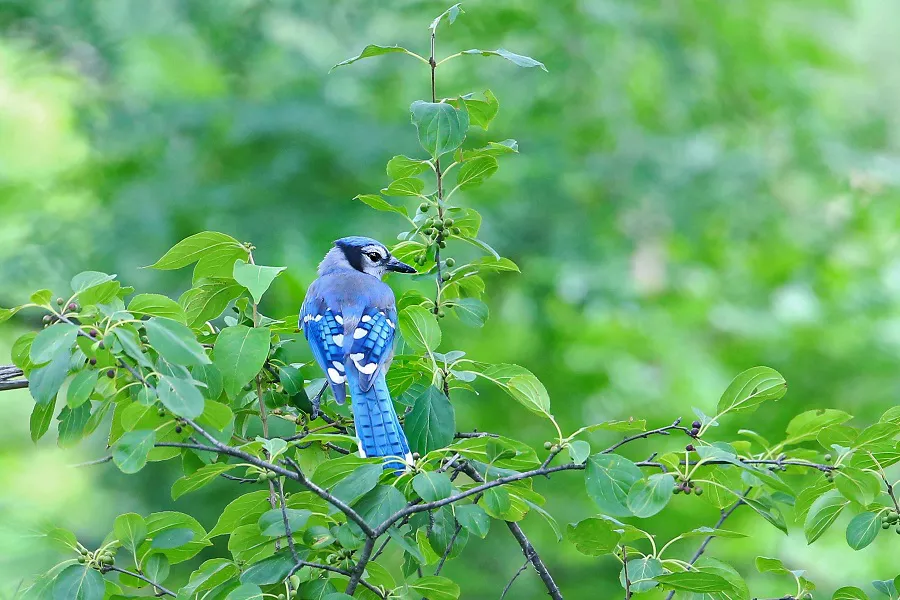
Blue jays can eat hummingbirds, but it is not common. In most cases, blue jays prefer easier food such as nuts, seeds, fruits, insects, and eggs from other birds’ nests. When they do harm hummingbirds, it is usually opportunistic rather than a regular hunting behavior.
Introduction
Blue jays are bold, smart, and highly adaptable birds. They are also omnivores, which means they eat both plant and animal food. Because of this, people often wonder whether they can also eat hummingbirds.
The short answer is yes, but only rarely. A healthy hummingbird is fast and difficult to catch, so it is not a normal target for a blue jay. Most blue jays are more likely to focus on food that gives them more energy for less effort.
Blue Jay Diet
Blue jays do not survive on one kind of food. Their diet includes acorns, beechnuts, seeds, berries, fruits, insects, spiders, snails, eggs, small frogs, small rodents, carrion, and baby birds. This wide diet is one reason they are so successful in many habitats.
Vegetable matter makes up a large part of their diet, especially in some seasons. They are also known for caching food, especially acorns and nuts, which they hide and later recover. That behavior helps forests too, because some stored acorns are never retrieved and can grow into new trees.
Can They Catch Hummingbirds?
Blue jays are physically capable of attacking small birds, but hummingbirds are not easy prey. Hummingbirds are tiny, quick, and very agile, which makes them hard to catch in open air. For that reason, a blue jay is far more likely to chase a smaller bird only when the chance is unusually easy.
The risk is greater if a hummingbird is sick, injured, trapped, or near a nest. In those situations, a blue jay may take advantage of the opportunity. This is why most reports describe blue jays as opportunistic predators rather than active hummingbird hunters.
When It Happens
Predation is most likely when food is scarce or when a vulnerable bird is easy to reach. Blue jays may also raid nests of smaller birds and eat eggs or nestlings. That behavior shows they can be aggressive around breeding areas and food sources.
With hummingbirds, direct attacks are usually rare. More often, the conflict is about competition near feeders or nesting areas rather than a full predation event. If a hummingbird is feeding near a busy area, a blue jay may simply drive it away instead of eating it.
Blue Jays vs Hummingbirds
Blue jays and hummingbirds are very different birds. Blue jays are larger, stronger, and more generalist in their diet. Hummingbirds are built for speed, hovering, and rapid escape, so they are much harder to catch.
| Feature | Blue Jay | Hummingbird |
|---|---|---|
| Size | Much larger | Very small |
| Main diet | Nuts, seeds, fruits, insects, eggs, and small animals | Nectar and small insects |
| Behavior | Bold, territorial, and opportunistic | Fast, agile, and highly mobile |
| Risk of predation | Can prey on small birds and nests | Generally low; vulnerable only in rare situations |
This difference matters because it explains why the answer is not simple. Blue jays are not specialized hummingbird predators, but they can still be a threat under the wrong conditions.
Conclusion
Blue jays can eat hummingbirds, but it is uncommon and not typical behavior. They are opportunistic omnivores that usually choose easier and more rewarding foods such as nuts, seeds, fruits, insects, and eggs.
FAQs
Do blue jays kill hummingbirds?
They can, but it is rare. Most blue jays do not actively hunt hummingbirds as a main food source.
Do blue jays eat hummingbird eggs?
Blue jays may raid nests and eat eggs or nestlings of smaller birds. That means nest predation is more realistic than adult hummingbird hunting.
Are blue jays dangerous to hummingbirds?
They can be dangerous in certain situations, especially if a hummingbird is weak, trapped, or nesting nearby. For healthy hummingbirds in open space, the risk is much lower.
 Facebook
  Instagram
  Youtube
 English
  Spanish