
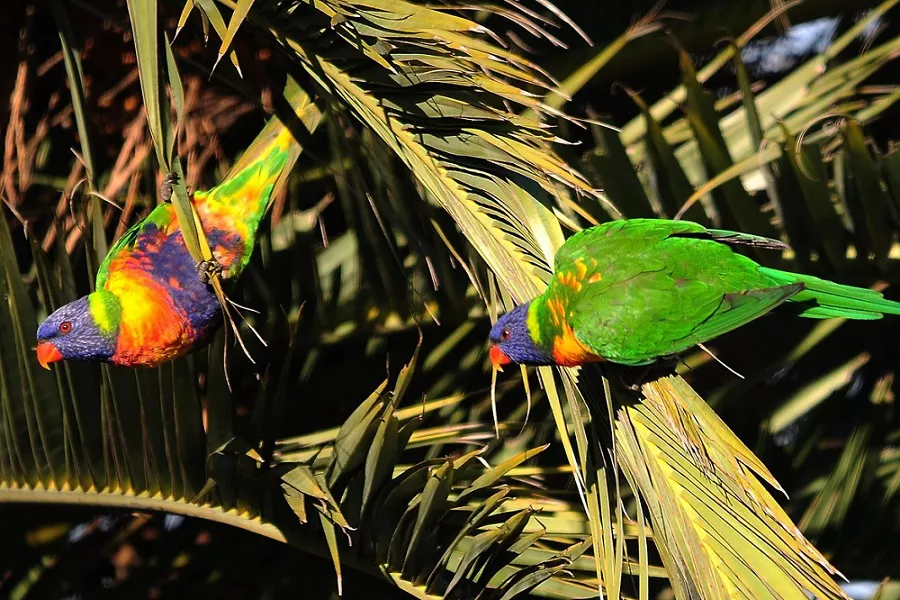
If you’ve ever seen a brightly colored lorikeet darting through tropical forests or feeding noisily in flowering trees, you may have wondered whether it was a Coconut Lorikeet or a Rainbow Lorikeet. These two parrots belong to the lorikeet group and share many similarities, including their vibrant plumage, brush-tipped tongues, and love of nectar. However, despite their close relationship, several important differences set them apart.
In this guide, we’ll compare the Coconut Lorikeet and Rainbow Lorikeet in detail, including their appearance, distribution, habitat, behavior, diet, vocalizations, and conservation status.
Quick Comparison: Coconut Lorikeet vs Rainbow Lorikeet
| Feature | Coconut Lorikeet | Rainbow Lorikeet |
|---|---|---|
| Scientific Name | Trichoglossus haematodus | Trichoglossus moluccanus |
| Average Length | 25–30 cm (10–12 in) | 25–30 cm (10–12 in) |
| Weight | 90–150 g | 75–157 g |
| Native Range | Indonesia, Papua New Guinea, Solomon Islands and nearby islands | Australia |
| Main Colors | Green body with variable blue, red, yellow, and orange markings | Bright blue head, orange-red breast, green wings |
| Habitat | Tropical forests, coconut plantations, coastal woodlands | Forests, woodlands, urban parks, gardens |
| Conservation Status | Least Concern | Least Concern |
| Popularity in Aviculture | Moderate | Very Popular |
What Is a Coconut Lorikeet?
The Coconut Lorikeet (Trichoglossus haematodus) is a colorful parrot belonging to the lorikeet group, known for its bright plumage, playful behavior, and specialized brush-tipped tongue used for feeding on nectar and pollen.
Key Characteristics of Coconut Lorikeets
- Predominantly green plumage
- Highly variable coloration depending on location
- Blue or purple head in many populations
- Red-orange beak
- Brush-tipped tongue adapted for nectar feeding
- Agile and highly social behavior
One of the most fascinating aspects of Coconut Lorikeets is their remarkable geographic variation. Birds from different islands can look surprisingly different from one another, making identification challenging even for experienced birdwatchers.
What Is a Rainbow Lorikeet?
The Rainbow Lorikeet (Trichoglossus moluccanus) is one of Australia’s most recognizable and beloved parrots. Famous for its vivid rainbow-like coloration, it is commonly seen in parks, gardens, forests, and urban areas across eastern and northern Australia.
Key Characteristics of Rainbow Lorikeets
- Bright royal-blue head
- Orange to red breast with yellow bands
- Green wings and back
- Long green tail
- Red-orange beak
- Loud, energetic personality
Their colorful appearance and playful nature have made them one of the most photographed bird species in Australia.
Appearance Differences Between Coconut Lorikeet and Rainbow Lorikeet
For most birdwatchers, plumage is the easiest way to distinguish these species.
Coconut Lorikeet Appearance
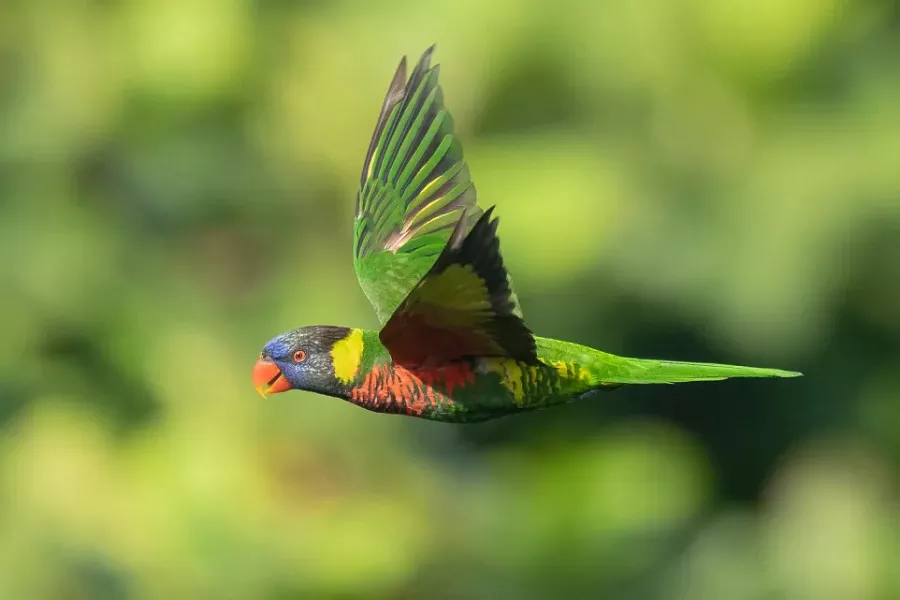
Rainbow Lorikeet in flight
The Coconut Lorikeet displays substantial variation across its range.
Depending on the subspecies or island population, individuals may exhibit:
- Green body plumage
- Blue, purple, or greenish heads
- Variable breast coloration
- Yellow or orange markings on the neck
- Different amounts of red on the chest
Because of this diversity, two Coconut Lorikeets from different islands may appear less similar to each other than either does to a Rainbow Lorikeet.
Rainbow Lorikeet Appearance
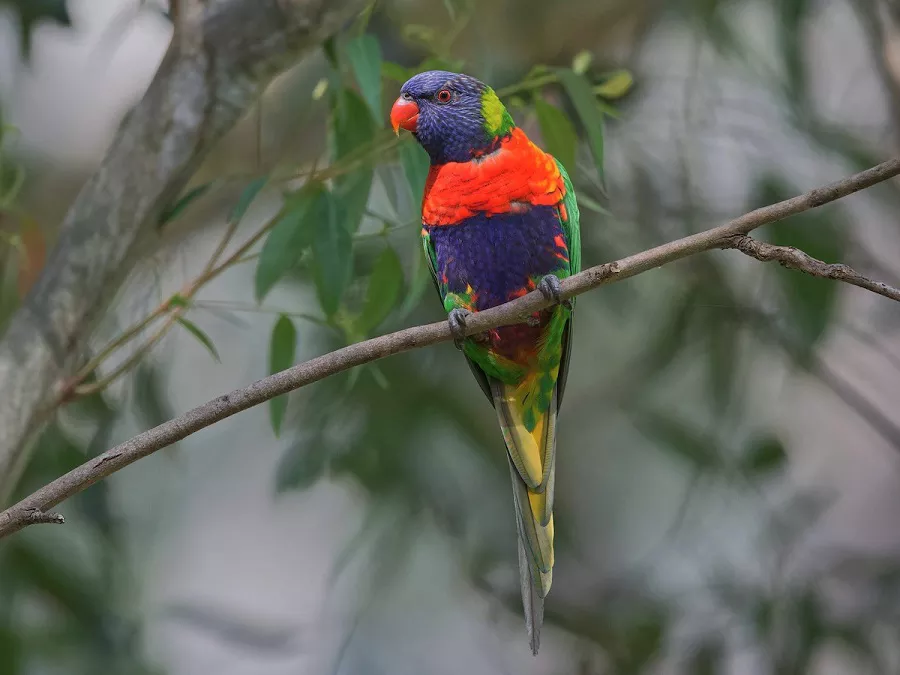
Rainbow Lorikeet on the branch
Rainbow Lorikeets are more consistent in appearance.
Typical adults show:
- Deep blue head and face
- Bright orange-red breast
- Yellow breast band
- Green wings and back
- Green tail
- Red-orange beak
The striking combination of blue, orange, yellow, and green creates the classic “rainbow” appearance from which the species gets its name.
Identification Tip
If you see a lorikeet with a clearly defined blue head and bright orange chest in Australia, it is most likely a Rainbow Lorikeet.
If you encounter a lorikeet on islands in Indonesia, Papua New Guinea, or the Solomon Islands with more variable coloration, it is likely a Coconut Lorikeet.
Geographic Distribution
Geography is one of the most reliable clues for identification.
Where Do Coconut Lorikeets Live?
Coconut Lorikeets occur across:
- Eastern Indonesia
- Papua New Guinea
- Bismarck Archipelago
- Solomon Islands
- Numerous smaller Pacific islands
Their distribution covers thousands of islands, contributing to the species’ extensive color variation.
Where Do Rainbow Lorikeets Live?
Rainbow Lorikeets are native primarily to:
- Eastern Australia
- Queensland
- New South Wales
- Victoria
- South Australia (introduced populations)
Introduced populations have also become established in:
- Western Australia
- Tasmania
- New Zealand
- Parts of Asia
Their adaptability has allowed them to thrive in many environments outside their native range.
Habitat Preferences
Although both species prefer flowering trees, their habitats differ somewhat.
Coconut Lorikeet Habitat
Coconut Lorikeets commonly inhabit:
- Tropical rainforests
- Coastal forests
- Mangroves
- Coconut plantations
- Secondary growth forests
- Island woodlands
The species often remains closely associated with tropical island ecosystems.
Rainbow Lorikeet Habitat
Rainbow Lorikeets occupy:
- Eucalyptus forests
- Woodland habitats
- Urban parks
- Residential gardens
- Agricultural areas
- Coastal regions
Their ability to exploit urban resources has contributed significantly to population growth.
Diet and Feeding Behavior
Both species are specialized nectar feeders.
Shared Diet
Like all lorikeets, they possess unique brush-like tongues that help collect nectar and pollen.
Their diet includes:
- Flower nectar
- Pollen
- Fruits
- Berries
- Seeds
- Blossoms
- Occasional insects and larvae
Coconut Lorikeet Feeding Habits
Coconut Lorikeets frequently feed from:
- Coconut palms
- Native tropical flowering trees
- Island fruiting plants
They often travel in flocks between feeding locations.
Rainbow Lorikeet Feeding Habits
Rainbow Lorikeets feed heavily on:
- Eucalyptus blossoms
- Grevillea flowers
- Bottlebrush flowers
- Fruit trees
- Urban garden plants
Their willingness to exploit ornamental plants has helped them flourish in cities.
Behavior and Personality
Both species are intelligent, social parrots.
Coconut Lorikeet Behavior
Common behavioral traits include:
- Highly active movement
- Strong flocking tendencies
- Frequent social interactions
- Agile climbing ability
- Fast, direct flight
In remote island habitats, they often travel in noisy groups searching for flowering trees.
Rainbow Lorikeet Behavior
Rainbow Lorikeets are known for being:
- Extremely vocal
- Curious
- Playful
- Bold around humans
- Territorial around food sources
Urban residents often recognize them by their loud screeching calls and energetic antics.
Vocalizations
Lorikeets are not quiet birds.
Coconut Lorikeet Calls
Coconut Lorikeets produce:
- Sharp screeches
- Chattering calls
- Contact calls within flocks
- High-pitched whistles
Their calls help maintain flock cohesion in dense tropical forests.
Rainbow Lorikeet Calls
Rainbow Lorikeets are among Australia’s loudest parrots.
Their vocal repertoire includes:
- Harsh screeches
- Rapid chatter
- High-pitched squeals
- Social contact calls
Large communal roosts can generate considerable noise at dawn and dusk.
Breeding and Nesting
The breeding biology of both species is broadly similar.
Nest Sites
Both species typically nest in:
- Tree hollows
- Natural cavities
- Palm trunks
- Dead branches
Egg Clutch Size
A typical clutch contains:
- 1–3 eggs
- Usually 2 eggs
Chick Development
- Incubation lasts approximately 24–27 days.
- Chicks remain in the nest for about 7–8 weeks.
- Both parents participate in chick care.
Are Coconut Lorikeets and Rainbow Lorikeets Related?
Yes.
Both species belong to the genus Trichoglossus and are closely related.
For many years, scientists classified them as part of the same species complex. Advances in genetic research, vocal analysis, and geographic studies eventually led researchers to separate several populations into distinct species.
This taxonomic revision explains why older bird guides may still treat Coconut Lorikeets and Rainbow Lorikeets differently than modern references.
Which Species Makes a Better Pet?
Both species can be kept in captivity where legal, but they present unique challenges.
Coconut Lorikeet as a Pet
Pros:
- Intelligent
- Attractive coloration
- Social nature
Cons:
- Specialized nectar diet
- High maintenance
- Loud vocalizations
- Messy droppings
Rainbow Lorikeet as a Pet
Pros:
- Highly interactive
- Entertaining personality
- Strong bond with owners
Cons:
- Very noisy
- Requires daily attention
- Specialized feeding requirements
- Can become territorial
Potential owners should understand that lorikeets require more specialized care than many other parrot species.
Conservation Status
Coconut Lorikeet Conservation
The Coconut Lorikeet is currently classified as Least Concern.
However, local populations may face threats from:
- Habitat loss
- Logging
- Agricultural expansion
- Illegal trapping
Rainbow Lorikeet Conservation
Rainbow Lorikeets are also listed as Least Concern.
In many areas, populations remain stable or increasing due to their adaptability and success in urban environments.
Conclusion
At first glance, Coconut Lorikeets and Rainbow Lorikeets appear remarkably similar. Both are energetic nectar-feeding parrots with brilliant plumage, strong social bonds, and impressive intelligence. However, a closer look reveals important differences in appearance, geographic range, habitat preferences, and taxonomy.
The Rainbow Lorikeet is the iconic Australian species recognized for its unmistakable blue head and orange breast. The Coconut Lorikeet, meanwhile, represents a diverse group of island populations spread across Southeast Asia and the Pacific, displaying a remarkable range of color variations.
Frequently Asked Questions (FAQ)
Is a Coconut Lorikeet the same as a Rainbow Lorikeet?
No. They are separate species, although they are closely related and were once classified together within a broader species complex.
Which bird is more colorful?
Most people consider the Rainbow Lorikeet more consistently colorful due to its bright blue head and vivid orange-red chest. Coconut Lorikeets can also be highly colorful, but their appearance varies significantly across different populations.
Can Coconut Lorikeets and Rainbow Lorikeets interbreed?
Because they are closely related, hybridization may be possible under captive conditions. However, natural hybridization is uncommon due to their largely separate geographic ranges.
Which species is louder?
Rainbow Lorikeets are generally regarded as louder and more vocal, particularly in urban environments where large flocks gather.
 Facebook
  Instagram
  Youtube
 English
  Spanish