
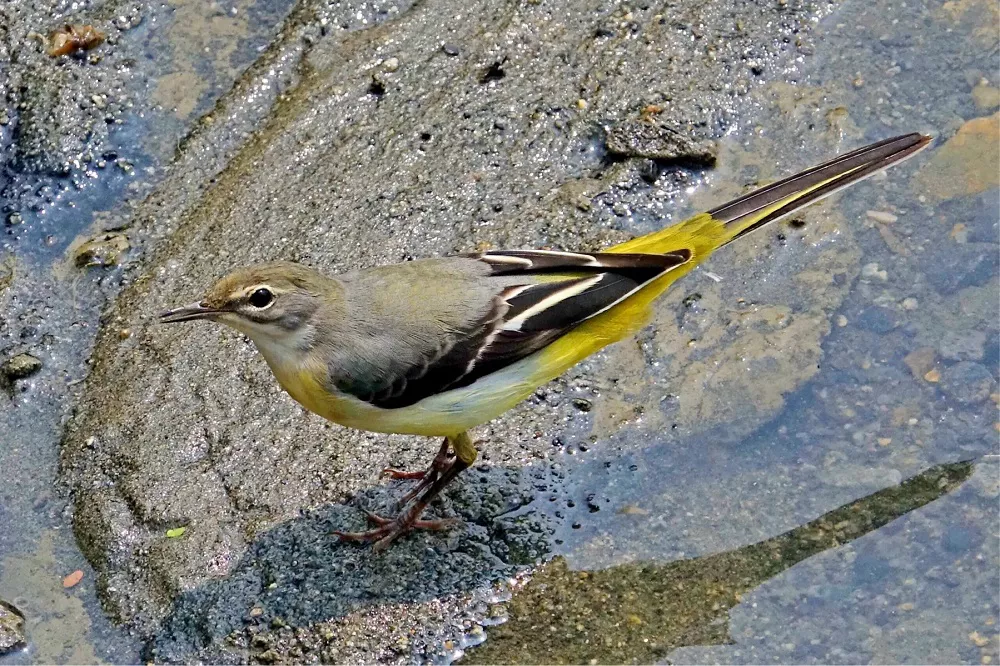
Wagtails are a group of small, slender birds belonging to the family Motacillidae. They are elegant in appearance and are known for their constantly wagging tails and lively, active behavior. Among them, the Grey Wagtail and the Yellow Wagtail are often confused due to their similar size and somewhat overlapping plumage colors. However, they differ markedly in habitat, appearance, behavior, and geographic distribution.
With over a decade of experience observing wagtails in different environments, I will explain these differences in a clear and practical way. This guide is designed for beginners and experienced bird lovers alike.
Overview of Grey Wagtail and Yellow Wagtail
Grey Wagtail
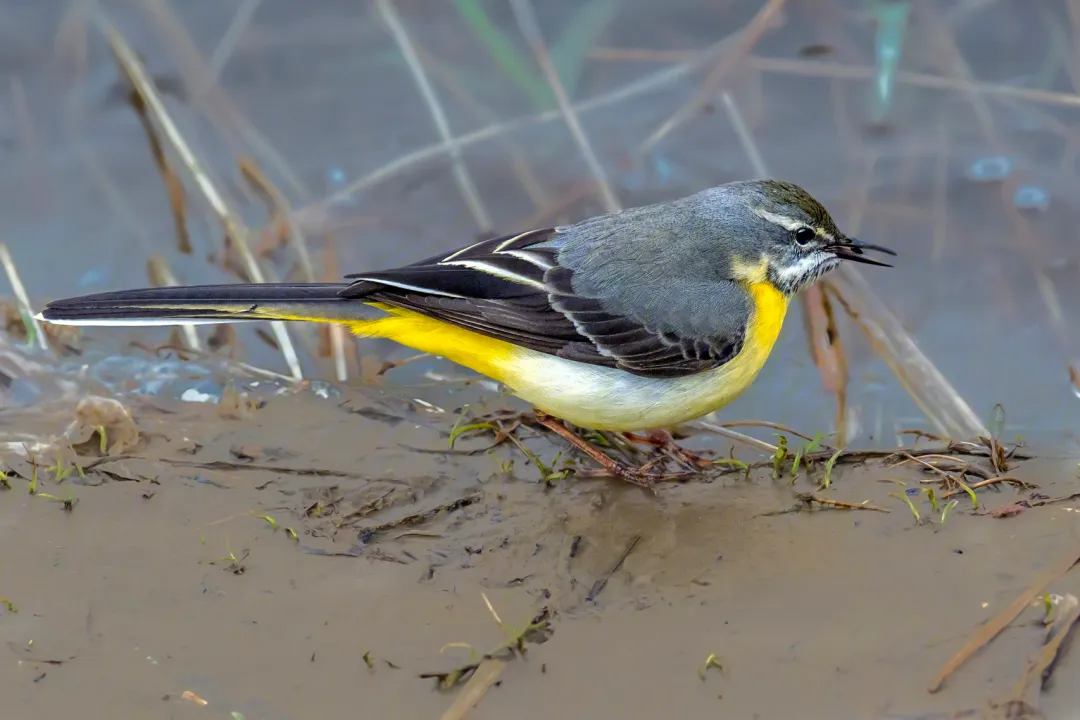
The Grey Wagtail (Motacilla cinerea) is a long-tailed, elegant bird commonly found near fast-flowing water such as streams and rivers. Despite its name, it is not entirely grey; in fact, it has a bright yellow underside.
Yellow Wagtail
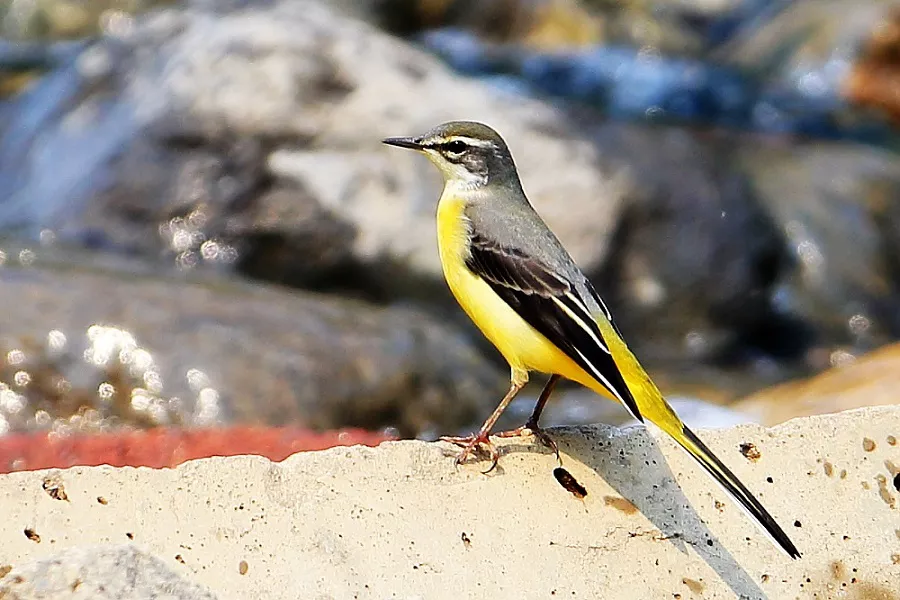
The Yellow Wagtail (Motacilla flava) is a highly variable species known for its bright yellow plumage and multiple subspecies. It prefers open fields and grasslands rather than water edges.
Key Differences at a Glance
| Feature | Grey Wagtail | Yellow Wagtail |
|---|---|---|
| Scientific Name | Motacilla cinerea | Motacilla flava |
| Upper body | Grey or slate-grey | Greenish-yellow to olive-green |
| Face | Darker face with a white eyebrow stripe | More yellow face with a darker eye-stripe |
| Underparts | Bright yellow under tail and belly | Yellow underparts overall |
| Tail | Longer, with white outer edges | Shorter than Grey Wagtail |
| Habitat | Fast-flowing water, rivers, streams | Open grassland, wet meadows, marshes, farmland |
| Seasonal presence | Present in many areas year-round or with local movement | Often a summer visitor in temperate regions, winters farther south |
Plumage Differences
The most important difference is color. The Grey Wagtail has grey upperparts, blackish wings, and a bright yellow underside. Males often show a black throat bib, which makes the bird look even more contrasty.
The Yellow Wagtail is brighter and more uniform in appearance. It usually has olive-green or yellow-green upperparts and yellow underparts. Many individuals also show a yellow eyebrow and a dark eye stripe. Compared with the Grey Wagtail, it tends to look warmer, softer, and more yellow overall.
Tail Shape
Tail shape is one of the best field marks. The Grey Wagtail has a notably long tail, and birders often notice how it bobs up and down almost constantly. Its tail also shows white on the outer feathers.
The Yellow Wagtail has a shorter tail in comparison. It still wags its tail, as wagtails do, but the tail often looks less long and less dramatic than the Grey Wagtail’s. If you are watching a bird near water and it seems long-tailed and slender with a strong bobbing motion, that points toward Grey Wagtail.
Body Shape
The Grey Wagtail often looks a little more compact and crouched. Birders sometimes describe its posture as low and agile. This is useful when comparing it with the Yellow Wagtail, which can appear taller and more upright.
The Yellow Wagtail often looks more like a pipit in posture. It stands a bit straighter, especially in open fields or wet meadows. This is not an absolute rule, but it helps when color alone is not enough.
Habitat
Habitat is one of the most reliable clues. Grey Wagtails are strongly linked to running water. They are often found along streams, rivers, and small watercourses, where they hunt insects and larvae. They can also turn up in parks, gardens, and urban areas, especially where water is nearby.
Yellow Wagtails prefer open, wet, and grassy landscapes. They are often seen in meadows, marshes, damp grassland, and farmland. In some regions, they also use rice fields and other agricultural land during migration or wintering.
This habitat difference is very helpful. If you see a wagtail on a rocky riverbank, the Grey Wagtail is more likely. If you see one walking through a wet field or grassland, the Yellow Wagtail becomes more likely.
Behavior
The two species also behave differently. Grey Wagtails are often more secretive and less open than Yellow Wagtails. They may stay close to cover near water and move quickly along stones, banks, or low vegetation. They are still active and alert, but they often seem more solitary or cautious.
Yellow Wagtails are usually more social. They may gather in small groups or flocks, especially during migration. They are often seen in open places, where they move more visibly across the ground. Their behavior can look more expansive and less tied to one narrow habitat than the Grey Wagtail’s.
The movement style is also slightly different. Grey Wagtails often show a very lively, undulating flight and a constant tail pump. Yellow Wagtails also wag their tails, but the overall impression is lighter and less steeply tied to watery settings.
Voice
Another key difference between Grey Wagtails and Yellow Wagtails is their calls. Grey Wagtails make sharp, metallic calls. Their song is often described as sweet, high-pitched, and trilling. In the field, the call can sound quite piercing and easy to hear near moving water.
Yellow Wagtails have a softer and more melodic voice. Their calls are often less sharp than those of Grey Wagtails, and many birders notice the difference quickly once they hear both species. If you are trying to identify one by sound alone, the Grey Wagtail usually sounds harder and more metallic, while the Yellow Wagtail sounds gentler.
Migration and Seasonal Status
Seasonality helps too. In many regions, Yellow Wagtails are summer visitors and leave for wintering grounds in Africa or other southern areas. This means that if you see a yellow wagtail-like bird in winter in a temperate area, it is less likely to be a Yellow Wagtail.
Grey Wagtails have a different pattern. They may move locally with the seasons, often shifting from upland or breeding areas to lower ground in winter. In some places, they are present for a much longer part of the year than Yellow Wagtails.
This is why timing matters so much. A wagtail in April on a damp meadow could be a Yellow Wagtail. A wagtail in January by a stream is much more likely to be a Grey Wagtail.
Breeding Habits
The breeding sites are very different. Grey Wagtails usually nest near fast-flowing streams or rivers. They choose places close to water, often with rocky banks or hidden ledges. This matches their strong link to freshwater habitats.
Yellow Wagtails usually nest on the ground or in low vegetation in open habitats. Their nesting style reflects their preference for grassland and meadow landscapes. They are more exposed than Grey Wagtails, so they rely on camouflage and open-country nesting habits.
Both species generally lay several eggs and raise chicks in spring and summer. The main difference is the nesting environment and the kind of landscape they choose.
Where Confusion Happens
Many birdwatchers confuse these species for three main reasons.
First, both have yellow on the body. Second, both are slender and active. Third, both wag their tails, which is the signature movement of wagtails. Because of this, people often focus too much on yellow and ignore the back color, tail length, and habitat.
The easiest mistake is to call any yellow wagtail a Yellow Wagtail. In reality, the Grey Wagtail can look more brightly yellow on the underside than many people expect. The key is to check the upperparts, tail length, face pattern, and location.
Identification Tips
Here are some practical field tips that work well.
- Check the back first. Grey back suggests Grey Wagtail; greenish-yellow back suggests Yellow Wagtail.
- Check the habitat. Water margins strongly suggest Grey Wagtail; wet fields and grassland suggest Yellow Wagtail.
- Check the tail. Grey Wagtail usually has the longer tail.
- Check the face. Grey Wagtail often shows a white eyebrow and darker face; Yellow Wagtail usually shows more yellow
- on the face with a darker eye-stripe.
- Check the season. Winter birds in temperate areas are more likely to be Grey Wagtails.
- Listen to the call. Grey Wagtail sounds sharper and more metallic; Yellow Wagtail sounds softer and more melodic.
These clues work best together. Do not rely on just one feature, because individual birds can vary.
Why They Matter
For birders, learning this difference improves identification accuracy. It also helps you understand how birds adapt to different habitats. The Grey Wagtail is closely tied to water, while the Yellow Wagtail is a bird of open country and seasonal movement.
For nature lovers, the comparison is also a good example of why bird names can be misleading. The Grey Wagtail is not simply “grey,” and the Yellow Wagtail is not just “yellow.” Both species are more complex and more beautiful than their common names suggest.
Final Practical Rule
If the bird is by a stream, has a grey back, a very long tail, and a yellow belly, it is probably a Grey Wagtail. If the bird is in a damp meadow or open field, looks greener-yellow overall, and seems more upright, it is probably a Yellow Wagtail.
 Facebook
  Instagram
  Youtube
 English
  Spanish