
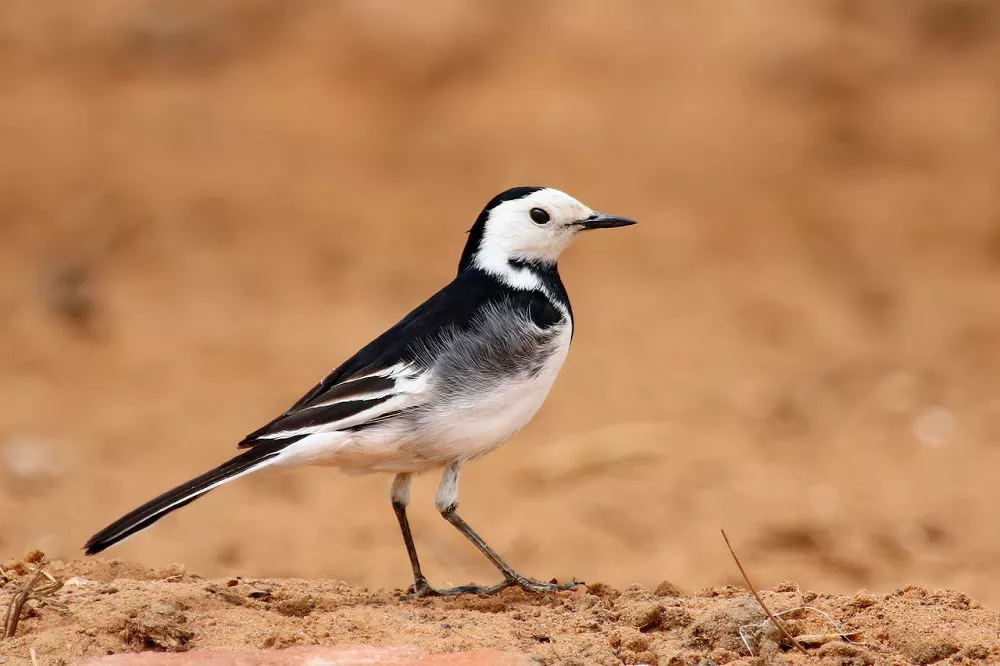
Wagtails are small, active birds known for their constant tail-wagging behavior. Among them, two species often confuse birdwatchers: the Pied Wagtail and the White Wagtail. At first glance, they look very similar. However, there are clear differences in appearance, distribution, behavior, and classification.
This guide breaks down their physical features, behaviors, habitats, and more.
Introduction to Wagtails
Wagtails belong to the Motacillidae family, a group of small passerine birds known for their slender bodies and constantly wagging tails. This tail movement is believed to help flush insects from the ground and may also serve as a communication signal.
Among the many wagtail species, the Pied Wagtail and the White Wagtail are the most commonly confused. While they are closely related, the Pied Wagtail is actually considered a subspecies of the White Wagtail.
Scientific Classification
| Feature | Pied Wagtail | White Wagtail |
|---|---|---|
| Scientific Name | Motacilla alba yarrellii | Motacilla alba |
| Taxonomic Status | Subspecies | Species |
| Family | Motacillidae | Motacillidae |
| Distribution | Primarily the United Kingdom | Europe, Asia, parts of Africa |
Physical Appearance
Plumage Differences
Male Pied Wagtails show jet-black backs, crowns, and bibs in breeding season. Females have grey backs instead of black. Both have white cheeks, foreheads, and bellies.
White Wagtails display paler grey backs. Their bellies stay very white with clean flanks. The nape blends smoothly into the mantle, unlike the sharp contrast in Pieds.
In winter, both fade. Pieds keep darker nape and smokey-grey flanks. Whites look crisper overall due to earlier moult.
Size and Structure
Both measure 16-18 cm long with similar wingspans of 25-30 cm. Weights range from 17-25 grams. Pieds appear bulkier on the ground due to bolder contrasts.
Tails stay long and narrow in both. They flick constantly. Legs look slender and stilt-like for ground running.
Wing patterns differ slightly. Pied Wagtail have broad white edges on greater coverts. White Wagtail show narrower bars.
Plumage Variations
Breeding Season
Breeding males provide the clearest split. Pied Wagtail males turn glossy black on back and head. White Wagtail males keep pale grey mantles with black crowns that fade into nape.
Females mimic males but softer. Pied Wagtail females grey out the black areas. White Wagtail females show even cleaner white underparts.
Juveniles confuse beginners. First-winter Pied Wagtail pale like White Wagtail but keep black rumps. Check uppertail coverts: black in Pied Wagtail, grey in White Wagtail.
Non-Breeding Season
Winter brings subtlety. Pied Wagtail retain blackish nape blending to grey back. Flanks gain dark grey wash.
White Wagtail moult earlier, by late August. They arrive in UK with fresh, unmarked plumage. Pied Wagtail moult into September, looking scruffier.
Rump color clinches it. Pied Wagtail always black. White Wagtail dark grey.
Behavioral Traits
Pied Wagtails act bold and aggressive. They chase intruders from lawns. White Wagtails seem shyer, less confrontational.
Both run fast, tail-pumping while hunting flies. Pied Wagtails call with sharp “chi-sik.” White Wagtails give softer “chit-it.”
Flight undulates in both. Pied Wagtails roost communally on roofs in winter, up to thousands.
Vocalizations
Calls differ subtly. Pied Wagtail’s “chirrup” sounds explosive. White Wagtail’s call softer, more melodic.
Songs rare on ground. Males sing from perches in spring. Both deliver short, twittery phrases.
Listen during migration. White Wagtails pass quietly; Pied Wagtails chatter boldly.
Habitat Preferences
Pied Wagtails thrive near humans. They favor short grass, farms, parks, and urban edges. Open ground suits their hunting style.
White Wagtails pick wetter spots. Riversides, marshes, and meadows host breeders. UK sightings cluster on coasts during migration.
Both avoid dense woods. They need space to spot insects.
Geographic Distribution
Pied Wagtails dominate Britain and Ireland year-round. Numbers peak in lowlands; scarcer on moors.
White Wagtails breed from France eastward. UK visitors migrate from Iceland or Scandinavia to Africa. Spring peaks April-May; fall September-October.
In Europe, ranges overlap. Hybrids rare. Climate shifts may expand White Wagtails westward.
Migration Patterns
Pied Wagtails mostly resident. Northern UK birds move south mildly. Core population stays put.
White Wagtails fully migrate. Long journeys demand early moult for peak fitness. Iceland birds cross Atlantic gaps.
Breeding and Nesting
Breeding starts April. Both lay 5-6 eggs in cup nests. Sites include holes, hedges, or buildings.
Pied Wagtails reuse urban spots. Double-brood common. Incubation 13 days; fledging 15 days.
White Wagtails nest streamside. Similar clutch size. Migrants breed later northwards.
Eggs creamy with brown spots. Chicks fed insects nonstop.
Diet and Foraging
Insects dominate. Flies, beetles, caterpillars snatched from ground. Both hover-catch mid-air.
Pied Wagtails exploit mown lawns. Urban lights draw night insects.
White Wagtails forage damper soils. Less tied to man-made habitats.
Population and Conservation
UK Pied Wagtails stable at 500,000 pairs. Roosts show urban success.
White Wagtail stable continent-wide. UK passage birds unprotected specially.
Threats include pesticides cutting insects. Both adaptable.
In conclusion, while the pied wagtail and the white wagtail may appear similar at first glance, there are several key differences that distinguish them. These differences include their plumage, habitat, behavior, and migration patterns. By paying attention to these distinguishing features, birdwatchers and nature enthusiasts can easily tell the difference between the two species.
Frequently Asked Questions (FAQs)
1. Are Pied Wagtails and White Wagtails the same species?
Yes, the Pied Wagtail is a subspecies of the White Wagtail (Motacilla alba). Despite this, they are commonly treated as separate birds for identification purposes.
2. Can you see both species in the UK?
Yes, although the Pied Wagtail is far more common. White Wagtails are typically seen during migration periods.
3. Why do wagtails wag their tails?
The tail-wagging behavior likely helps flush insects from the ground and may also serve as a communication mechanism.
4. Do these birds migrate?
Pied Wagtails are mostly resident, while White Wagtails are strongly migratory.
 Facebook
  Instagram
  Youtube
 English
  Spanish