
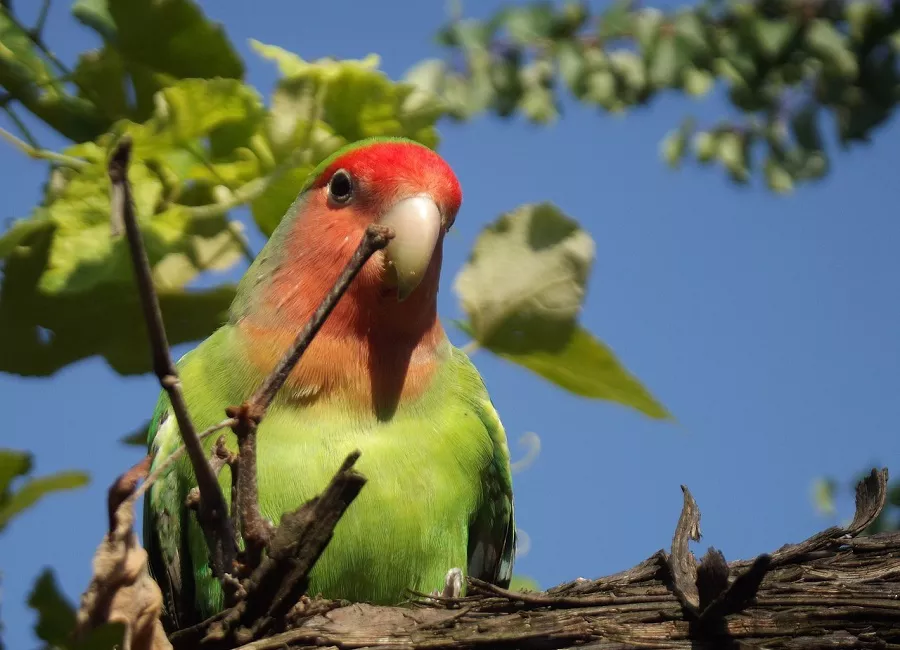
Lovebirds are among the most popular pet birds in the world because of their beautiful colors, affectionate personalities, and strong social bonds. However, many owners wonder: How can you tell if a lovebird is male or female?
Unlike some bird species with obvious differences between males and females, most lovebirds are sexually monomorphic, meaning males and females usually look very similar. This makes identifying a lovebird’s gender challenging, especially for inexperienced owners.
In this article, we will explain the most reliable ways to determine whether a lovebird is male or female, including physical clues, behavioral differences, DNA testing, and professional methods.
1. Check the Lovebird’s Pelvic Bones (A Common Breeder Method)
One of the traditional methods used by experienced breeders is checking the distance between the pelvic bones.
Female lovebirds generally need a wider pelvic area because they lay eggs. As a result:
Female lovebird characteristics:
- Pelvic bones may feel slightly wider apart
- The area below the abdomen may feel broader
- The body may appear slightly rounder
Male lovebird characteristics:
- Pelvic bones are usually closer together
- Body shape may appear slimmer
- The abdomen area is often narrower
However, this method requires experience and should be done gently. Young birds, overweight birds, and birds that have never laid eggs may not show clear differences.
Accuracy: Moderate
2. Observe Lovebird Behavior
Behavior can provide useful clues, especially in adult birds.
Male Lovebird Behavior
Male lovebirds are often described as:
- More likely to perform courtship displays
- More likely to feed their mate by regurgitating food
- Often more willing to approach humans
- Frequently involved in singing and playful behaviors
A male may also perform movements such as:
- Head bobbing
- Gentle tapping with the beak
- Dancing around another bird
These behaviors are usually part of courtship.
Female Lovebird Behavior
Female lovebirds often show stronger nesting instincts.
Common female behaviors include:
- Shredding paper or nesting materials
- Carrying materials under their feathers
- Spending more time arranging a nest
- Becoming territorial around nesting areas
Female lovebirds can also be more protective of their cage or favorite areas.
However, personality differences can make behavior unreliable. Some males may behave like females, and some females may show male-like behaviors.
Accuracy: Low to Moderate
3. Look at Nesting Behavior
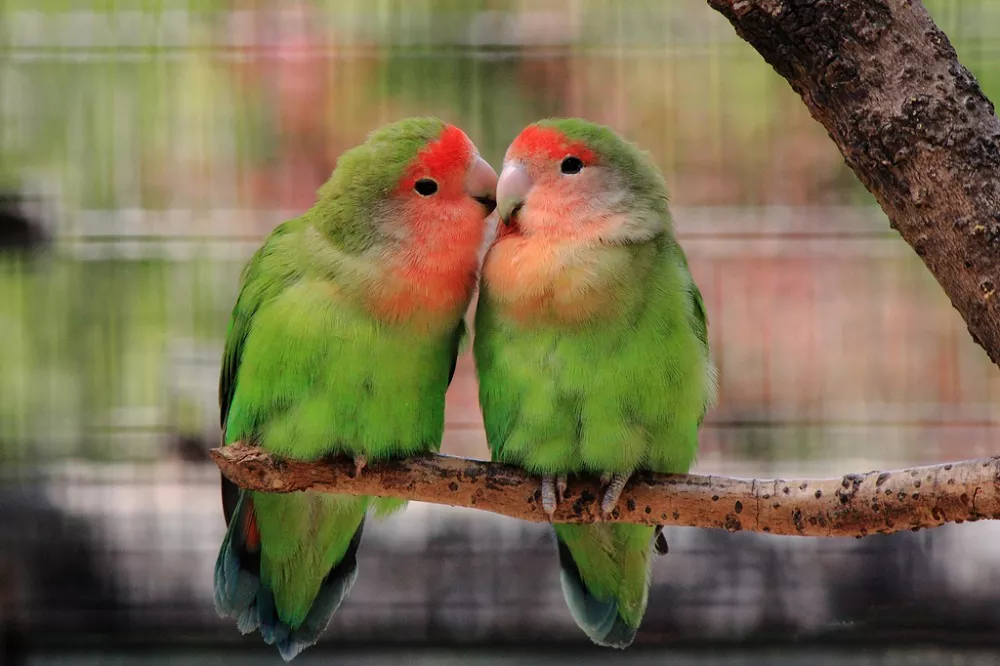
Nesting habits are one of the more noticeable differences between male and female lovebirds.
Female lovebirds are usually responsible for nest preparation.
A female may:
- Tear leaves, paper, or soft materials into strips
- Carry nesting materials back to a chosen location
- Spend hours organizing nesting areas
Many female lovebirds have a unique habit of tucking nesting material between their feathers before carrying it away.
Male lovebirds usually participate less in nest building, although they may help by bringing food to the female.
Accuracy: Moderate
4. Compare Body Shape and Size
Although not a guaranteed method, experienced bird owners sometimes notice differences in body structure.
Female lovebirds often have:
- A slightly wider body
- A broader stance
- A larger-looking head
- A rounder abdomen
Male lovebirds often have:
- A slimmer body shape
- A narrower head profile
- A more streamlined appearance
These differences are subtle and vary between species.
For example, differences may be easier to notice in:
- Peach-faced Lovebirds
- Fischer’s Lovebirds
- Masked Lovebirds
but much harder in some color mutations.
Accuracy: Low
5. DNA Testing: The Most Accurate Method
For owners who need a definite answer, DNA sex testing is the most reliable method.
DNA testing can determine a lovebird’s gender using:
- A small feather sample
- A blood sample
- Other genetic material
Benefits of DNA testing:
- Accuracy is usually above 99%
- Works for young birds
- Not affected by behavior or appearance
- Suitable for all lovebird species
DNA testing is especially recommended for:
- Breeders
- Owners planning breeding programs
- People keeping multiple lovebirds
- Owners who need to confirm gender before naming or pairing birds
Accuracy: Very High
Conclusion
Determining whether a lovebird is male or female can be difficult because most species look nearly identical. Traditional methods such as observing behavior, checking body shape, and examining pelvic bones may provide hints, but they are not completely reliable.
For a definite answer, DNA testing remains the most accurate and recommended method.
Whether your lovebird is male or female, providing proper nutrition, social interaction, enrichment, and veterinary care is the most important part of keeping these intelligent and affectionate birds healthy.
FAQs About the Lovebirds
Q: How big do lovebirds grow?
A: Lovebirds are relatively small parrots, typically ranging in size from 5 to 7 inches (13 to 18 cm) in length, depending on the specific species.
Q: Are lovebirds social birds?
A: Yes, lovebirds are highly social birds that thrive on companionship. They are known for forming strong bonds with their mate or a close companion, and they can become quite attached to humans if hand-raised from a young age.
Q: What do lovebirds eat?
A: Lovebirds primarily eat a diet consisting of seeds, fruits, vegetables, and occasionally some protein sources like eggs. Providing a balanced diet is important for their health and longevity.
See Also: What Foods Can Lovebirds Not Eat
Q: How long do lovebirds live?
A: The lifespan of lovebirds can vary depending on factors such as species and care. On average, lovebirds can live anywhere from 10 to 15 years, with proper care and attention.
Q: At what age can you tell a lovebird’s gender?
A: DNA testing can identify gender at almost any age. Behavioral differences usually become clearer after sexual maturity, often around 6–12 months depending on species and individual development.
 Facebook
  Instagram
  Youtube
 Spanish
  English