
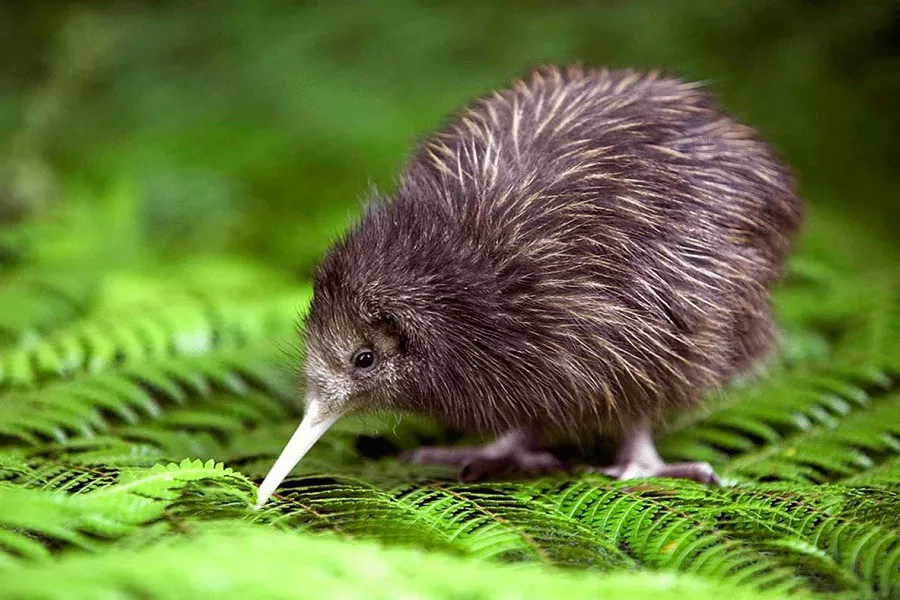
Yes, kiwi birds are native to New Zealand and are endemic to the country in their natural distribution. These unusual, flightless birds are among New Zealand’s most recognizable native animals. They have long, slender bills, strong legs, loose, hair-like feathers, and a remarkable sense of smell. Although kiwi share some characteristics with other flightless birds, their biology and evolutionary history make them a distinctive part of New Zealand’s biodiversity.
But why are kiwi birds associated so closely with New Zealand? Where did they come from, and can they live naturally in other countries? Understanding their distribution, evolution, and adaptations helps explain what makes these birds so special.
Why Are Kiwi Birds Native to New Zealand?
Kiwi birds are native to New Zealand because their natural populations belong to the country’s indigenous wildlife. They are also endemic to New Zealand, meaning that all five living kiwi species occur naturally nowhere else in the world. The New Zealand Department of Conservation recognizes kiwi as endemic native birds.
The terms native and endemic have related but different meanings.
- Native: A species occurs naturally in a particular region rather than arriving there through human introduction.
- Endemic: A species is naturally restricted to a particular geographical area.
For example, a bird may be native to several countries without being endemic to any one of them. Kiwi are different because their natural distribution is restricted to New Zealand.
New Zealand’s long geographic isolation has played an important role in shaping its wildlife. Over millions of years, native species developed in ecosystems that differed from those found on many other landmasses.
Before humans arrived, New Zealand had very few native land mammals. Bats were the principal native terrestrial mammals, creating ecological opportunities for birds to occupy roles filled by mammals elsewhere. Kiwi evolved as ground-dwelling birds that search for food among leaf litter and soil.
Their unusual adaptations make them especially well suited to this way of life.
Where Do Kiwi Birds Live in New Zealand?
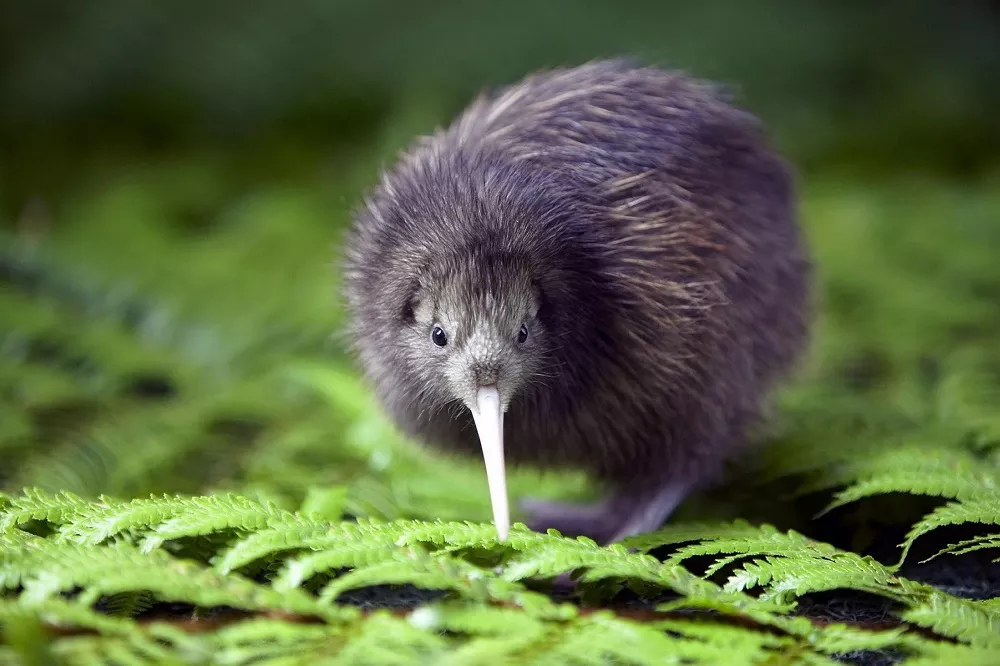
Kiwi live in several regions of New Zealand, but their distribution depends on the species. They can inhabit native forests, scrublands, mountainous areas, and other suitable habitats. Some populations also survive in managed sanctuaries and on predator-free offshore islands.
North Island Kiwi Habitats
The North Island brown kiwi (Apteryx mantelli) is the kiwi species naturally associated with New Zealand’s North Island.
It occupies a variety of habitats, including lowland and coastal native forests, scrub, and some modified landscapes. Certain populations can also survive in non-native forests and areas of farmland when sufficient cover and suitable conditions remain.
Although the North Island brown kiwi is relatively widespread compared with some other kiwi species, it still faces significant threats, particularly from introduced predators and uncontrolled dogs.
South Island and Offshore Island Habitats
The South Island supports several distinctive kiwi species.
The great spotted kiwi, also known as roroa, inhabits mountainous areas in the northern part of the South Island. It is the largest living kiwi species and is associated with areas such as the Northwest Nelson region and the Paparoa Range.
The southern brown kiwi, or tokoeka, occurs in parts of the South Island and on Stewart Island/Rakiura. Different populations occupy distinct geographical areas.
The little spotted kiwi survives mainly on protected islands and at other managed sites, although a population was confirmed on the South Island’s West Coast in 2025. Rowi, also known as the Okarito brown kiwi, has a particularly restricted natural distribution in the Okarito area of the West Coast.
These differences demonstrate that kiwi are not distributed evenly throughout New Zealand. Each species has its own ecological requirements and conservation challenges.
How Did Kiwi Birds Get to New Zealand?
The evolutionary history of kiwi is more complicated than it might initially appear.
New Zealand separated from the ancient supercontinent Gondwana as the Earth’s landmasses changed over geological time. For many years, scientists explained the distribution of flightless birds by suggesting that their ancestors had already occupied Gondwana before its landmasses separated.
However, genetic research has changed how scientists understand the evolutionary history of flightless birds.
Studies of living and extinct ratites suggest that the ancestors of many modern groups could fly and that flightlessness evolved independently in different lineages. DNA comparisons have also identified Madagascar’s extinct elephant birds as the closest known relatives of kiwi, rather than the New Zealand moa.
Did Kiwi Birds Evolve in New Zealand?
Kiwi diversified into the living species found in New Zealand today. Geographic isolation within the country helped separate populations over time, allowing them to develop different genetic characteristics.
Changes in the landscape also contributed to this process. Mountains, glaciers, rivers, and stretches of sea could restrict movement between populations. Because kiwi cannot fly, such barriers can be especially significant.
Over many generations, isolated populations became increasingly distinct. Genetic research has helped scientists recognize species such as rowi and tokoeka as separate from other kiwi groups.
Nevertheless, it is important to distinguish the diversification of modern kiwi in New Zealand from the deeper evolutionary origins of their ancestors. The exact history is not completely resolved, partly because the fossil record is limited.
The evidence supports kiwi’s status as an endemic part of New Zealand’s wildlife, but it does not justify claiming that every stage of their evolutionary ancestry originated within the country’s present-day boundaries.
How Many Species of Kiwi Birds Are There?
There are five living species of kiwi, according to New Zealand’s Department of Conservation and the conservation organization Save the Kiwi. Each has its own geographical distribution and distinguishing characteristics.
| Kiwi species | Scientific name | Main distribution | Key characteristic |
|---|---|---|---|
| North Island brown kiwi | Apteryx mantelli | North Island | Adaptable to several habitats |
| Great spotted kiwi (roroa) | Apteryx haastii | Northern South Island | Largest living kiwi species |
| Little spotted kiwi (kiwi pukupuku) | Apteryx owenii | Protected islands and managed sites, with a rediscovered South Island population | Smallest living kiwi species |
| Rowi | Apteryx rowi | Okarito region, West Coast | Very restricted natural distribution |
| Southern brown kiwi (tokoeka) | Apteryx australis | Parts of the South Island and Stewart Island/Rakiura | Several distinct regional populations |
The exact status of kiwi populations can change as conservation programs succeed or new research becomes available. Taxonomic names and population boundaries should therefore be checked against current authoritative sources before publication.
Although these species share a broadly similar appearance, they differ in size, plumage, behavior, and distribution.
What Makes Kiwi Birds Unique?
Kiwi are unusual even among flightless birds. Their physical characteristics reflect a lifestyle based largely on walking, probing the ground, and searching for food under cover.
1. Kiwi Cannot Fly
Kiwi have very small wings that are hidden beneath their loose feathers. Their bodies are adapted for life on the ground rather than powered flight.
Their strong legs help them walk, run, dig, and defend themselves. Their strong legs help them walk, run, dig, and defend themselves. These adaptations make kiwi well suited to life on the ground. For a closer look at their anatomy and behavior, read our guide to whether kiwi birds can fly.
2. They Have Nostrils Near the Tip of the Bill
Most birds have nostrils closer to the base of their bills. Kiwi have nostrils near the tip, a distinctive feature that supports their unusual feeding behavior.
They use their long bills to probe the soil and leaf litter while searching for earthworms, insects, larvae, and other food. Their well-developed sense of smell helps them locate prey hidden beneath the surface.
3. Their Feathers Look Like Hair
Kiwi feathers are soft and loose, giving them a shaggy appearance that differs from the smooth, overlapping feathers of many other birds.
This appearance helps explain why a kiwi can look more like a small terrestrial mammal than a typical bird.
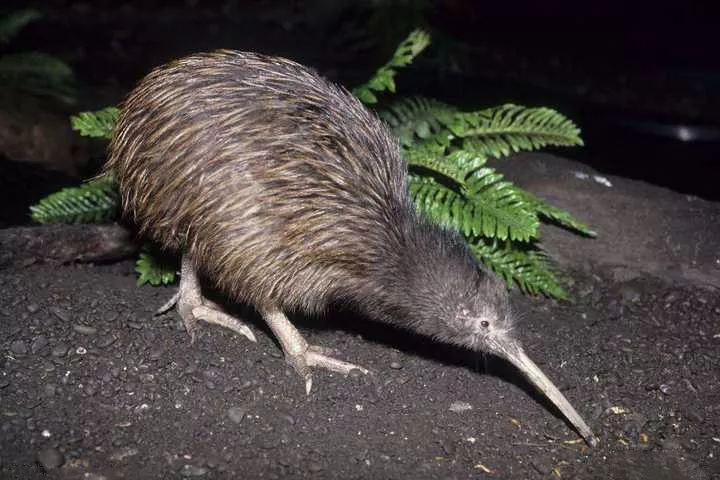
4. Kiwi Are Primarily Nocturnal
Kiwi are generally active at night, although their activity patterns can vary with habitat and circumstances.
Their strong sense of smell, good hearing, and tactile structures around the bill help them navigate and forage in low light.
5. They Lay Remarkably Large Eggs
Kiwi eggs are unusually large relative to the female’s body size. This is one of the best-known features of their reproductive biology.
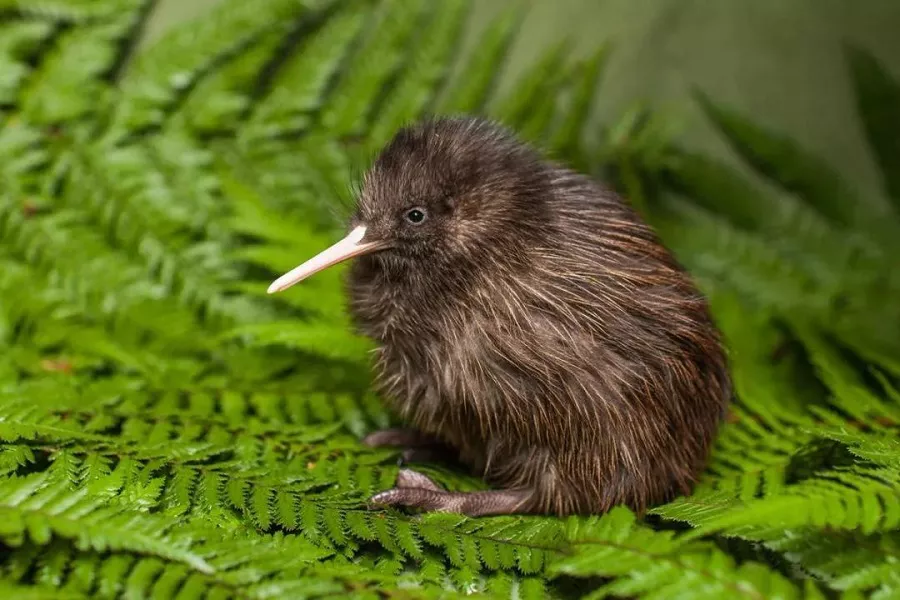
The large egg contains substantial resources for the developing chick. After hatching, kiwi chicks are relatively independent and begin leaving the nest to feed at a young age.
Together, these adaptations show how kiwi evolved a specialized way of life in New Zealand’s ecosystems.
Are Kiwi Birds Endangered?
Kiwi face serious conservation challenges, but the level of risk differs among species and populations. Learn more about whether kiwi birds are endangered and the conservation efforts helping them survive.
The New Zealand Department of Conservation reports that kiwi conservation statuses range from recovering to nationally critical under New Zealand’s conservation framework. It is therefore inaccurate to assign one identical threat category to every kiwi species.
Main Threats to Kiwi
Introduced predators: Stoats and other introduced mammals can kill kiwi chicks and threaten their survival. Dogs can also pose a major danger, particularly to adult kiwi.
Habitat loss and degradation: Changes to forests and other natural habitats can reduce the amount of suitable cover and feeding areas available to kiwi.
Small population sizes: Some species occupy restricted areas or survive in relatively small populations. This makes them more vulnerable to local threats and loss of genetic diversity.
Human-related risks: Roads, land development, uncontrolled pets, and disturbance can affect kiwi and the habitats on which they depend.
How Are Kiwi Birds Protected?
New Zealand conservation organizations use several methods to help kiwi survive.
- Predator control reduces the number of introduced mammals that threaten kiwi chicks.
- Habitat protection helps maintain suitable areas for feeding, shelter, and breeding.
- Managed transfers establish or strengthen populations at protected sites.
- Monitoring and genetic research help conservationists understand population trends and maintain genetic diversity.
- Public education encourages residents and visitors to keep dogs under control and respect wildlife protection rules.
The rediscovery of little spotted kiwi on the South Island’s West Coast, confirmed through DNA testing in 2025, also illustrates why continued field research matters. It revealed that a surviving population existed beyond the species’ previously known mainland distribution.
Protecting kiwi requires long-term cooperation among conservation agencies, local communities, landowners, and Māori groups.
Why Are Kiwi Birds Important to New Zealand?
Kiwi are important both ecologically and culturally.
As distinctive ground-dwelling birds, they form part of New Zealand’s unique natural heritage. Their feeding activities connect them with the soil ecosystem, where they search for invertebrates and other food.
Kiwi are also a widely recognized national symbol. The word *Kiwi* is commonly used as an informal name for New Zealanders, reflecting the bird’s strong place in the country’s identity.
For Māori, kiwi have cultural significance, including connections to traditional knowledge and relationships with the natural world. Specific meanings and practices can differ among iwi and communities, so these connections should be understood in their appropriate cultural contexts.
The bird’s importance extends beyond symbolism. Kiwi conservation helps protect native habitats, supports ecological restoration, and encourages people to take responsibility for New Zealand’s endemic wildlife.
Their survival also demonstrates a broader conservation principle: species that evolved in isolation can become especially vulnerable when introduced predators and rapid environmental changes disrupt their ecosystems.
Final Thoughts
Kiwi birds are native to New Zealand and are endemic to the country in their natural distribution. Their flightlessness, distinctive bills, strong sense of smell, and ground-dwelling behavior make them unlike most other birds.
FAQs About Kiwi Birds
1. Are kiwi birds originally from New Zealand?
Yes. Kiwi are native to New Zealand and are endemic to the country in their natural distribution. Their living species are associated with New Zealand’s forests, scrublands, islands, and other suitable habitats.
2. Are kiwi birds native only to New Zealand?
Yes. All five living kiwi species are naturally restricted to New Zealand. Individual birds may be kept in zoos elsewhere, but these captive populations do not change the species’ natural geographical distribution.
3. Why can kiwi birds not fly?
Kiwi have very small wings and bodies adapted for ground-dwelling life. Their strong legs help them walk, run, and forage, while their long bills and keen sense of smell help them locate food in soil and leaf litter.
4. How many kiwi species live in New Zealand?
There are five living kiwi species: North Island brown kiwi, great spotted kiwi, little spotted kiwi, rowi, and southern brown kiwi, also called tokoeka. Their distributions and conservation needs differ.
5. Can you see kiwi birds in the wild?
Yes. Kiwi survive in protected areas and other suitable habitats in New Zealand. Because they are primarily nocturnal and often shy, they can be difficult to observe. Guided nighttime wildlife experiences and conservation sanctuaries may offer opportunities to see them responsibly.
6. Do kiwi birds live in Australia?
Kiwi do not have natural populations in Australia. They are endemic to New Zealand, although individual birds may be held in overseas zoological collections.
 Facebook
 Instagram
 Youtube

 Spanish
 English