
Bird feeding is one of the easiest ways to support local wildlife while enjoying nature up close. However, feeding birds correctly requires more than simply hanging a feeder in your yard. Poor placement can lead to window collisions, predator attacks, disease spread, or birds abandoning the feeder altogether.
This is where the 5-7-9 rule for bird feeders becomes essential. It is a practical guideline used by experienced birders, wildlife biologists, and backyard enthusiasts to optimize feeder placement for bird safety, accessibility, and effectiveness.
This guide explains what the 5-7-9 rule is, why it matters.
What Is the 5-7-9 Rule for Bird Feeders?
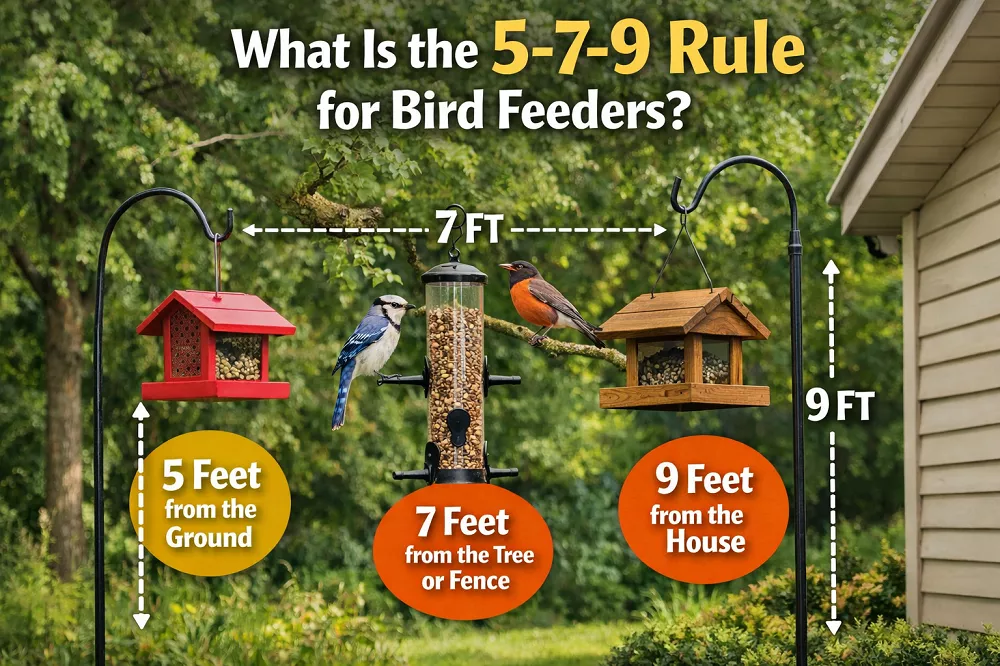
The 5-7-9 rule refers to three recommended distances for placing bird feeders:
- 5 feet from the ground
- 7 feet away from cover or structures
- 9 feet away from windows
Each number addresses a specific safety concern, including predator attacks and window collisions.
Why the 5-7-9 Rule Matters for Bird Safety
Bird feeders directly affect bird behavior. Poor placement increases the risk of injury and stress. The 5-7-9 rule helps reduce:
- Fatal window strikes
- Cat and predator attacks
- Stress caused by ambush points
- Disease spread from overcrowding
Following this rule supports ethical and responsible bird feeding.
The 5-Foot Rule: Proper Feeder Height
Placing a bird feeder about 5 feet above the ground balances safety and convenience.
At this height, birds can escape quickly, predators have limited reach, and humans can clean and refill feeders easily.
This height is ideal for common backyard birds such as finches, chickadees, sparrows, cardinals, and nuthatches.
The 7-Foot Rule: Distance From Cover
Cover includes bushes, trees, fences, sheds, and walls. Feeders should be placed about 7 feet away from cover.
This distance prevents predators from hiding and ambushing birds. It also gives birds a clear view of their surroundings.
Birds prefer feeding locations where visibility is high and escape routes are clear.
The 9-Foot Rule: Distance From Windows
Window collisions are one of the leading causes of bird deaths. Birds cannot recognize glass and may fly into reflections.
Placing feeders at least 9 feet away from windows reduces the risk of high-speed collisions.
An alternative safe option is placing feeders less than 3 feet from windows, but 9 feet remains the most widely recommended distance.
How the 5-7-9 Rule Works Together
Each part of the rule solves a different problem, but together they create a safe feeding environment.
- 5 feet high reduces predator attacks
- 7 feet from cover prevents ambush
- 9 feet from windows prevents collisions
Ignoring one part of the rule can compromise bird safety.
Does the 5-7-9 Rule Apply to All Feeders?
Most feeder types benefit from this rule, including tube feeders, suet feeders, and platform feeders.
Hummingbird feeders may have flexible height placement, but window distance remains critical.
Applying the Rule in Small Yards
If space is limited, prioritize window safety first. Use window decals, baffles, and feeder poles to compensate for reduced distance.
Even partial application of the 5-7-9 rule improves bird safety.
How the Rule Improves Bird Health
Correct feeder placement reduces stress, increases feeding time, and lowers injury risk.
Healthy feeding environments also reduce aggressive competition between birds.
Common Mistakes to Avoid
- Placing feeders too close to trees
- Ignoring window reflections
- Mounting feeders too high
- Neglecting regular cleaning
Final Thoughts
The 5-7-9 rule for bird feeders is one of the simplest yet most effective guidelines for responsible bird feeding. It improves safety, supports bird health, and enhances your bird-watching experience.
Whether you are a beginner or an experienced birder, following this rule shows respect for wildlife and contributes to a healthier backyard ecosystem.
Frequently Asked Questions About the 5-7-9 Rule
1. Is the 5-7-9 rule mandatory?
No, but it is strongly recommended for bird safety and optimal feeding success.
2. Can I adjust the distances slightly?
Yes. Yard size, bird species, and feeder type may require small adjustments.
3. Does this rule prevent squirrels?
Not entirely. Use baffles and squirrel-proof feeders for best results.
4. Does feeder placement affect bird diversity?
Yes. Proper placement attracts more species and encourages regular visits.
 Facebook
  Instagram
  Youtube
 English
  Spanish