
Barn owls are among the most fascinating birds of prey in the world. Known for their heart-shaped faces, silent flight, and incredible hunting skills, these mysterious nocturnal birds have adapted to live in a wide range of environments, from farmland and grasslands to forests and wetlands.
Whether you are a bird lover, wildlife enthusiast, or simply curious about owls, these 10 interesting facts about barn owls will help you discover what makes them such unique and remarkable birds.
1. Barn Owls Have a Unique Heart-Shaped Face
One of the most recognizable features of the barn owl is its distinctive heart-shaped facial disc. Unlike most owls with round faces, barn owls have a more elongated face that helps them collect and direct sound toward their ears.
This facial structure works like a satellite dish, allowing barn owls to detect tiny noises made by prey hidden under grass, leaves, or snow. Their excellent hearing is one of the main reasons they are such successful nighttime hunters.
2. Barn Owls Are Excellent Night Hunters
Barn owls are primarily nocturnal birds, meaning they are most active after sunset and before sunrise. Their powerful senses allow them to hunt efficiently even in complete darkness.
Their large eyes help them see in low-light conditions, while their extremely sensitive hearing allows them to locate prey without relying only on sight.
A barn owl can often detect a small mammal moving beneath vegetation and accurately strike from above.
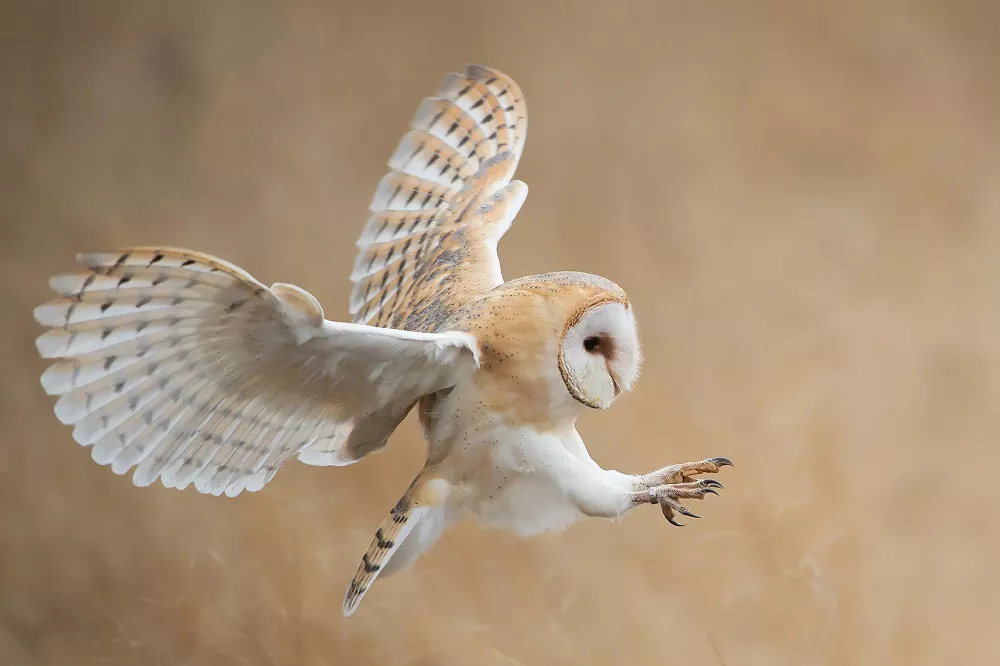
3. Barn Owls Can Fly Almost Silently
One of the most amazing barn owl facts is their ability to fly silently.
Their feathers have special adaptations that reduce noise during flight:
- Soft, fluffy feather edges help break up air turbulence.
- Serrated edges on their wing feathers reduce sound.
- Their lightweight bodies allow smooth, controlled movement.
This silent flight gives barn owls a major advantage because prey animals often cannot hear them approaching until it is too late.
4. Barn Owls Have Incredible Hearing Abilities
Barn owls have some of the best hearing abilities among all birds.
Their ears are positioned unevenly on their heads, with one ear slightly higher than the other. This asymmetrical ear placement helps them determine the exact location of sounds in three dimensions.
Even when prey is hidden beneath vegetation, a barn owl can use sound alone to calculate:
- The direction of movement
- The distance of the prey
- The precise location to strike
This ability allows them to hunt successfully in darkness.
5. Barn Owls Eat Mostly Small Mammals
Barn owls are carnivorous birds that mainly feed on small mammals. Their diet depends on the habitat they live in, but common prey includes:
- Mice
- Voles
- Rats
- Shrews
- Small rabbits
- Other small rodents
A single barn owl family can consume hundreds of rodents during a breeding season, making them valuable natural pest controllers for farmers.
6. Barn Owls Swallow Their Prey Whole
Like many birds of prey, barn owls do not chew their food. Instead, they swallow their prey whole.
Because they cannot digest fur, bones, and other hard materials, their bodies produce pellets. These compact pellets contain the indigestible parts of their meals and are later regurgitated.
Scientists and bird researchers often study barn owl pellets to learn what animals live in an area and understand local ecosystems.
7. Barn Owls Live on Almost Every Continent
Barn owls are one of the most widespread land birds in the world.
They can be found in many regions, including:
- Europe
- Africa
- Asia
- Australia
- North America
- South America
They are highly adaptable and can survive in many habitats, such as:
- Open grasslands
- Agricultural fields
- Marshes
- Deserts
- Forest edges
- Rural areas
However, they are usually absent from extremely cold polar regions and some isolated islands.
8. Barn Owls Often Nest in Buildings
Despite their name, barn owls do not only live in barns. They often choose sheltered locations that provide protection from predators and harsh weather.
Common nesting sites include:
- Old barns
- Church towers
- Abandoned buildings
- Tree cavities
- Cliffs
- Nest boxes
Barn owls do not build traditional nests. Instead, they usually lay eggs on a simple surface covered with pellets and other debris.
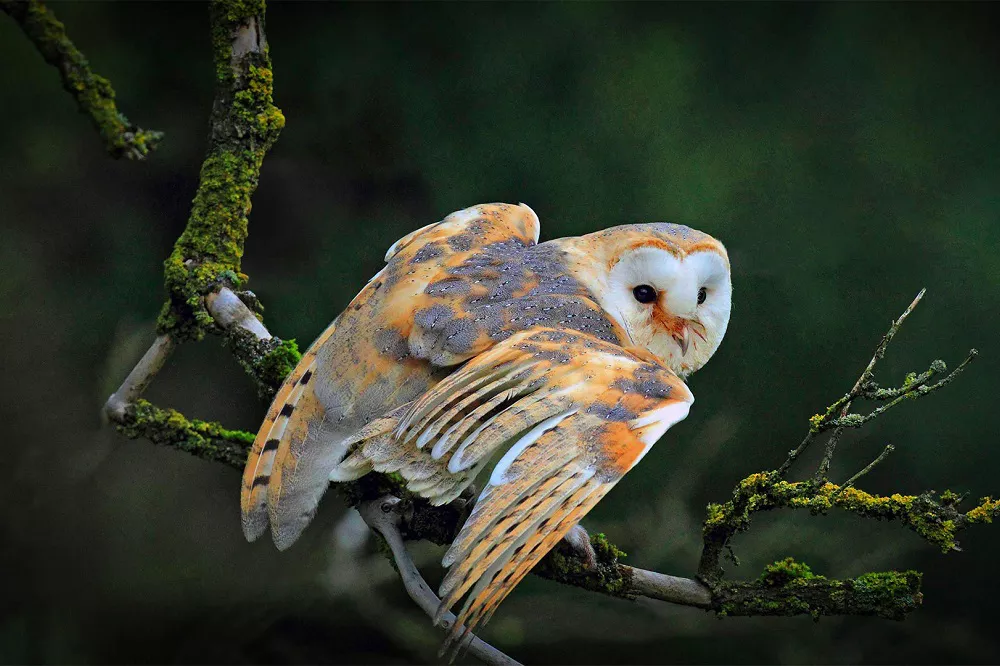
9. Barn Owls Have a Distinctive White Appearance
Barn owls have a beautiful and easily recognizable appearance.
Most barn owls have:
- A white, heart-shaped face
- Dark eyes
- Long wings
- Pale feathers underneath
- Golden or brown feathers on their back
Their pale coloration can make them look ghostly when flying at night, which has contributed to many myths and legends about owls throughout history.
10. Barn Owls Have Uneven Ears
One of the most surprising Barn Owl facts is that their ears are not positioned at the same height.
One ear sits slightly higher than the other.
This uneven placement allows the owl to detect tiny differences in when sound reaches each ear.
As a result, Barn Owls can determine both the horizontal and vertical location of prey with incredible precision.
This adaptation is one reason they are such successful hunters.
Final Thoughts
Barn owls are truly remarkable birds with extraordinary hunting skills, unique physical adaptations, and an important role in nature. Their heart-shaped faces, silent flight, and powerful hearing make them one of the most specialized nocturnal predators on Earth.
 Facebook
  Instagram
  Youtube
 English
  Spanish