
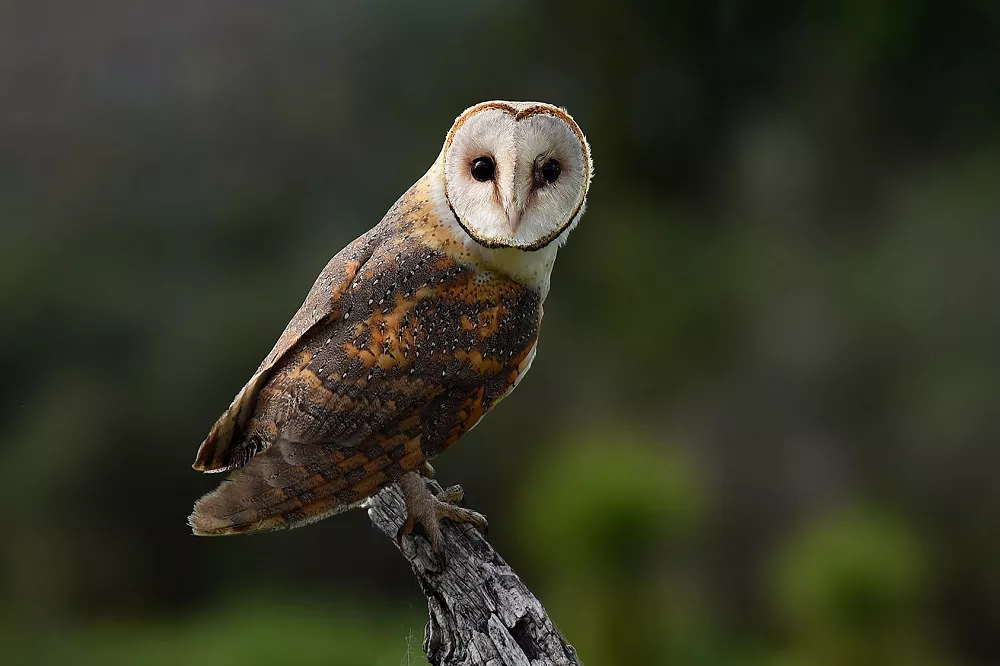
Barn Owls are one of the most recognizable owl species in the world, famous for their heart-shaped faces, ghostly appearance, and silent flight. Their unique body features help them hunt efficiently at night and adapt to a wide range of environments.
If you have ever wondered “What does a Barn Owl look like?”, this guide will explain their size, colors, facial features, feathers, wings, eyes, and other physical characteristics in detail.
What Does a Barn Owl Look Like?
The Barn Owl (Tyto alba) has a distinctive appearance that separates it from most other owls. Unlike many typical owls with round faces and dark markings, Barn Owls have a pale, heart-shaped facial disc, long legs, and a slender body.
Their overall appearance can be described as:
- A white or pale heart-shaped face
- Golden-brown feathers on the back and wings
- A white underside with small dark spots
- Dark eyes surrounded by a facial disc
- Long, rounded wings
- A short tail
- Long legs covered with feathers
These features make Barn Owls look almost ghost-like when flying silently at night.
What Color Is a Barn Owl?
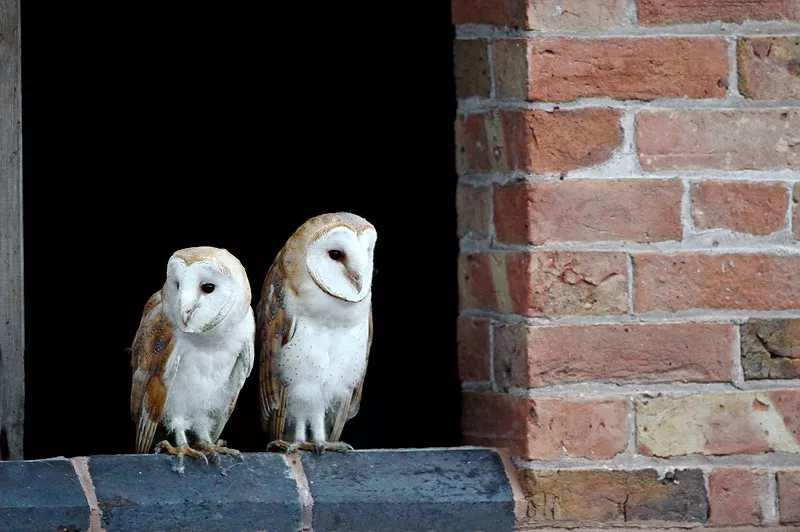
Barn Owls have a combination of white, brown, gray, and golden colors.
Face and Underparts
The most noticeable feature of a Barn Owl is its white, heart-shaped face. The facial disc surrounds the eyes and helps direct sound toward their ears, improving their ability to locate prey in darkness.
The chest and belly are usually:
- White or cream-colored
- Sometimes covered with small black or brown spots
- More heavily spotted in some individuals than others
Male Barn Owls often have cleaner white underparts, while females usually have more spotting.
Back and Wings
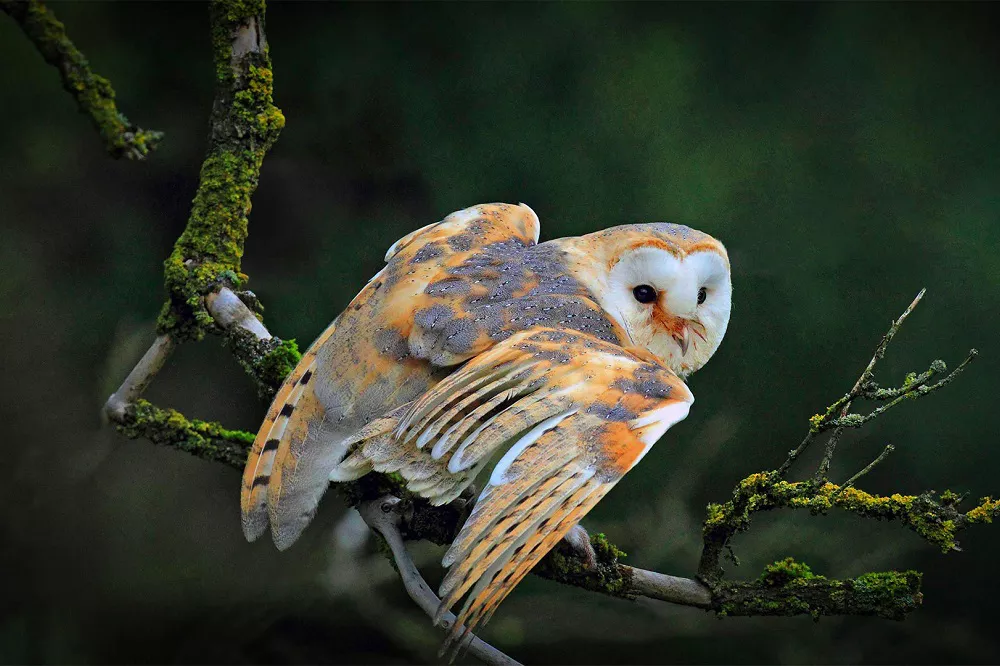
The upper body of a Barn Owl is darker than the underside. Their back and wings typically show:
- Golden-brown feathers
- Gray patches
- Fine black and white patterns
These colors provide excellent camouflage when they rest inside barns, tree cavities, cliffs, or abandoned buildings.
The Barn Owl’s Heart-Shaped Face
One of the most famous characteristics of the Barn Owl is its heart-shaped facial disc.
Unlike many owl species with circular faces, Barn Owls have a face shaped like a heart because of the arrangement of feathers around their eyes and beak.
This facial structure serves an important purpose:
- It collects and directs sound waves
- Helps locate prey hidden under grass or snow
- Allows accurate hunting in complete darkness
The facial disc acts like a natural satellite dish, making Barn Owls extremely effective nocturnal hunters.
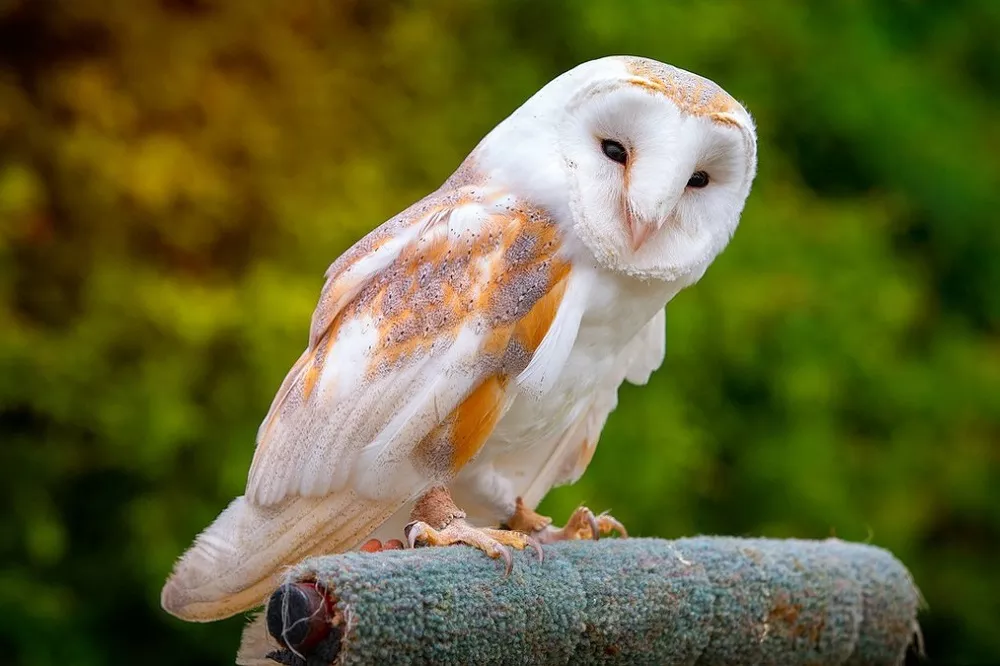
Image credit: pixabay @iankelsall1
Barn Owl Eyes and Vision
Barn Owls have large, forward-facing eyes that help them judge distances while hunting.
Their eyes are usually:
- Dark brown to black
- Positioned toward the front of the head
- Surrounded by a white facial disc
Although their night vision is excellent, Barn Owls rely even more heavily on their hearing. Their asymmetrical ear placement allows them to detect tiny differences in sound direction and locate prey accurately.
How Big Is a Barn Owl?
Barn Owls are medium-sized owls with a slim body shape.
| Feature | Measurement |
|---|---|
| Body length | 33–39 cm (13–15 inches) |
| Wingspan | 80–95 cm (31–37 inches) |
| Weight | 250–700 g (0.5–1.5 lbs) |
Females are generally larger and heavier than males, which is common among many birds of prey.
Their long wings and lightweight body allow them to fly slowly and silently while searching for rodents.
Barn Owl Wings and Flight Appearance
A Barn Owl in flight has a very different appearance compared with other owls.
Their wings are:
- Long and rounded
- Broad compared with their body size
- Covered with specialized soft feathers
These feather adaptations reduce flight noise, allowing Barn Owls to approach prey almost silently.
When flying, they often appear:
- Pale underneath
- Almost white in low light
- Floating or gliding through the air
This silent, ghost-like flight is one reason Barn Owls are sometimes called “ghost owls.”
Barn Owl Legs and Feet
Barn Owls have long legs that are mostly hidden beneath feathers.
Their legs and feet are adapted for catching prey:
- Long toes with sharp claws
- Strong gripping ability
- Feather-covered legs for protection
Their powerful talons allow them to capture small mammals such as mice, voles, and rats.
Do Male and Female Barn Owls Look Different?
Male and female Barn Owls look very similar, but there are some differences.
Male Barn Owl Features
Male Barn Owls usually have:
- Whiter chest feathers
- Fewer dark spots
- Slightly smaller body size
Female Barn Owl Features
Female Barn Owls often have:
- More noticeable dark spots on the chest
- Slightly larger bodies
- Darker markings
These differences are subtle, and identifying their sex by appearance alone can be difficult.
How Do Barn Owls Compare With Other Owls?
Barn Owls are easy to distinguish from most owl species.
| Feature | Barn Owl | Typical Owls |
|---|---|---|
| Face shape | Heart-shaped | Round |
| Eye color | Dark | Often yellow or orange |
| Ear tufts | None | Common in many species |
| Body shape | Slim and long-legged | Usually stockier |
| Flight | Very silent and floating | Silent but often more powerful |
Unlike Great Horned Owls or Eurasian Eagle-Owls, Barn Owls do not have visible ear tufts.
Why Do Barn Owls Have Their Unique Appearance?
Every part of a Barn Owl’s appearance has an important survival function.
Heart-Shaped Face
Helps collect sounds and locate prey.
Pale Feathers
Provide camouflage in open habitats and may help them blend with moonlit surroundings.
Long Wings
Allow slow, controlled flight while hunting.
Soft Feathers
Reduce wing noise and make surprise attacks possible.
Long Legs and Sharp Talons
Help capture prey efficiently.
What Does a Baby Barn Owl Look Like?
Young Barn Owls look different from adults.
Baby Barn Owls are usually:
- Covered in soft white down feathers
- Rounder in appearance
- Without the fully developed heart-shaped facial disc
As they grow, they gradually develop adult feathers and their recognizable facial pattern.
Juveniles begin to resemble adults after several weeks but may have slightly softer and less defined markings.
Final Thoughts
The Barn Owl is one of the most unique-looking birds in the world. Its heart-shaped white face, golden-brown wings, dark eyes, long legs, and silent flight make it instantly recognizable.
Their unusual appearance is not just for beauty—it is a result of millions of years of adaptation. Every feature, from their facial disc to their soft feathers, helps them become one of nature’s most skilled nighttime hunters.
 Facebook
  Instagram
  Youtube
 English
  Spanish