
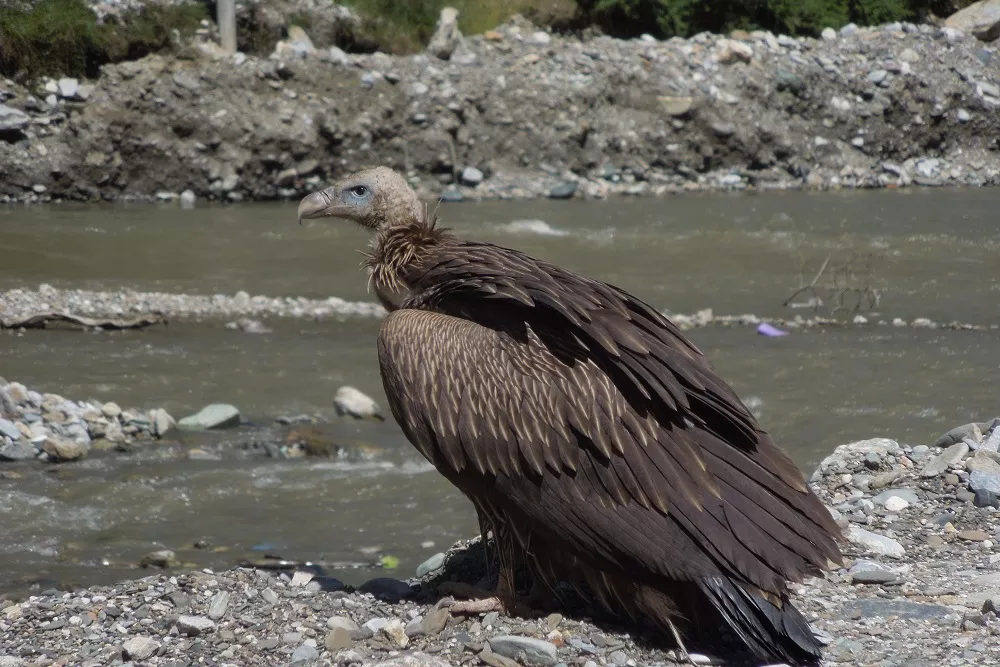
Buzzards and vultures are often confused because both are large soaring birds, but they are not the same group and they play very different roles in nature. In simple terms, buzzards are usually hunters that catch live prey, while vultures are primarily scavengers that feed on dead animals.
In this guide, we’ll explore the key differences between buzzards and vultures, including their appearance, behavior, habitat, diet, and ecological importance.
Quick Comparison: Buzzards vs. Vultures
| Feature | Buzzard | Vulture |
|---|---|---|
| Main Diet | Live prey | Carrion (dead animals) |
| Feeding Style | Hunter | Scavenger |
| Head | Fully feathered head and neck | Often bald or sparsely feathered |
| Beak | Short, sharply curved, and hooked for killing live prey | Long, hooked beak perfect for tearing into tough animal hides |
| Talons | Strong, sharp talons | Relatively weak |
| Hunting Style | Active hunter | Scavenger |
| Flight Style | Soaring and hunting | Long-distance soaring |
| Social Behavior | Generally solitary or in pairs | Highly social; often roost and feed in massive groups |
What Is a Buzzard?
A buzzard is a medium-to-large bird of prey belonging to the family Accipitridae. It is widely distributed across Europe, Asia, Africa, and parts of North America.
In Europe, the term “buzzard” usually refers to species in the genus Buteo, especially the Common Buzzard (Buteo buteo), one of the continent’s most widespread raptors.
In North America, the term “buzzard” is sometimes incorrectly used to describe vultures, particularly the Turkey Vulture. However, true buzzards are actually closer relatives of hawks and eagles than vultures.
Physical Characteristics of Buzzards
Buzzards typically have:
- Broad wings
- Short, strong necks
- Fully feathered heads
- Excellent eyesight
- Sharp talons
- Hooked beaks
- Compact, muscular bodies
Most species range from 40–70 cm (16–28 inches) in length and display brown, gray, or mottled plumage that helps them blend into woodland environments.
What Is a Vulture?
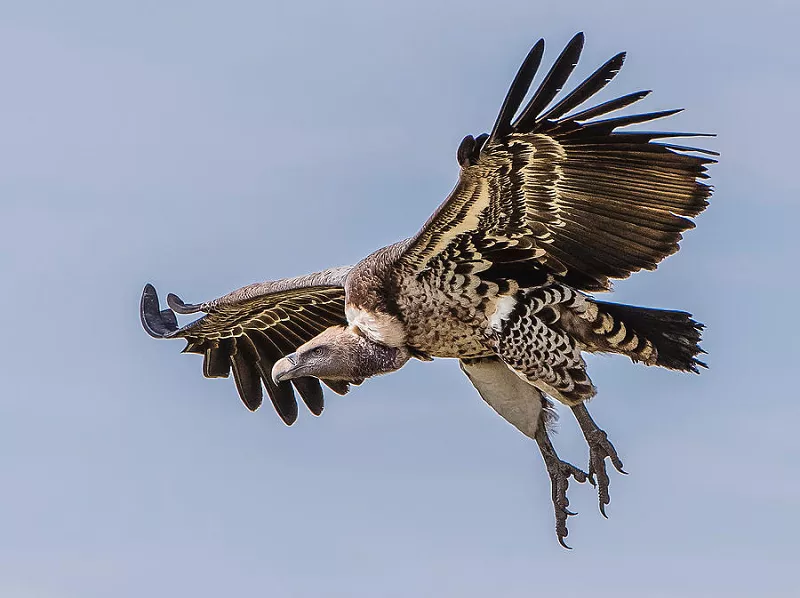
Vultures are large scavenging birds that feed mainly on dead animals. They are nature’s cleanup crew, helping prevent the spread of disease by removing carcasses from the environment.
Unlike buzzards, vultures rarely hunt healthy prey. Their anatomy and behavior have evolved specifically for locating and consuming carrion.
Physical Characteristics of Vultures
Most vultures possess:
- Large wingspans
- Bald or nearly bald heads
- Long necks
- Long, hooked beak
- Relatively weak feet
The bald head is one of their most distinctive adaptations. Because vultures frequently feed inside animal carcasses, having few feathers on the head helps prevent bacteria and blood from accumulating.
Taxonomic Differences Between Buzzards and Vultures
One of the key differences between buzzards and vultures lies in their taxonomic classification, which reflects their evolutionary relationships and biological grouping.
Buzzard Classification
Buzzards belong to a well-defined group of birds of prey within the raptor family.
- Kingdom: Animalia
- Class: Aves
- Order: Accipitriformes
- Family: Accipitridae
- Genera: Buteo and closely related genera
Buzzards are closely related to other diurnal raptors, including:
- Hawks
- Eagles
- Harriers
- Kites
These relationships place buzzards firmly within the broader group of active hunting birds of prey.
Vulture Classification
Vultures are not a single unified group taxonomically. Instead, they are divided into two distinct evolutionary lineages: Old World vultures and New World vultures.
Old World Vultures
Old World Vultures are found in Africa, Europe, and Asia. Examples include the Griffon Vulture, Cinereous Vulture, and Egyptian Vulture.
These species belong to the family Accipitridae, meaning they are more closely related to eagles and buzzards.
New World Vultures
New World Vultures are found in North, Central, and South America. Examples include the Turkey Vulture, Black Vulture, and Andean Condor.
These birds belong to the family Cathartidae, a separate evolutionary lineage that developed independently from Old World vultures.
Differences in Diet
Diet is one of the clearest differences between these two bird groups.
What Do Buzzards Eat?
Buzzards are predators and opportunistic hunters.
Their diet commonly includes:
- Mice
- Rats
- Rabbits
- Voles
- Small birds
- Lizards
- Snakes
- Frogs
- Large insects
Buzzards usually locate prey from elevated perches or while soaring overhead. Once they spot a target, they swoop down rapidly and seize it with their talons.
What Do Vultures Eat?
Vultures primarily eat dead animals.
Their diet includes:
- Deer carcasses
- Livestock carcasses
- Roadkill
- Dead birds
- Dead mammals
- Wildlife remains
- Reptile remains
Rather than hunting, vultures spend much of their day searching for carcasses.
Feeding Strategy Comparison
| Feature | Buzzard | Vulture |
|---|---|---|
| Hunts Live Prey | Yes | Rarely |
| Eats Carrion | Occasionally | Primarily |
| Talon Strength | Strong | Weak |
| Feeding Role | Predator | Scavenger |
Differences in Hunting and Foraging Behavior
Buzzard Hunting Behavior
Buzzards are highly patient predators that rely on careful observation before striking.
Their most common hunting strategies include:
- Perch hunting from elevated positions
- Soaring high in the sky to scan for prey
- Ambush attacks on unsuspecting animals
- Low gliding pursuits when tracking moving targets
Thanks to their excellent eyesight, buzzards can detect potential prey from considerable distances, allowing them to plan precise and efficient attacks.
Vulture Foraging Behavior
Vultures are primarily scavengers and depend on different strategies to locate food.
Their foraging behavior typically involves:
- Soaring on thermal air currents to cover large areas
- Constant visual scanning of the ground
- Social feeding, often gathering in groups around food sources
- Following other vultures to locate carcasses
The Turkey Vulture is especially notable for its highly developed sense of smell, which allows it to detect hidden carcasses even under dense forest canopy.
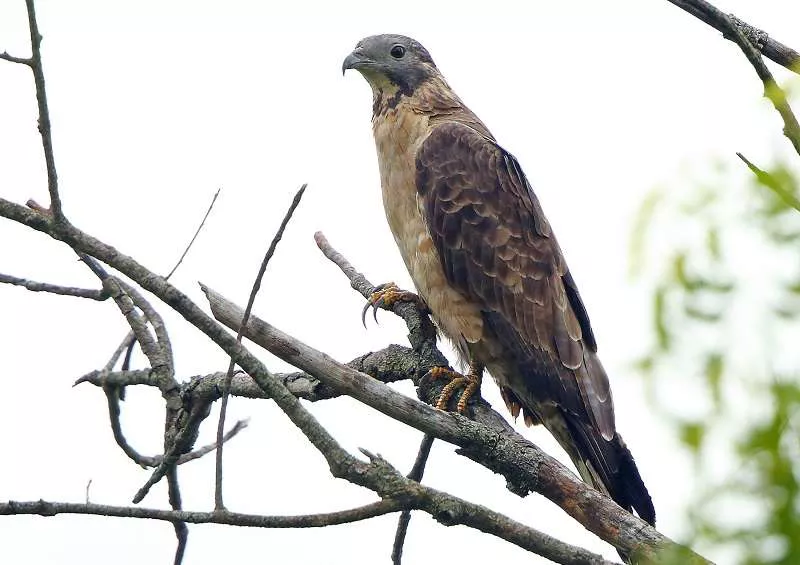
Oriental Honey Buzzard
Flight Style Differences
Both birds soar efficiently, but there are notable differences.
Buzzard Flight Style
Buzzards typically fly at moderate heights while actively searching for prey.
Their flight behavior includes:
- Circling over open fields and woodland areas
- Alternating between soaring and active wing flapping
- Hunting across diverse landscapes such as fields, meadows, and forests
Overall, their flight is more purposeful and directly linked to hunting behavior, allowing them to quickly locate and pursue live prey.
Vulture Flight Style
Vultures are highly specialized soaring birds known for extremely energy-efficient flight.
They commonly:
- Rely on thermal air currents to stay aloft
- Cover vast distances with minimal energy expenditure
- Rarely flap their wings compared to other large birds
- Spend long periods circling high in the sky while scanning for carcasses
Some vulture species can remain airborne for several hours at a time with very little wing movement, making them among the most efficient soaring birds in the natural world.
Social Behavior Differences
One of the most noticeable differences between buzzards and vultures is their social behavior. Although both birds may occasionally be seen soaring in groups, the way they interact with members of their own species is very different.
Buzzard Social Behavior
Buzzards are generally solitary and highly territorial birds. They prefer to hunt alone and will often defend their territory from other raptors, particularly during the breeding season.
Typical social characteristics of buzzards include:
- Usually seen alone or in pairs
- Form strong monogamous breeding pairs during the nesting season
- Actively defend nesting sites and hunting territories
- Rarely gather in large groups, except during migration periods
- Compete with other birds of prey for access to hunting areas
For example, the Common Buzzard (Buteo buteo) often spends much of the day soaring or perched alone while searching for prey.
Vulture Social Behavior
Vultures, in contrast, are far more social than buzzards. Because they rely on carrion—which is often unpredictable and widely dispersed—group behavior and cooperation play an important role in helping them locate food efficiently.
Typical social characteristics of vultures include:
- Frequently seen in large groups known as committees, kettles, or wakes
- Communally roost in trees, cliffs, or other elevated locations
- Gather at carcasses, sometimes with dozens or even hundreds of individuals feeding together
- Use social cues and follow other vultures to locate food sources
- Maintain complex dominance hierarchies during feeding
Some species, such as the Turkey Vulture (Cathartes aura) and the Griffon Vulture (Gyps fulvus), may travel and roost in large flocks, especially outside the breeding season.
Conclusion
Buzzards and vultures may look similar at first glance, but they are fundamentally different birds with distinct evolutionary backgrounds, feeding strategies, and ecological roles.
Buzzards are active hunters closely related to hawks, while vultures are specialized scavengers designed for cleaning up the environment. Understanding these differences not only helps with bird identification but also deepens appreciation for how nature divides roles among species.
Frequently Asked Questions
Is a Buzzard a Hawk?
Yes. Buzzards belong to the same family as hawks and are often considered a type of hawk, particularly species in the genus Buteo.
Can Buzzards Eat Carrion?
Yes. Although they primarily hunt live prey, buzzards occasionally feed on carcasses when opportunities arise.
Do Vultures Ever Hunt?
Some vultures may capture weak, injured, or very young animals, but most rely heavily on scavenging.
Which Is Bigger: A Buzzard or a Vulture?
Vultures are generally larger. Species such as the Andean Condor possess wingspans exceeding 3 meters (10 feet), far larger than most buzzards.
 Facebook
  Instagram
  Youtube
 English
  Spanish