
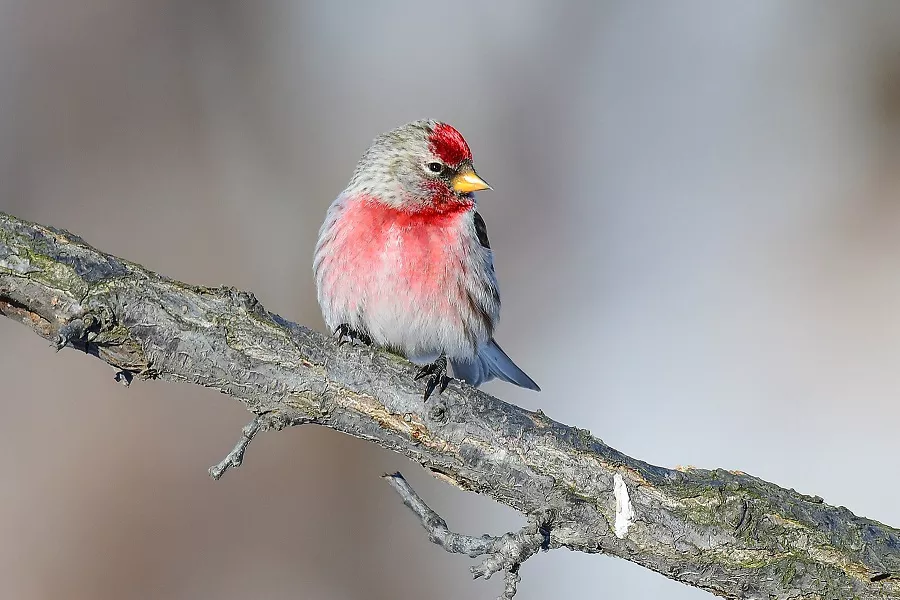
Common Redpolls and House Finches are both small finches that can appear at backyard bird feeders. Their similar size and reddish coloring can make them difficult to identify at first glance. However, they are quite different birds.
The Common Redpoll is a small northern finch adapted to cold climates. The House Finch is a more widespread finch commonly associated with towns, suburbs, farms, and other human-modified habitats.
In this guide, we will explore the key differences between Common Redpoll and House Finch to help bird enthusiasts confidently identify these fascinating birds.
| Feature | Common Redpoll | House Finch |
|---|---|---|
| Scientific name | Acanthis flammea | Haemorhous mexicanus |
| Family | Fringillidae | Fringillidae |
| Size | About 4.7–5.5 inches (12–14 cm) | About 5–6 inches (12.5–15 cm) |
| Weight | 9–20 g (0.3–0.7 oz) | 16–27 g (0.6–0.9 oz) |
| Body shape | Small and compact | Larger and fuller-bodied |
| Bill | Very small and short | Larger and more substantial |
| Male coloring | Red forehead and often pinkish chest | Red or rosy face, throat, and breast |
| Female coloring | Brown and heavily streaked | Brown and heavily streaked |
| Key face feature | Red forehead and dark eye area | Red facial coloring but no red crown patch like a redpoll |
| Breast | Often pale or lightly pink in males | Males usually have a stronger red or rosy breast |
| Habitat | Arctic, boreal forests, tundra, open northern areas | Cities, suburbs, farms, woodland edges |
| Cold tolerance | Extremely high | Good, but not specialized for Arctic conditions |
| Diet | Seeds, buds, small insects | Mostly seeds, fruits, and plant material |
| Geographic range | Mainly northern North America, Europe, and Asia | Mainly North America |
What Is a Common Redpoll?
The Common Redpoll is a small northern finch in the family Fringillidae. It is associated with cold northern environments, including boreal forests and Arctic regions. During winter, some redpolls move farther south and can appear at bird feeders in northern parts of the United States and Canada.
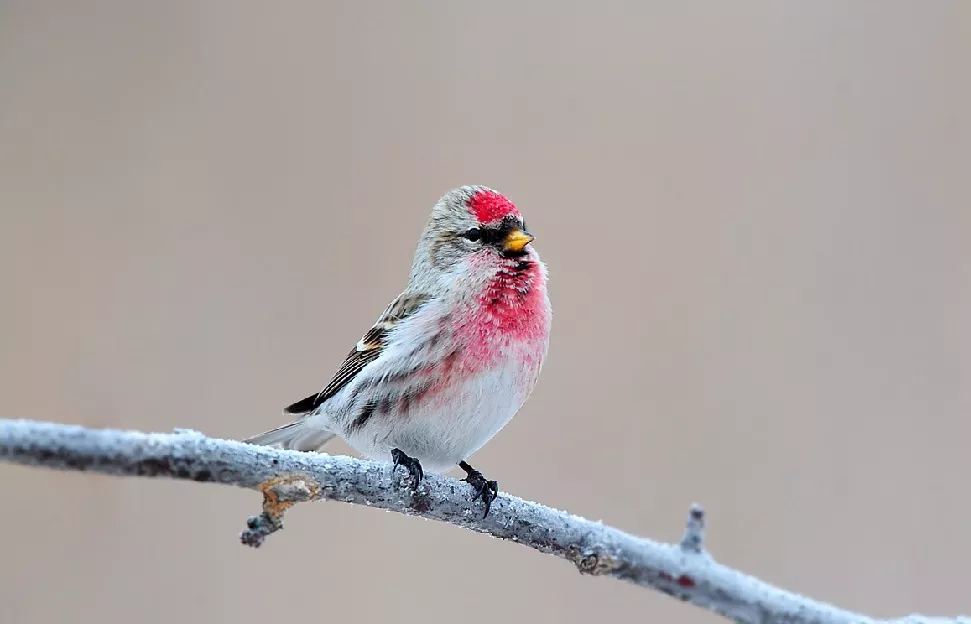
Redpolls are active and social birds. They often travel in flocks and move rapidly between trees, shrubs, weeds, and feeding stations. They are especially well known for feeding on small seeds and for their ability to survive extremely cold conditions.
A typical Common Redpoll has a small head, a short bill, a notched tail, and strongly streaked brown-and-white plumage. The small red patch on the forehead is one of its most useful identification features.
What Is a House Finch?
The House Finch is another member of the finch family. Its scientific name is Haemorhous mexicanus. It is one of the most familiar finches in North America and is especially common around human settlements.
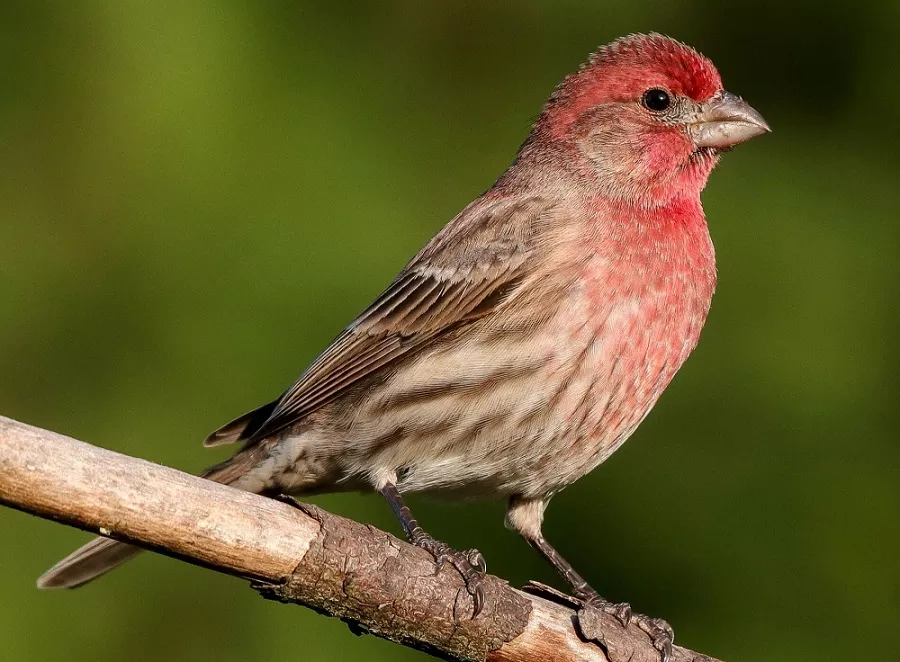
House Finches can be found in residential neighborhoods, city parks, farms, forest edges, and other open habitats. They frequently visit bird feeders, especially when sunflower seeds are available.
Adult male House Finches are easy to recognize when their red coloration is strong. The red is concentrated around the face and upper breast. Depending on diet, however, the color can range from bright red to orange or yellowish tones. Cornell notes that the intensity of male House Finch coloration is strongly influenced by carotenoid pigments in the bird’s diet.
Female House Finches are much less colorful. They are generally brown or grayish-brown with blurry streaks. This can make a female House Finch look more similar to a female or immature redpoll.
1. Size Difference: House Finch Is Usually Larger
One of the easiest ways to separate these birds is by body size and shape.
The Common Redpoll is a tiny finch with a compact body, small head, and short pointed bill. It is about the size of an American Goldfinch, measuring around 11.5–14 cm (4.5–5.5 inches) and weighing only 9–20 grams.
The House Finch is slightly larger and appears heavier-bodied. It usually measures about 13–14 cm (5.1–5.5 inches) and weighs 16–27 grams. It has a larger head, thicker bill, and longer-looking body.
Field Tip:
- A tiny finch that looks delicate and round → likely Common Redpoll
- A chunkier finch with a stronger beak → likely House Finch
2. Color Differences: Red Cap vs Red Face
Color is the most noticeable difference between these two species.
Common Redpoll
The Common Redpoll has a very distinctive small red patch on the forehead, which gives the bird its name (“redpoll” means red forehead). It also has:
- Black feathers around the bill
- Yellow pointed bill
- Brown-and-white streaked body
- Two white wingbars
- Males often show a soft pink or rosy wash on the chest
The red color is usually limited compared with House Finch.
House Finch
Male House Finches have much more extensive red coloring:
- Red forehead
- Red eyebrows
- Red throat
- Red face
- Red upper breast
The rest of the body is brown with streaking on the back and belly. The intensity of the red can vary depending on diet because carotenoids influence feather color.
Field Tip:
- Small red “cap” only = Common Redpoll
- Large red face and chest = House Finch
3. Bill Shape: Small vs Heavy
The bill is another excellent identification clue.
Common Redpoll Bill
- Short
- Thin
- Pointed
- Yellow with black feathers around the base
This bill is adapted for extracting small seeds from trees and weeds.
House Finch Bill
- Larger
- Thicker
- More powerful-looking
House Finches use their strong bills to crack larger seeds such as sunflower seeds at feeders.
4. Plumage Pattern: Streaks and Wingbars
Common Redpoll Pattern
Common Redpolls have a very recognizable frosty appearance:
- Brown streaked back
- Strong streaking on the sides
- White wingbars
- Black chin patch
- Red forehead
Their streaked appearance helps them blend into northern environments.
House Finch Pattern
House Finches have:
- Brown streaked back
- Streaked belly and flanks
- Less obvious wingbars
- More uniform brown coloring
Female House Finches can sometimes be confused with female redpolls, but they lack the red forehead patch.
5. Habitat Differences
Habitat is one of the strongest clues when identifying these birds.
Where Common Redpolls Live
Common Redpolls are northern specialists. They breed in:
- Arctic tundra
- Boreal forests
- Birch and willow habitats
- Northern Canada and Alaska
During winters with limited food availability, they may move south in large numbers, known as an irruption. They often appear at backyard feeders in northern states and southern Canada.
Where House Finches Live
House Finches prefer warmer and more human-associated environments:
- Backyards
- City parks
- Suburban neighborhoods
- Farms
- Open woodland edges
They are one of the most common feeder birds in North America.
Habitat Shortcut:
- Snowy northern landscape → Common Redpoll
- Urban backyard feeder → House Finch
6. Behavior Differences
Common Redpoll Behavior
Common Redpolls are highly social birds. They often gather in large flocks that may contain hundreds of individuals. They are energetic feeders and are famous for hanging upside down while searching for seeds.
Typical behaviors:
- Rapid movements
- Constant chatter
- Large winter flocks
- Feeding on tree seeds and weeds
House Finch Behavior
House Finches are also social but usually appear in smaller groups.
They often:
- Sit calmly at feeders
- Crack seeds with their strong bills
- Perch on rooftops, trees, and utility wires
- Adapt well to human environments
7. Diet Comparison
Although both birds belong to the finch family, their preferred foods differ.
Common Redpoll Diet
Main foods include:
- Birch seeds
- Alder seeds
- Willow seeds
- Weed seeds
- Small insects during breeding season
Their specialized feeding habits allow them to survive in cold northern environments.
House Finch Diet
House Finches mainly eat:
- Sunflower seeds
- Grass seeds
- Fruits
- Buds
- Plant materials
They are frequent visitors to backyard feeders.
Final Thoughts
Although the Common Redpoll and House Finch belong to the same finch family, they represent two very different lifestyles. The Common Redpoll is a hardy northern specialist, perfectly adapted to survive freezing temperatures in Arctic and boreal environments, while the House Finch is a highly adaptable species that has successfully made parks, gardens, and urban neighborhoods its home.
 Facebook
  Instagram
  Youtube
 English
  Spanish