
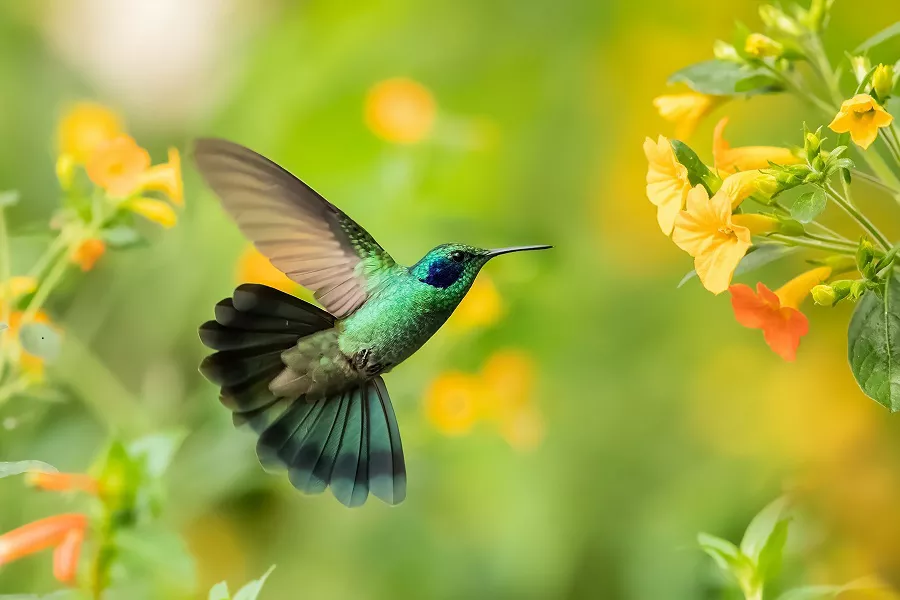
Yes, hummingbirds do eat mosquitoes, but mosquitoes are only a small part of their diet. Hummingbirds mainly drink nectar for energy, and they also eat many tiny insects and spiders for protein. Mosquitoes can be one of the insects they catch, especially when flying nearby or resting in easy-to-reach places.
However, hummingbirds are not effective mosquito-control birds in the same way that bats or swallows are. They may consume some mosquitoes, but they do not actively specialize in hunting large numbers of them.
In this guide, we’ll explore exactly how hummingbirds eat mosquitoes, why insects are important to their survival, and how you can attract hummingbirds to your yard.
Why Do Hummingbirds Eat Insects?
Many people think hummingbirds survive entirely on flower nectar.
While nectar provides sugar and energy, it lacks several nutrients hummingbirds need to survive.
Hummingbirds require:
- Protein
- Amino acids
- Fats
- Vitamins
- Minerals
These nutrients come mainly from insects and spiders.
In fact, scientists estimate that insects may make up up to one-third of a hummingbird’s diet, especially during breeding season.
Tiny insects provide:
- Muscle-building protein
- Nutrients for feather growth
- Energy for migration
- Food for growing chicks
Without insects, hummingbirds would struggle to maintain their fast metabolism and active lifestyle.
What Do Hummingbirds Normally Eat?
Nectar
Nectar is the primary fuel source for hummingbirds.
They obtain nectar from:
- Flowering plants
- Native wildflowers
- Flowering shrubs
- Hummingbird feeders
The sugar in nectar gives them the energy needed to hover and fly.
A hummingbird’s heart can beat more than 1,000 times per minute during intense activity, requiring an enormous amount of energy.
Small Insects
Hummingbirds frequently eat:
- Mosquitoes
- Gnats
- Fruit flies
- Midges
- Aphids
- Leafhoppers
- Small beetles
- Flying ants
They often catch these insects while flying.
Spiders
Spiders are another important food source.
Hummingbirds may:
- Pick spiders from webs
- Eat spider eggs
- Use spider silk to build nests
Spider silk acts like natural glue and helps keep nests flexible and strong.
Do Hummingbirds Actively Hunt Mosquitoes?
Yes, But Only Opportunistically
Hummingbirds do not usually search specifically for mosquitoes.
Instead, they catch tiny insects whenever they encounter them.
Mosquitoes happen to be the right size for a hummingbird to consume.
When feeding around flowers, shrubs, ponds, or gardens, hummingbirds may snap up mosquitoes flying nearby.
This behavior is known as opportunistic feeding.
Aerial Hunting
Hummingbirds are skilled aerial hunters.
They can:
- Hover in place
- Fly backward
- Turn sharply
- Accelerate rapidly
These abilities allow them to catch insects in midair.
A hummingbird may suddenly dart away from a flower, grab a tiny insect, and return within seconds.
Birdwatchers often mistake this behavior for territorial chasing when the bird is actually hunting.
How Many Mosquitoes Can a Hummingbird Eat?
There is no exact number because feeding habits vary among species and individuals.
Factors include:
- Habitat
- Time of year
- Availability of flowers
- Weather conditions
- Breeding status
A hummingbird may consume dozens or even hundreds of tiny insects daily.
However, mosquitoes usually represent only a portion of these insects.
For this reason, hummingbirds should not be considered a complete mosquito-control solution.
Why Are Mosquitoes Important for Hummingbirds?
Mosquitoes provide several nutritional benefits.
Protein
Protein supports:
- Muscle development
- Feather maintenance
- Tissue repair
This is especially important during migration and breeding.
Amino Acids
Amino acids are the building blocks of proteins.
They help hummingbirds:
- Grow feathers
- Maintain organs
- Support healthy metabolism
Nutrients for Young Birds
Baby hummingbirds need significantly more protein than adults.
Parents feed nestlings a mixture of:
- Regurgitated insects
- Nectar
Mosquitoes and other small insects help young birds grow quickly.
Do Baby Hummingbirds Eat Mosquitoes?
Yes.
Nestling hummingbirds receive a diet rich in insects.
Adult hummingbirds capture:
- Tiny mosquitoes
- Gnats
- Small flies
- Aphids
These insects are partially digested and fed to the chicks.
Protein-rich food is essential because baby hummingbirds grow at an astonishing rate.
Within only a few weeks, they develop:
- Feathers
- Flight muscles
- Adult body structure
Without insects, young hummingbirds would not receive adequate nutrition.
Nectar vs. Insects: Which Is More Important?
Both are essential, but they serve different purposes.
| Food Source | Main Benefit |
|---|---|
| Nectar | Quick energy from sugars |
| Insects | Protein, fats, vitamins, minerals |
| Spiders | Protein and amino acids |
| Sap | Supplemental carbohydrates |
How to Attract Hummingbirds to Your Yard
If you want hummingbirds to visit your garden—and potentially help reduce some mosquito activity—you need to create a suitable habitat.
Plant Native Nectar Flowers
Choose flowers that produce abundant nectar.
Excellent options include:
- Bee balm
- Cardinal flower
- Salvia
- Columbine
- Coral honeysuckle
- Penstemon
Native plants often attract both hummingbirds and the insects they eat.
Provide Hummingbird Feeders
Offer a simple nectar solution made from:
- 1 part white sugar
- 4 parts water
Avoid:
- Honey
- Artificial sweeteners
- Red dye
Clean feeders regularly to prevent mold growth.
Avoid Pesticides
Pesticides reduce insect populations.
While this may seem beneficial, it removes an important food source for hummingbirds.
A pesticide-free garden supports healthier bird populations.
Create Diverse Habitat
Include:
- Trees
- Shrubs
- Flower beds
- Water features
These areas attract both hummingbirds and the insects they eat.
Conclusion
So, do hummingbirds eat mosquitoes? Absolutely. Mosquitoes are among the many tiny insects that hummingbirds capture and consume to obtain protein, fats, vitamins, and minerals that nectar cannot provide.
However, mosquitoes make up only a small portion of their diet. Hummingbirds are opportunistic insectivores that also feed on gnats, fruit flies, aphids, spiders, and numerous other small arthropods. While they contribute modestly to natural mosquito control, their greater ecological importance lies in pollination and maintaining balanced insect populations.
Frequently Asked Questions (FAQ)
Q1. What eats mosquitoes the most?
Dragonflies are among the most effective mosquito predators, and bats, birds, and aquatic insects also eat mosquitoes in large numbers.
Q2. Do hummingbirds eat fruit?
Usually, no. Hummingbirds mainly feed on nectar, but they may occasionally sip juice from soft or damaged fruit.
Q3. How much do hummingbirds eat per day?
Hummingbirds eat frequently throughout the day and can consume nectar equal to a large share of their body weight to support their high energy needs.
Q4. Do hummingbirds eat dragonflies?
No, hummingbirds do not eat dragonflies; in fact, the opposite is true. Large dragonflies, such as the common green darner, are known predators of hummingbirds.
Q5. Do hummingbirds eat wasps?
Yes, hummingbirds may eat small insects like wasps, along with flies, gnats, and spiders. Insects provide important protein, especially during breeding season.
 Facebook
  Instagram
  Youtube
 English
  Spanish