
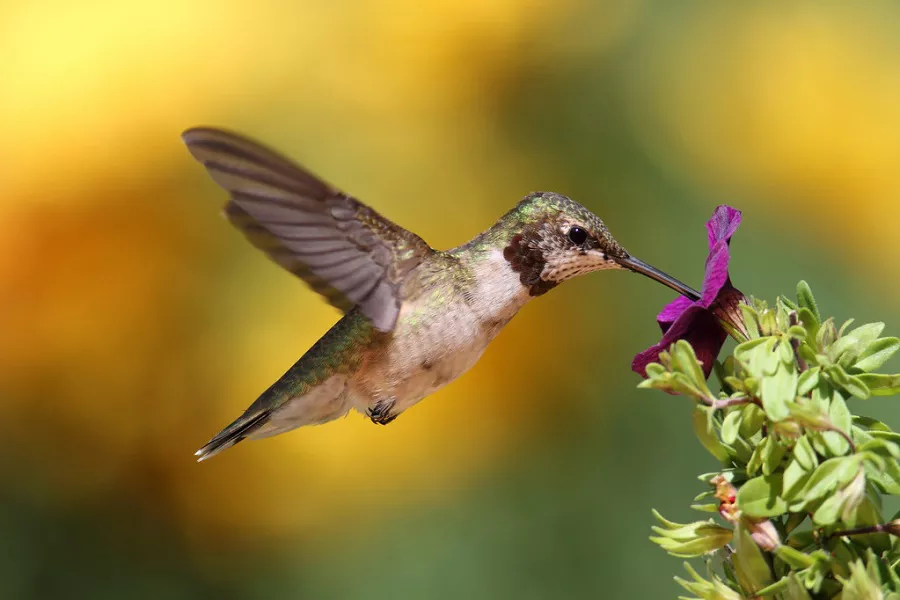
Ruby-throated hummingbirds eat mostly nectar, plus small insects and spiders. Nectar gives them quick energy, while insects and spiders provide protein, fat, vitamins, and minerals that help them stay healthy and survive migration.
Introduction
Ruby-throated hummingbirds are tiny birds with huge energy needs. Their wings beat so fast that they must eat many times a day to keep going. They are not just nectar drinkers; they are also skilled hunters of tiny prey.
Ruby-throated hummingbird Diet
Nectar from flowers
Nectar is the most important food for ruby-throated hummingbirds. They feed on tubular flowers, especially red, orange, and bright pink blooms, because these flowers are often shaped and colored in ways that attract hummingbirds.
They especially like flowers such as trumpet creeper, cardinal flower, honeysuckle, jewelweed, bee balm, red buckeye, and red morning glory. These plants offer the high-energy nectar that helps hummingbirds fuel their rapid flight.
Small insects
Ruby-throated hummingbirds also eat tiny insects. Common prey includes flies, gnats, aphids, mosquitoes, fruit flies, caterpillars, and small bees. These insects are an important source of protein and other nutrients.
Spiders
Spiders are another important part of their diet. Hummingbirds may catch spiders directly or pull small insects and spiders from webs. This gives them extra protein and helps balance their mostly sugary nectar diet.
Tree sap
When nectar is scarce, ruby-throated hummingbirds may drink tree sap. They sometimes use sap wells made by sapsuckers, and they may also eat insects attracted to the sap. This is not their main food, but it can help them when flowers are limited.
How they feed
Ruby-throated hummingbirds feed by hovering at flowers and using their long tongues to lap up nectar. They also catch insects in midair, pick them from leaves, or take them from spider webs. This mix of feeding methods helps them get both energy and protein.
They eat often because their metabolism is extremely fast. One source notes that they may feed 5 to 6 times each hour, and they may spend much of the day moving from flower to flower.
Why their diet is important
Nectar gives hummingbirds quick fuel, but it does not give them everything they need. Insects and spiders supply the protein and other nutrients needed for growth, muscle maintenance, and migration. Young birds depend heavily on insects because nectar alone is not enough for development.
This is especially important before migration. Ruby-throated hummingbirds can nearly double their body weight before long flights, and insect feeding helps build the fat and strength they need for that journey.
What they eat at feeders
Many people feed ruby-throated hummingbirds with sugar water in feeders. This can serve as a nectar substitute, but it is only part of a healthy feeding strategy. Natural flowers and small insects are still essential, because hummingbirds need more than sugar alone.
A feeder can help support them during migration and in areas with fewer flowers. Still, a yard with native flowering plants is better because it offers a more complete food supply.
Best plants for attracting them
If you want to help ruby-throated hummingbirds, plant flowers that match their feeding habits. The best choices are usually red or orange, tubular, and rich in nectar. Native plants are often the strongest choice because they support both nectar feeding and insect life.
Good examples include:
- Trumpet creeper
- Cardinal flower
- Bee balm
- Honeysuckle
- Jewelweed
- Red buckeye
- Red morning glory
Seasonal eating habits
Their diet can change with the season. During migration, they often need more energy and may eat more insects to build up body weight. When flowers are blooming, nectar becomes the main food source, but they still rely on insects throughout the year.
This flexibility helps them survive across a wide range of habitats. It also explains why they are often found near both flowering plants and insect-rich areas.
Conclusion
Ruby-throated hummingbirds eat nectar, tiny insects, spiders, and sometimes tree sap. Nectar gives them energy, while insects and spiders provide the nutrients they need to grow, migrate, and survive.
The best way to support them is to plant native nectar-rich flowers and, if desired, use clean feeders as a backup food source. A healthy hummingbird habitat should always include both flowers and the small insects that complete their diet.
Ruby-throated hummingbird FAQ
Q1. When do ruby-throated hummingbirds migrate south?
Ruby-throated hummingbirds usually start migrating south in late summer or early autumn. Most Ruby-throated Hummingbirds start their journey south to Mexico and Central America between August and September.
Q2. Ruby-throated Hummingbird: Female vs. Male
While they are the same species, the males and females look quite different—a trait known as sexual dimorphism.
| Feature | Male | Female |
|---|---|---|
| Throat (Gorget) | Iridescent ruby-red | White or pale gray, sometimes lightly streaked |
| Size | Slightly smaller | Slightly larger |
| Tail | Forked with pointed feathers | Rounded with white tips |
| Behavior | More territorial and performs courtship displays | Responsible for nest building and raising young |
Q3. What are ruby-throated hummingbirds’ favorite flowers?
They are especially attracted to tubular, nectar-rich flowers, especially red and orange blooms like wild columbine, cardinal flower, coral honeysuckle, and jewelweed.
Q4. What is a hummingbird’s biggest enemy?
The biggest enemies of hummingbirds are often predators such as domestic cats, hawks, owls, and even larger insects or spiders in some situations. In many areas, habitat loss and food shortages are also major threats.
 Facebook
  Instagram
  Youtube
 English
  Spanish