
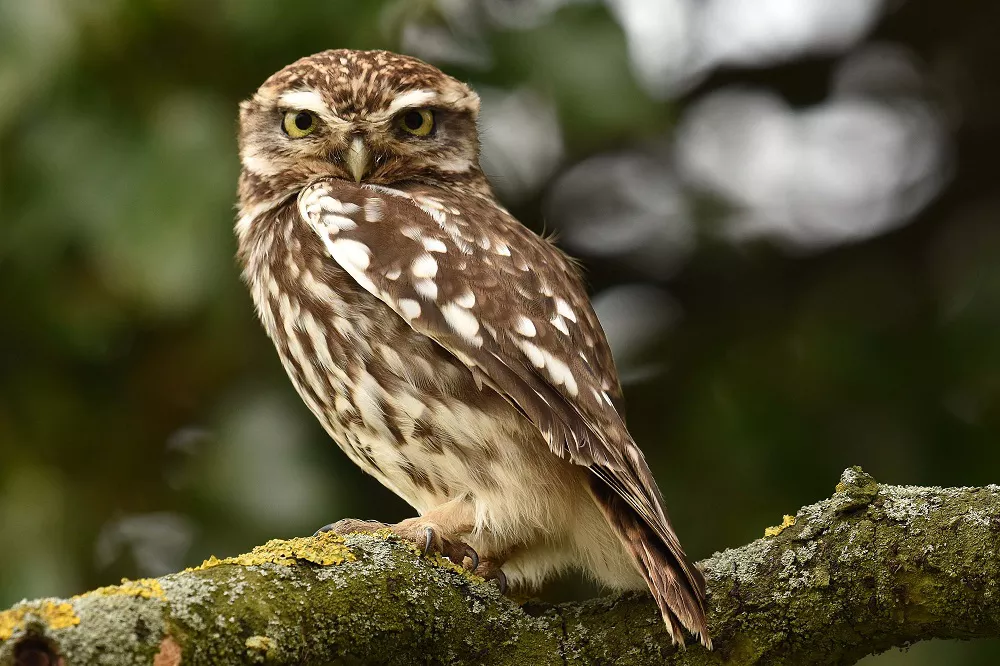
The Little Owl (Athene noctua) holds a special place in Greek culture, history, and national identity. As the national bird of Greece, this small yet charismatic owl is closely associated with Athena, the ancient Greek goddess of wisdom. Throughout ancient Greece, images of the Little Owl appeared on coins, pottery, sculptures, and temple decorations. Even today, it remains an important cultural symbol and a valuable part of Greece’s natural heritage.
In this guide, you’ll learn everything about Greece’s national bird, including its appearance, habitat, behavior, symbolism, and fascinating role in ancient civilization.
Why Is the Little Owl the National Bird of Greece?
The Little Owl became Greece’s national bird because of its strong connection to Athena, the goddess of wisdom, strategy, and crafts in ancient Greek mythology.
According to legend, Athena chose the owl as her sacred companion because it symbolized intelligence, insight, and knowledge. The owl’s ability to see clearly at night represented the power to understand truths hidden from others.
The city of Athens, named after Athena, adopted the owl as its official symbol. Ancient coins, statues, and artworks frequently featured the bird. Over time, the owl became a national emblem that represented wisdom and the cultural achievements of Greece.
Even today, the image of the Little Owl remains one of the most recognizable symbols of Greek heritage.
Quick Facts About the Little Owl
| Feature | Details |
| Scientific Name | Athene Noctua |
| Common Name | Little Owl |
| Size | Length: 21–23 cm (8.3–9.1 in); Wingspan: 54–58 cm (21–23 in) |
| Weight | 140–250 grams (4.9–8.8 oz) |
| Plumage | Brown with white spots on upperparts; pale underparts with darker streaks |
| Eyes | Large, yellow, and forward-facing |
| Facial Disc | Inconspicuous, flat-faced with white “eyebrows” giving a stern expression |
| Habitat | Open countryside, farmland, orchards, and ruins |
| Diet | Insects, small mammals, birds, earthworms, and reptiles |
| Hunting Style | Mostly nocturnal and crepuscular; hunts from low perches |
| Call | Repetitive “kiew” or “kee-ik” calls; also a cat-like “mew” |
| Nesting | In cavities—trees, buildings, or nest boxes |
| Breeding Season | March to August |
| Clutch Size | 3–5 eggs |
| Incubation | About 28–29 days, by the female only |
| Conservation Status | Least Concern (IUCN), but declining in parts of Western Europe |
| Lifespan | Up to 15 years in the wild |
Physical Appearance of the Little Owl
Size and Shape
Despite its name, the Little Owl is not the smallest owl species in the world, but it is relatively compact.
Adults typically measure:
- Length: 21–23 cm
- Wingspan: 50–57 cm
- Weight: 140–250 grams
The body is stocky and rounded, with a large head and short tail.
Plumage
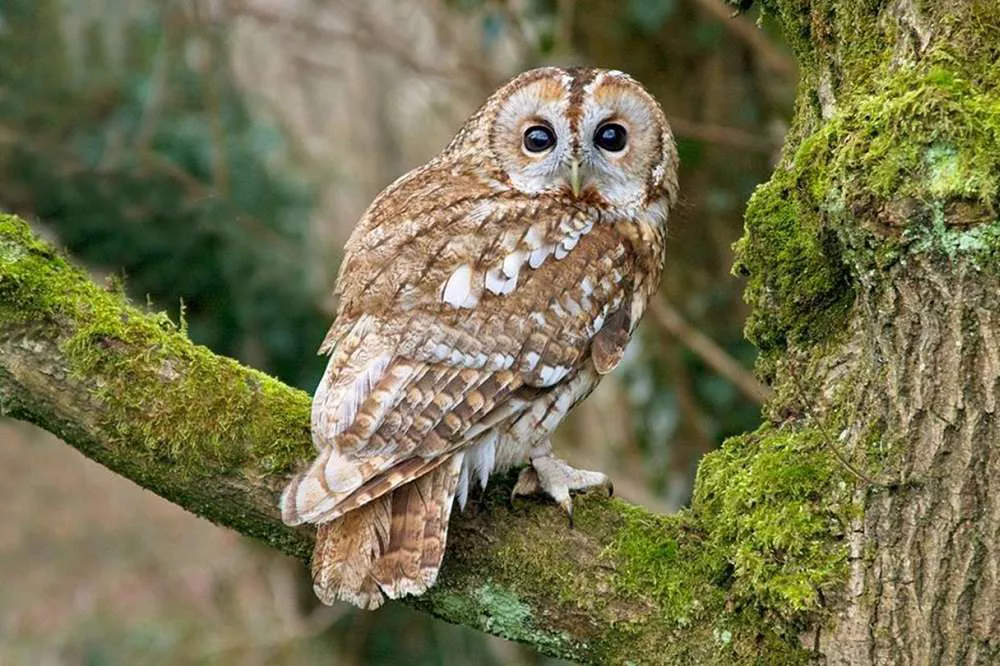
The Little Owl has excellent camouflage that helps it blend into rocky landscapes and tree bark.
Key plumage features include:
- Brown upperparts with white spots
- Pale underparts streaked with brown
- White eyebrows above the eyes
- White throat patch
- Short, rounded wings
Its spotted feathers make it difficult for predators to detect it when perched.
Eyes
One of the bird’s most distinctive features is its bright yellow eyes.
Unlike many owl species that have dark eyes, the Little Owl’s striking yellow eyes give it an alert and intense appearance.
Distribution and Range
Native Range
The Little Owl has an extensive distribution across:
- Southern Europe
- Central Europe
- North Africa
- The Middle East
- Central Asia
- Parts of China
In Greece
The species is widespread throughout mainland Greece and many islands.
It can be found in:
- Agricultural landscapes
- Olive groves
- Villages
- Rocky hillsides
- Ancient ruins
- Open countryside
Its adaptability has helped it thrive alongside humans for centuries.
Habitat of the Little Owl
Unlike many forest-dwelling owls, the Little Owl prefers open landscapes.
Common habitats include:
- Farmland
- Grasslands
- Orchards
- Vineyards
- Stone walls
- Archaeological sites
The species often nests in cavities such as:
- Tree holes
- Rock crevices
- Old buildings
- Ruins
- Nest boxes
This flexibility contributes greatly to its survival success.
Behavior and Lifestyle
Active During Day and Night
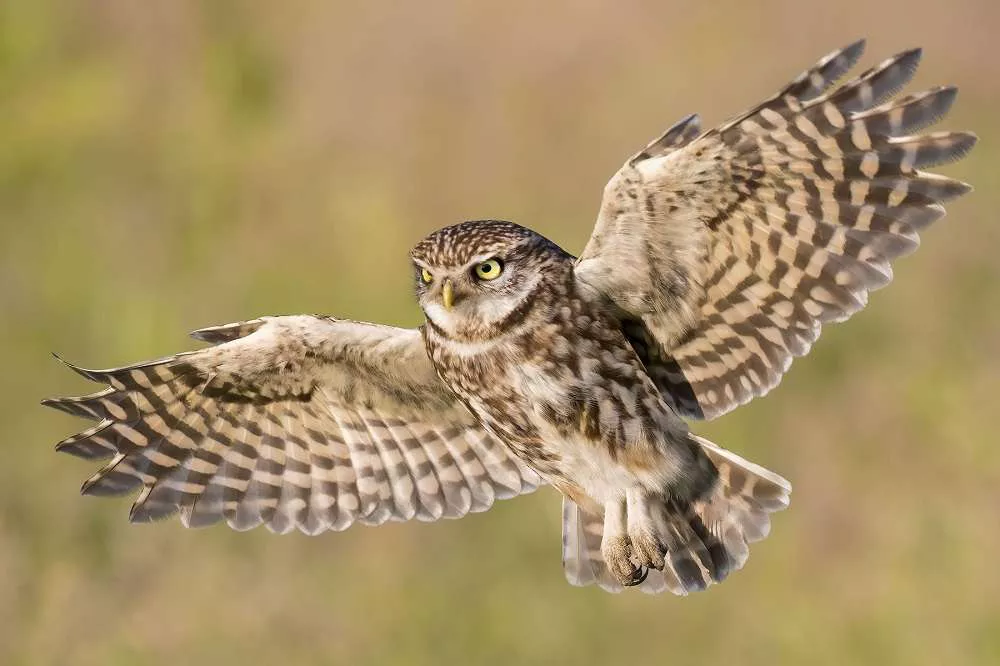
Although classified as a nocturnal bird, the Little Owl is frequently active during:
- Dawn
- Dusk
- Overcast days
- Early mornings
This makes it easier to observe than many larger owl species.
Territorial Nature
Little Owls are highly territorial.
They often use elevated perches such as:
- Fence posts
- Utility poles
- Stone walls
- Rooftops
From these positions, they monitor their surroundings and search for prey.
Distinctive Calls
Their vocalizations include:
- Repetitive whistles
- Sharp “kiew” calls
- Chirping sounds
- Territorial warning notes
These calls are especially common during the breeding season.
Diet and Hunting Techniques
The Little Owl is an opportunistic predator.
Main Food Sources
Its diet includes:
- Beetles
- Grasshoppers
- Crickets
- Earthworms
- Mice
- Voles
- Small birds
- Lizards
- Amphibians
- Hunting Strategy
Little Owls typically hunt by:
- Sitting on a perch.
- Scanning the ground.
- Detecting movement.
- Flying down rapidly.
- Capturing prey with sharp talons.
Their excellent vision and hearing allow them to locate prey even in low-light conditions.
Breeding and Reproduction
The breeding season generally begins in spring.
Nesting Sites
Pairs usually nest in:
- Hollow trees
- Building cavities
- Stone structures
- Cliff crevices
Egg Laying
A female typically lays:
- 3–5 eggs
- Occasionally up to 7 eggs
The eggs are incubated for approximately 28 days.
Raising Young
After hatching:
- The female remains near the nest.
- The male provides food.
- Chicks leave the nest after about one month.
Young birds continue learning hunting skills from their parents before becoming independent.
The Little Owl in Greek Mythology
Sacred Bird of Athena
The Little Owl’s greatest cultural significance comes from its association with Athena.
According to Greek mythology:
- Athena favored the owl above all birds.
- The owl symbolized intelligence.
- The bird represented clear thinking and wisdom.
Because Athena was the patron goddess of Athens, the owl became a symbol of the city itself.
Symbol of Wisdom
Ancient Greeks believed the owl could see what others could not.
Its ability to navigate darkness made it a metaphor for:
- Insight
- Knowledge
- Awareness
- Understanding
This symbolism continues around the world today.
Many educational institutions still use owl imagery to represent learning.
Ancient Greek Coins
One of the most famous depictions of the Little Owl appears on ancient Athenian silver coins.
The reverse side often featured:
- A standing owl
- An olive branch
- Greek inscriptions
These coins became some of the most widely recognized currency designs in the ancient world.
Interesting Facts About Greece’s National Bird
Here are some fascinating facts about the Little Owl:
- It has been associated with Greece for over 2,500 years.
- Its scientific genus name, Athene, comes directly from Athena.
- It is one of the few owl species regularly active during daylight.
- Ancient Greek soldiers considered owl sightings lucky.
- The owl appeared on some of the world’s most famous ancient coins.
- It can rotate its head up to 270 degrees.
- It often lives near human settlements.
- The species helps control rodent populations naturally.
Conclusion
The Little Owl (Athene noctua) is far more than just a small owl species. As the national bird of Greece, it represents a living bridge between nature, mythology, history, and modern culture. For over two millennia, this remarkable owl has stood as a symbol of wisdom and intellectual achievement, inspired by its enduring connection to Athena and the city of Athens.
Frequently Asked Questions (FAQ)
Q1. What is the national animal of Greece?
The national animal of Greece is the dolphin. Dolphins symbolize hope, compassion, and helpfulness. They are celebrated in Greek legend for saving sailors.
Q2. What is the national flower of Greece?
The national flower of Greece is the bear’s breeches (Acanthus mollis). This plant is known for its tall, elegant flower spikes and distinctive leaves, which were famously used as inspiration for the design of Corinthian columns in classical Greek architecture.
Q3. What is the national tree of Greece?
The national tree of Greece is the olive tree (Olea europaea). Deeply rooted in Greek history and mythology, the olive tree symbolizes peace, wisdom, and prosperity. According to legend, the city of Athens was named after the goddess Athena, who gifted the olive tree to the people.
 Facebook
  Instagram
  Youtube
 English
  Spanish