
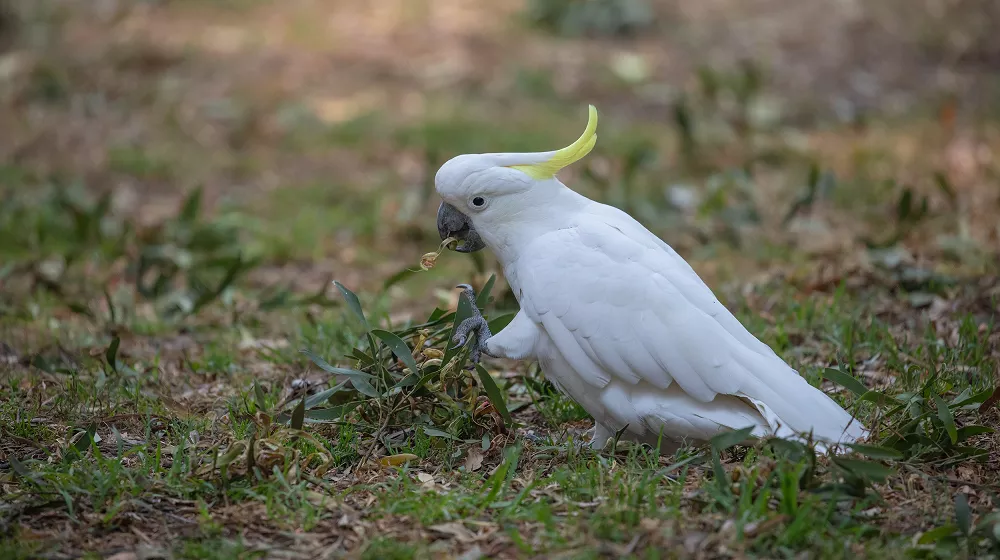
The Sulphur-crested Cockatoo (Cacatua galerita) is one of the world’s most recognizable parrots. Famous for its brilliant white feathers, striking yellow crest, remarkable intelligence, and loud calls, this intelligent bird is admired for its playful personality.
Native to Australia, New Guinea, and nearby islands, Sulphur-crested Cockatoos have adapted incredibly well to both wild forests and bustling cities. They thrive in forests, woodlands, farmland, parks, and even busy urban areas, making them one of the most familiar parrots across much of Australia.
This comprehensive guide covers everything you need to know about the Sulphur-crested Cockatoo, including its appearance, habitat, diet, lifespan, behavior, breeding habits, and whether it makes a suitable pet.
Quick Facts
| Scientific Name | Cacatua galerita |
|---|---|
| Common Name | Sulphur-crested Cockatoo |
| Family | Cacatuidae |
| Order | Psittaciformes |
| Size | 44–55 cm (17–22 inches) |
| Wingspan | 90–103 cm (35–40 inches) |
| Weight | 700–1,100 g |
| Lifespan | 20–40 years (wild), 50–70+ years (captivity) |
| Diet | Seeds, nuts, fruits, flowers, roots, insects |
| Habitat | Forests, woodlands, grasslands, urban parks |
| Native Range | Australia, New Guinea, Aru Islands |
| Conservation Status | Least Concern (IUCN) |
| Social Behavior | Highly social |
| Intelligence | Extremely high |
| Pet Suitability | Experienced bird owners |
Identification
The Sulphur-crested Cockatoo is among the largest white cockatoos and is instantly recognizable.
Physical Appearance
Key characteristics include:
- Brilliant white plumage
- Bright yellow erectile crest
- Dark grey-black beak
- Grey feet
- White tail and wings
- Pale yellow wash beneath wings
- Dark brown eyes (males)
- Reddish-brown eyes (females)
The impressive crest is perhaps its most iconic feature. Cockatoos raise it when excited, frightened, curious, or communicating with other birds.
Young birds resemble adults but typically have darker eyes and slightly duller plumage.
Natural Distribution
Sulphur-crested Cockatoos naturally occur across:
- Eastern Australia
- Northern Australia
- Tasmania (introduced populations)
- Papua New Guinea
- Aru Islands
- Parts of eastern Indonesia
They have also established feral populations in:
- New Zealand
- Singapore
- Hong Kong
- Some areas of the United States
Because they adapt easily to urban environments, they are now common in parks, gardens, golf courses, and agricultural lands.
Preferred Habitat
Sulphur-crested Cockatoos occupy an impressive range of habitats.
These include:
- Open forests
- Rainforest edges
- Woodland
- Mangroves
- Farmland
- Urban parks
- Residential suburbs
- Riverbanks
- Grasslands
Unlike many bird species, they thrive alongside humans and often become familiar neighborhood visitors.
Size and Weight
Adult Sulphur-crested Cockatoos typically measure:
- Length: 44–55 cm
- Weight: 700–950 grams
- Wingspan: up to 103 cm
Males are generally slightly larger than females, although distinguishing them by size alone is difficult.
Behavior and Personality
One reason Sulphur-crested Cockatoos are so beloved is their extraordinary personality.
Highly Intelligent
Researchers consider cockatoos among the world’s smartest birds.
They can:
- Solve puzzles
- Open locks
- Recognize patterns
- Learn routines
- Mimic sounds
- Understand cause and effect
- Remember people for years
Recent observations have even documented wild cockatoos learning to open household garbage bins and passing the technique through social learning.
Social Birds
These parrots rarely live alone.
Outside the breeding season, they gather in flocks ranging from:
- 20 birds
- 100 birds
- Sometimes more than 1,000 individuals
Living in groups provides protection from predators and improves food-finding success.
Communication
Sulphur-crested Cockatoos communicate through:
- Loud screeches
- Whistles
- Body posture
- Crest position
- Wing displays
- Gentle beak tapping
Their calls can carry over several kilometers.
Diet in the Wild
Sulphur-crested Cockatoos are opportunistic omnivores.
Their natural diet includes:
Seeds
Grass seeds are a major food source throughout the year.
Nuts
They crack open hard shells using their incredibly powerful beaks.
Fruits
Favorite fruits include:
- Figs
- Apples
- Native berries
- Palm fruits
- Roots and Tubers
They frequently dig into the ground searching for underground plant material.
Flowers
Many Australian flowering trees provide nectar and pollen.
Insects
Cockatoos supplement their diet with:
- Beetles
- Larvae
- Caterpillars
- Grubs
Feeding Habits
Sulphur-crested Cockatoos usually feed:
- Early morning
- Late afternoon
Large flocks often feed together in open fields while several birds act as lookouts.
If danger approaches, sentry birds emit loud alarm calls and the entire flock takes flight within seconds.
Breeding and Reproduction
Breeding Season
Breeding varies depending on location but usually occurs between: August and January.
Nesting
They nest inside:
- Hollow eucalyptus trees
- Large dead trees
- Natural cavities
Suitable nesting hollows may take over 100 years to develop, making mature forests critically important.
Eggs
Typical clutch size: 2–3 eggs.
Incubation lasts approximately: 27–30 days.
Both parents participate in incubation and chick rearing.
Young Birds
Chicks remain in the nest for roughly: 9–12 weeks.
Even after fledging, young birds often stay with their parents for several months while learning essential survival skills.
Lifespan
Sulphur-crested Cockatoos are exceptionally long-lived.
In the Wild
Most live: 20–40 years.
In Captivity
With excellent care, many individuals reach: 50–70 years.
Some exceptional birds have reportedly lived more than 80 years.
Because of this remarkable longevity, owning one is a lifetime commitment.
Natural Predators
Adult cockatoos have relatively few predators.
Potential threats include:
- Wedge-tailed eagles
- Powerful owls
- Large snakes
- Monitor lizards
Young chicks are more vulnerable to nest predators.
Human activities remain the greatest long-term threat.
Sulphur-crested Cockatoo as a Pet
These birds are popular companion parrots, but they are not suitable for everyone.
Advantages
Owners appreciate their:
- Incredible intelligence
- Strong bonds with humans
- Ability to learn tricks
- Entertaining personalities
- Long lifespan
Challenges
Potential owners should carefully consider:
Extremely Loud
Their vocalizations can exceed 120 decibels.
Constant Attention
Cockatoos crave social interaction and may become depressed if ignored.
Destructive Chewing
Their powerful beaks can destroy:
- Furniture
- Doors
- Electronics
- Wooden toys
Emotional Needs
Without enrichment, they may develop:
- Feather plucking
- Excessive screaming
- Aggression
- Anxiety
For these reasons, Sulphur-crested Cockatoos are recommended only for experienced bird keepers prepared for decades of daily care.
What Do Pet Sulphur-crested Cockatoos Eat?
A healthy captive diet should include:
Pellets
High-quality formulated pellets should make up approximately 60–70% of the diet.
Fresh Vegetables
Excellent choices include: Carrots, Broccoli, Bell peppers, Kale, and Spinach.
Fruits
Offer in moderation: Apples, Blueberries, Mango, Papaya, and Grapes.
Healthy Treats
Occasionally provide:
- Almonds
- Walnuts
- Pumpkin seeds
Avoid:
- Chocolate
- Avocado
- Alcohol
- Caffeine
- Onion
- Garlic
- Excess salt
Fresh water should always be available.
Common Health Problems
Like other parrots, Sulphur-crested Cockatoos can develop:
- Obesity
- Fatty liver disease
- Psittacine beak and feather disease (PBFD)
- Respiratory infections
- Vitamin A deficiency
- Calcium imbalance
- Feather destructive behavior
Routine veterinary checkups are essential for long-term health.
Conservation Status
According to the International Union for Conservation of Nature (IUCN), the Sulphur-crested Cockatoo is currently classified as Least Concern.
Although the global population remains stable, local threats include:
- Habitat loss
- Removal of old nesting trees
- Illegal wildlife trade
- Human-wildlife conflict
- Agricultural persecution
Protecting mature forests and preserving natural nesting cavities are essential for the species’ future.
Some Interesting Facts about Sulphur-crested Cockatoo
- Their crest contains specialized muscles that allow rapid raising and lowering.
- They can fly at speeds exceeding 70 km/h.
- Their beak continuously grows throughout life.
- Wild cockatoos often mate for life.
- They can distinguish individual flock members by voice.
- Their loud calls help maintain contact while flying over long distances.
- Urban populations have learned to open garbage bins by lifting lids with coordinated movements.
Final Thoughts
The Sulphur-crested Cockatoo is much more than a beautiful white parrot. It is an exceptionally intelligent, highly social, and emotionally complex bird that has successfully adapted to a wide variety of environments. From ancient Australian forests to modern city parks, its curiosity, problem-solving skills, and unmistakable yellow crest have made it one of the world’s most admired cockatoos.
Frequently Asked Questions
Are Sulphur-crested Cockatoos good pets?
They can be wonderful companions for experienced owners but require decades of commitment, daily interaction, extensive enrichment, and tolerance for extremely loud vocalizations.
How long do Sulphur-crested Cockatoos live?
Most live between 20–40 years in the wild and 50–70 years or more in captivity with proper care.
Can Sulphur-crested Cockatoos talk?
Yes. They are capable of learning words, short phrases, household sounds, and whistles, although they are generally less articulate than African Grey Parrots.
Why do they raise their crest?
The crest is used to communicate emotions such as excitement, curiosity, alarm, aggression, or courtship.
Are Sulphur-crested Cockatoos endangered?
No. They are currently listed as Least Concern, although some regional populations face habitat-related pressures.
Why are they so noisy?
Loud vocalizations help flock members communicate across long distances and warn each other about predators or other threats.
 Facebook
  Instagram
  Youtube
 English
  Spanish