
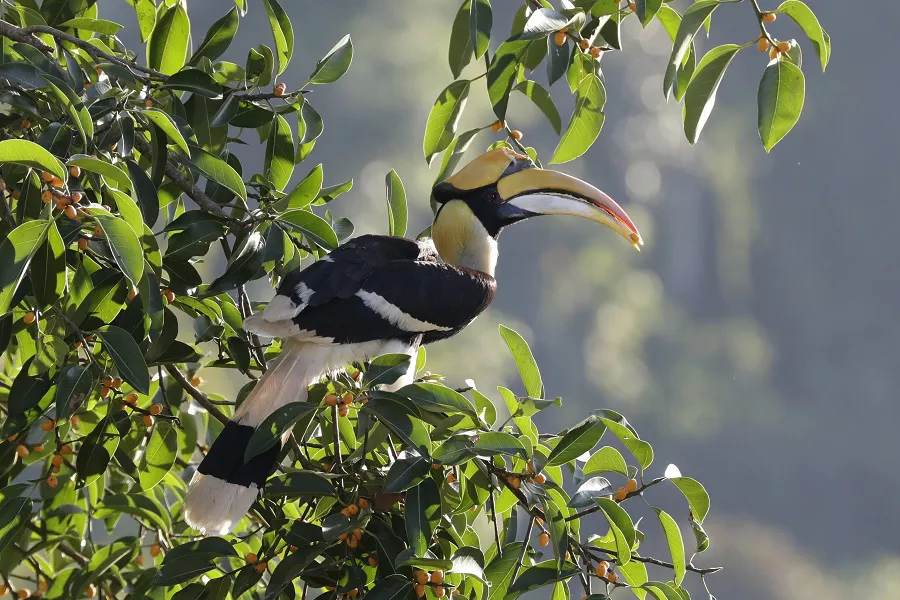
The Rhinoceros Hornbill (Buceros rhinoceros) is one of the most spectacular birds found in the tropical rainforests of Southeast Asia. Known for its large orange-red casque, impressive curved bill, and striking black-and-white plumage, this iconic hornbill is often considered a symbol of the rainforest.
In this comprehensive guide, we will explore everything about the Rhinoceros Hornbill’s feeding habits, favorite foods, hunting techniques, seasonal dietary changes, and ecological importance.
What Is a Rhinoceros Hornbill?
The Rhinoceros Hornbill (Buceros rhinoceros) is a large, striking bird native to the tropical forests of Southeast Asia, including Malaysia, Thailand, Sumatra, and Borneo. It belongs to the hornbill family (Bucerotidae) and is easily recognizable by its large, curved bill topped with a bright, helmet-like structure called a casque, which looks like a horn—hence the name.
Like many tropical birds, Rhinoceros Hornbills are omnivorous, meaning they consume both plant and animal matter.
What Do Rhinoceros Hornbills Eat?
Primary Diet Overview
Rhinoceros Hornbills have a varied diet that includes:
- Fruits
- Figs
- Berries
- Small mammals
- Insects
- Reptiles
- Amphibians
- Bird eggs
- Small birds
However, fruit makes up the majority of their diet throughout most of the year.
Scientists classify them as frugivore-omnivores, meaning they rely heavily on fruit while supplementing their nutrition with animal prey.
Fruits: The Most Important Food Source
Why Fruits Dominate Their Diet
The tropical rainforests of Southeast Asia produce fruit year-round, providing a reliable source of energy.
Rhinoceros Hornbills consume large amounts of:
- Wild figs
- Drupes
- Forest berries
- Palm fruits
- Nutmeg fruits
- Laurel fruits
These foods are rich in:
- Natural sugars
- Water
- Vitamins
- Antioxidants
The high-energy content helps sustain the birds during long flights between feeding and nesting sites.
Figs Are Their Favorite Food
Among all fruits, figs are particularly important.
Many rainforest ecologists consider hornbills and fig trees to have a mutually beneficial relationship.
Hornbills frequently feed on:
- Strangler figs
- Cluster figs
- Banyan figs
- Wild forest figs
Figs often fruit during periods when other food sources are scarce, making them a critical survival resource.
In some forests, researchers have observed Rhinoceros Hornbills visiting the same fig tree repeatedly over several days when fruit is abundant.
Do Rhinoceros Hornbills Eat Animals?
Yes, They Regularly Eat Animal Prey
Although fruit dominates their diet, Rhinoceros Hornbills are opportunistic feeders.
They actively hunt and consume various animals, especially during breeding season when protein demands increase.
Animal foods include:
- Large insects
- Lizards
- Frogs
- Snakes
- Rodents
- Small birds
These protein-rich foods help support:
- Muscle maintenance
- Feather growth
- Egg production
- Chick development
Insects in the Rhinoceros Hornbill Diet
Common Insects They Eat
Rhinoceros Hornbills consume a wide range of insects, including:
- Beetles
- Grasshoppers
- Crickets
- Cicadas
- Caterpillars
- Termites
Insects provide:
- Protein
- Essential fats
- Micronutrients
Young hornbill chicks especially benefit from insect-rich meals delivered by their parents.
Do Rhinoceros Hornbills Eat Reptiles?
Lizards and Small Snakes
Yes, reptiles are a regular part of their diet.
Common reptile prey includes:
- Geckos
- Skinks
- Small forest lizards
- Juvenile snakes
Their large bills allow them to grasp and manipulate slippery prey effectively.
Once captured, the prey is often tossed into the air and swallowed whole.
Amphibians as Food
During wet seasons, amphibians become more abundant.
Rhinoceros Hornbills may feed on:
- Tree frogs
- Ground frogs
- Small toads
Amphibians provide valuable protein and moisture, especially during periods of high activity.
Do Rhinoceros Hornbills Eat Birds and Eggs?
Opportunistic Nest Predators
Although not their primary food source, Rhinoceros Hornbills occasionally eat:
- Nestling birds
- Bird eggs
- Small adult birds
When opportunities arise, they may raid nests found while foraging through the forest canopy.
This behavior demonstrates their adaptability as omnivorous feeders.
How Do Rhinoceros Hornbills Find Food?
Excellent Vision
Rhinoceros Hornbills rely heavily on their eyesight.
Their vision allows them to:
- Detect brightly colored fruits
- Spot movement among branches
- Locate hidden prey
- Navigate dense rainforest canopies
Unlike many predators, they do not depend primarily on smell.
Searching the Forest Canopy
Most feeding occurs high above the forest floor.
The birds move through:
- Emergent trees
- Upper canopy layers
- Fruit-bearing branches
Their powerful wings enable them to travel long distances between feeding sites.
A single hornbill may cover several kilometers in a day while searching for food.
Unique Feeding Behavior
Toss-and-Swallow Technique
One fascinating feeding behavior is their toss-and-swallow method.
After grabbing food with the bill, the hornbill often:
- Tilts its head back.
- Throws the item into the air.
- Catches it with an open beak.
- Swallows it whole.
This technique is commonly observed when eating:
- Fruits
- Insects
- Lizards
- Small vertebrates
The behavior helps them consume food efficiently despite their large bill structure.
What Do Baby Rhinoceros Hornbills Eat?
Diet of Nestlings
Baby Rhinoceros Hornbills require highly nutritious food for rapid growth.
Parents provide:
- Soft fruits
- Figs
- Insects
- Small reptiles
- Frogs
Protein-rich prey becomes especially important during the first weeks after hatching.
Feeding During Nesting Season
Hornbills have one of the most remarkable nesting strategies among birds.
The female seals herself inside a tree cavity using mud, fruit pulp, and droppings, leaving only a narrow slit.
During this period:
- The male gathers food.
- He delivers meals through the opening.
- The female feeds herself and the chicks.
A male may make dozens of feeding trips every day to support the family.
This demanding process significantly increases the need for diverse food sources.
Seasonal Changes in Diet
Fruit Availability Influences Feeding
The diet of Rhinoceros Hornbills changes throughout the year based on fruit production cycles.
When fruit is abundant:
- Fruits may comprise over 80% of the diet.
When fruit becomes scarce:
- Animal prey consumption increases.
- Insects become more important.
- Small vertebrates are hunted more frequently.
This flexibility allows the species to survive seasonal fluctuations in food supply.
What Do Rhinoceros Hornbills Eat in Captivity?
Zoo and Conservation Center Diets
Birds kept in accredited zoos and wildlife rehabilitation centers receive carefully managed diets.
Typical foods include:
- Papaya
- Banana
- Melon
- Grapes
- Figs
- Berries
- Prepared bird pellets
- Insects
- Mice
- Nutritional supplements
Keepers aim to mimic the nutritional diversity found in the wild.
Why Captive Diets Must Be Balanced
An improper diet can lead to:
- Obesity
- Nutritional deficiencies
- Poor feather quality
- Reproductive problems
Modern avian nutrition programs ensure hornbills receive appropriate levels of:
- Protein
- Calcium
- Vitamins
- Minerals
Interesting Facts About Rhinoceros Hornbill Feeding Habits
1. They Can Swallow Surprisingly Large Fruits
Their large bill and flexible throat allow them to consume fruits much larger than those eaten by many other birds.
2. They Travel Long Distances for Food
Some individuals may fly several kilometers daily between nesting and feeding areas.
3. Figs Are a Lifeline
During periods when other fruits are unavailable, figs often become the primary food source.
4. Males Work Extremely Hard During Nesting
A nesting male may spend most of the day gathering food for the sealed female and growing chicks.
5. They Help Grow Future Forests
Thousands of seeds may pass through a hornbill’s digestive system each year, contributing to rainforest regeneration.
Conclusion
The Rhinoceros Hornbill is an extraordinary rainforest bird with a diverse and adaptable diet. While fruits—especially wild figs—make up the majority of its food intake, it also consumes insects, reptiles, amphibians, small mammals, and bird eggs to meet its nutritional needs. This balanced diet supports its survival in the tropical forests of Southeast Asia and provides the energy required for breeding, nesting, and long-distance foraging.
Frequently Asked Questions
Are Rhinoceros Hornbills Herbivores or Carnivores?
Neither. They are omnivores, eating both plant and animal matter.
What Is Their Favorite Food?
Wild figs are generally considered one of their most important and preferred food sources.
Do Rhinoceros Hornbills Hunt Live Animals?
Yes. They regularly catch insects, lizards, frogs, and other small animals.
Do They Eat Meat Every Day?
Not necessarily. Fruit forms the majority of their diet, but animal prey is consumed regularly, especially during breeding periods.
Can Rhinoceros Hornbills Eat Only Fruit?
No. Although fruit is their primary food source, animal protein provides essential nutrients, particularly for growing chicks.
 Facebook
  Instagram
  Youtube
 English
  Spanish