
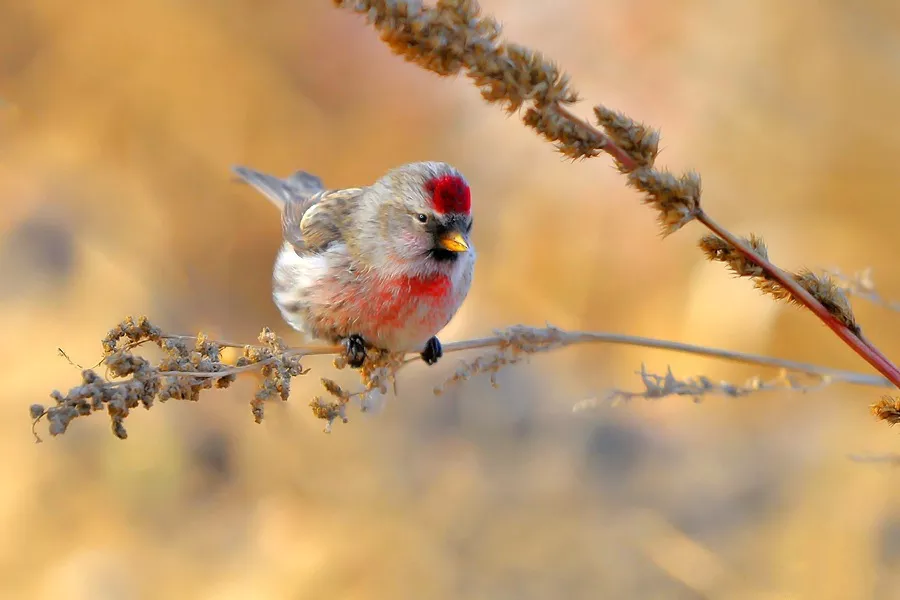
Redpolls are among the most fascinating small finches found in the northern regions of the world. With their tiny red forehead patches, streaked brown plumage, and energetic feeding behavior, these birds often attract the attention of birdwatchers during the colder months. Two redpoll forms that frequently cause confusion are the Common Redpoll and the Lesser Redpoll.
Although they look very similar, several differences in size, appearance, habitat, distribution, and behavior can help bird enthusiasts tell them apart. This guide explains the key differences between Common Redpoll vs Lesser Redpoll and provides practical identification tips for bird lovers.
Common Redpoll vs Lesser Redpoll: Quick Comparison
| Feature | Common Redpoll | Lesser Redpoll |
|---|---|---|
| Size | Slightly larger | Smaller |
| Color | Paler, colder tones | Darker, warmer brown |
| Face | Whiter | More brown |
| Streaking | Moderate | Heavier |
| Range | Arctic regions, North America, Europe | Mainly Europe |
| Habitat | Boreal forests, tundra | Woodland, gardens |
| Bill | Slightly larger | Smaller |
| Overall Appearance | Frosty look | Warm brown look |
What Is a Common Redpoll?
The Common Redpoll is a small finch that breeds across northern Europe, Asia, and North America. It prefers boreal forests, tundra edges, and birch woodlands.
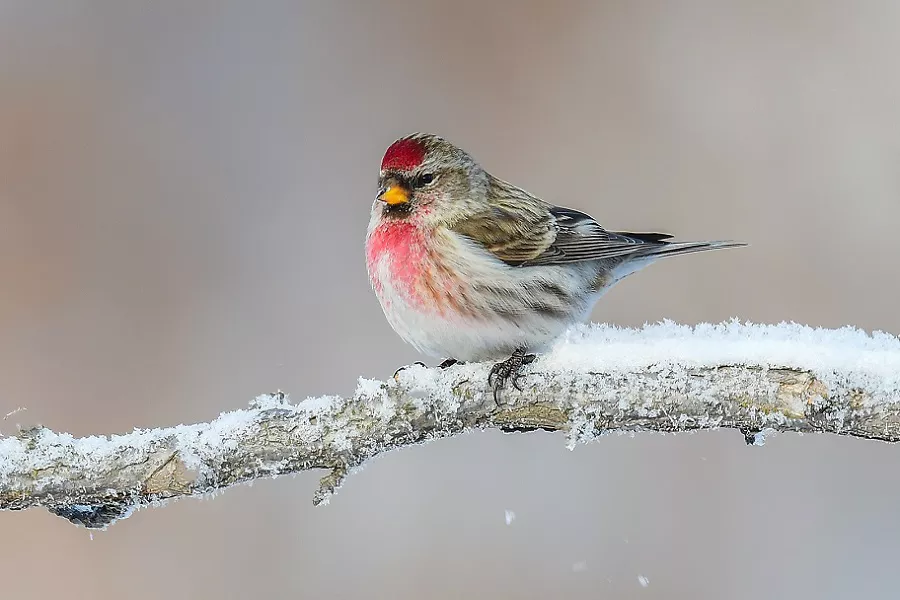
Common Redpoll
Basic Facts
- Scientific name: Acanthis flammea
- Length: 11.5–14 cm (4.5–5.5 inches)
- Weight: 9–20 g
- Habitat: Arctic and boreal forests
- Diet: Mainly seeds, especially birch, alder, and willow seeds
Common Redpolls often move south during winter in large flocks. In North America, they may visit backyard feeders during irruption years.
What Is a Lesser Redpoll?
The Lesser Redpoll is mainly found in Europe. It is smaller and darker than the Common Redpoll.
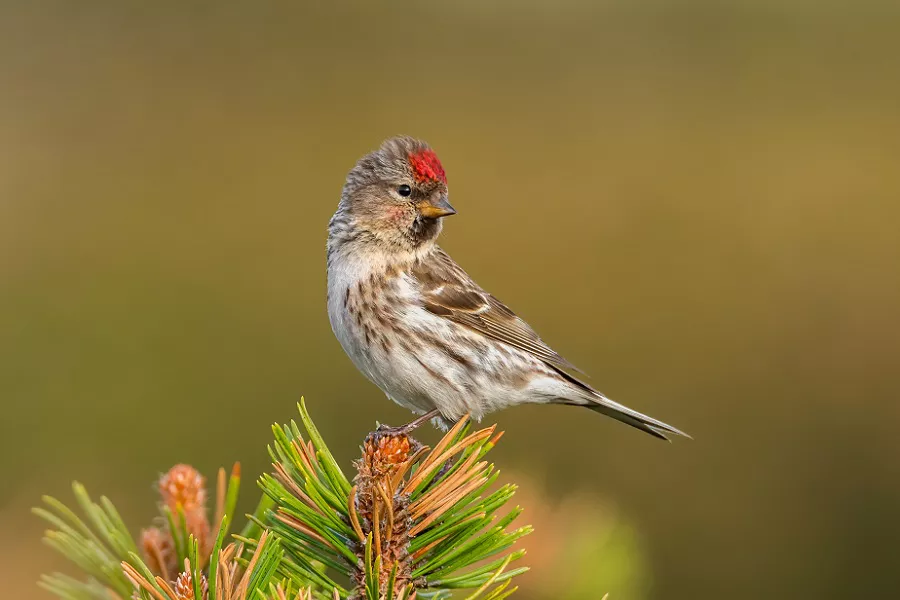
Lesser Redpoll
Basic Facts
- Scientific name: Acanthis cabaret (traditional classification)
- Length: 11–12 cm (4.3–4.7 inches)
- Weight: About 8–12 g
- Habitat: Woodland edges, scrub, gardens, and heathland
- Distribution: Mainly Britain and parts of Europe
Lesser Redpolls are common visitors to gardens and feeders in the UK. They often feed in groups and have a cheerful, chattering call.
Key Differences Between Common Redpoll and Lesser Redpoll
1. Size Difference
One of the easiest ways to separate the two is by body size.
The Common Redpoll is usually larger, with:
- A longer body
- A slightly heavier build
- A larger bill
The Lesser Redpoll is smaller and slimmer, giving it a more delicate appearance.
However, size alone is unreliable because individual birds vary, and mixed flocks can make comparisons difficult.
2. Plumage and Color
Color is one of the most useful identification clues.
Common Redpoll:
- Appears paler overall
- More grayish-brown
- Has whiter wing bars
- Often shows a pinkish breast in males
Lesser Redpoll:
- Looks darker and warmer
- Has more cinnamon or brown tones
- Often appears richer in color around the head and sides
A Common Redpoll often gives a “cold northern” impression, while a Lesser Redpoll has a warmer brown appearance.
3. Bill Size and Shape
The bill is another helpful feature:
Common Redpoll:
- Slightly larger bill
- More noticeable triangular shape
Lesser Redpoll:
- Smaller, finer bill
- More delicate facial appearance
Because redpolls are extremely similar, experienced birders usually combine bill size with other features rather than relying on a single characteristic.
4. Habitat Preferences
The two birds often prefer slightly different environments.
Common Redpoll Habitat
Common Redpolls are adapted to northern landscapes:
- Arctic tundra edges
- Boreal forests
- Willow and birch shrublands
- Open fields during winter
They are especially common in northern regions where cold temperatures are normal.
Lesser Redpoll Habitat
Lesser Redpolls are more associated with:
- Birch woodland
- Alder forests
- Young woodland areas
- Countryside habitats
In the UK, they are commonly found in areas with suitable seed-producing trees.
Why Are They No Longer Separate Species?
This is one of the most interesting developments in modern bird science.
Scientists studied the DNA of Common, Lesser, and Hoary Redpolls. They found very small genetic differences.
Most visible variations are controlled by a special genetic mechanism called a supergene, which affects:
- Body size
- Plumage color
- Bill shape
Because of this discovery, major ornithological organizations combined them into one species called Redpoll in 2024.
However, many birdwatchers still use the traditional names because the different forms remain easy to recognize in the field.
How to Identify a Redpoll in the Field
When trying to identify a redpoll, avoid focusing on only one feature. Instead, look at the whole bird.
Step 1: Check the Overall Size
Ask:
- Does it look large and sturdy?
- Or small and delicate?
Step 2: Look at the Color Tone
Ask:
- Is the bird pale gray-brown?
- Or darker and warmer brown?
Step 3: Examine the Head and Bill
Look for:
- Red forehead patch
- Bill size
- Black chin markings
Step 4: Consider Location
Geography can provide important clues:
- North America: Common Redpoll is far more likely
- Western Europe: Lesser Redpoll is more common
- Mixed flocks may contain different forms
Common Redpoll vs Lesser Redpoll: Which One Is Easier to See?
For most birdwatchers, the answer depends on location.
- In Canada and northern United States, Common Redpolls are the species most frequently encountered.
- In the United Kingdom and parts of Europe, Lesser Redpolls are much more common.
- During winter irruptions, redpoll numbers can increase dramatically, bringing large flocks to gardens and feeders.
Final Thoughts
The difference between Common Redpoll and Lesser Redpoll is subtle but fascinating. The Common Redpoll is generally larger, paler, and more widespread, while the Lesser Redpoll is smaller, darker, and mainly European.
 Facebook
  Instagram
  Youtube
 English
  Spanish