
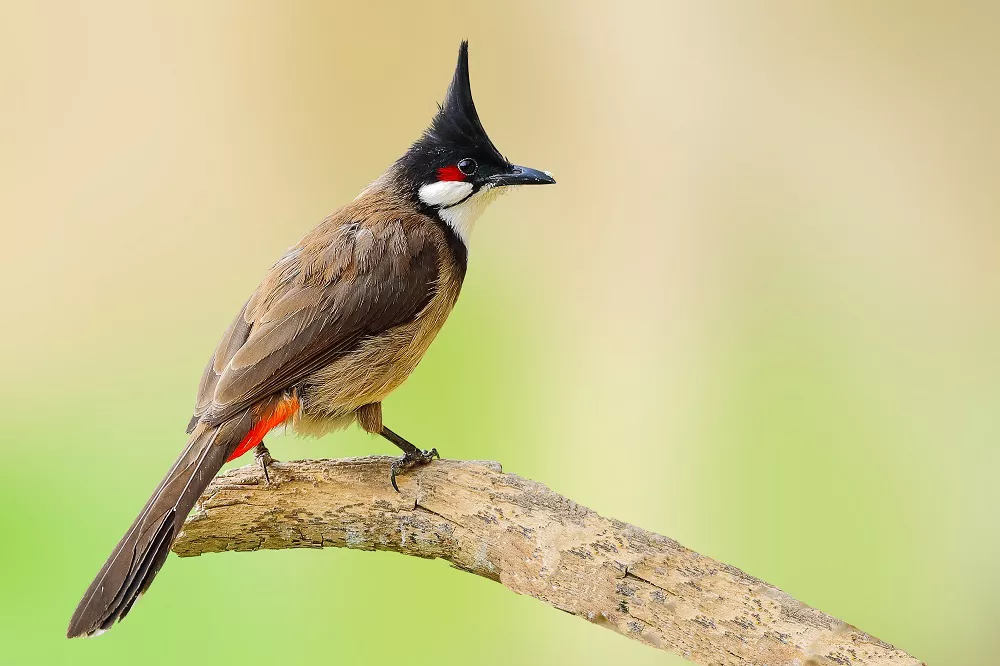
The red-whiskered bulbul (Pycnonotus jocosus), or crested bulbul, is a passerine bird native to Asia. It is a member of the bulbul family. It is a resident frugivore found mainly in tropical Asia. Known for its distinctive crest, bright red cheek patch, and cheerful personality, this bird has fascinated birdwatchers, nature enthusiasts, and aviculturists for centuries.
In this article, you’ll learn everything about the Red-Whiskered Bulbul, including its identification, habitat, diet, behavior, breeding habits, conservation status, and much more.
Quick Facts About the Red-whiskered Bulbul
| Feature | Details |
|---|---|
| Common Name | Red-whiskered Bulbul |
| Scientific Name | Pycnonotus jocosus |
| Family | Pycnonotidae (Bulbuls) |
| Size | 19–22 cm (7.5–8.7 in) |
| Weight | 23–42 g (0.8–1.5 oz) |
| Lifespan | Up to 10–11 years in the wild |
| Diet | Fruits, nectar, insects, and small invertebrates |
| Habitat | Gardens, forests, scrublands, plantations, and urban areas |
| Range | South Asia, Southeast Asia; introduced in parts of the world |
| Conservation Status | Least Concern (IUCN) |
What Is a Red-whiskered Bulbul?
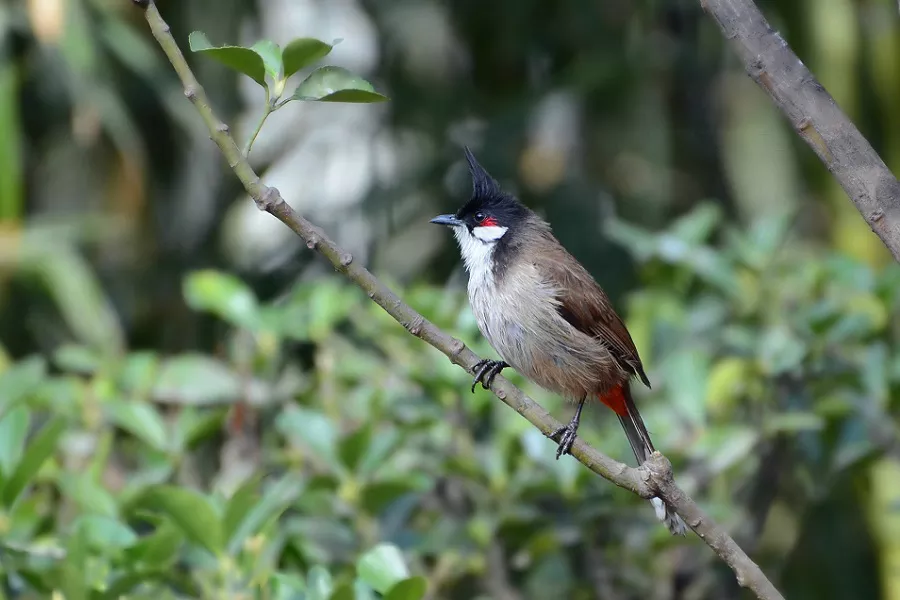
The Red-whiskered Bulbul is a passerine bird belonging to the bulbul family Pycnonotidae. It is famous for its striking appearance: a tall pointed crest, white face, black upperparts, and the bright red “whisker” patch just behind the eye. Another red patch is visible beneath the tail, adding to its colorful charm.
This species is highly adaptable and thrives in both natural and human-modified environments. Its cheerful calls and active behavior make it one of the easiest bulbuls to observe in the wild.
How to Recognize a Red-whiskered Bulbul
Identifying a Red-whiskered Bulbul is relatively easy once you know its key features.
Key Identification Features
- Black Crest: A tall, pointed crest that gives the bird a stylish appearance.
- White Cheeks and Throat: The face is mostly white, contrasting sharply with the black crest and mask.
- Red Whisker Patch: A vivid red patch behind the eye — the species’ signature feature.
- Brown Back and Wings: The upperparts are soft brown, while the underparts are whitish.
- Red Vent Patch: A bright red patch under the tail is often visible when the bird flies or perches.
- Slender Black Bill and Dark Eyes: Typical of insect- and fruit-eating songbirds.
Male vs Female Red-Whiskered Bulbul
Male and female Red-Whiskered Bulbuls look remarkably similar.
Males
- Slightly larger body size
- More territorial during breeding season
- Often sing more frequently
Females
- Slightly smaller
- Similar coloration
- Responsible for much of the incubation process
For most birdwatchers, distinguishing the sexes in the field is difficult without observing behavior.
Juvenile Birds
Young Red-Whiskered Bulbuls differ from adults by having:
- Duller plumage
- Smaller crest
- Less prominent red whisker patch
- Brownish facial markings
As they mature, their colors gradually become brighter.
Red-Whiskered Bulbul Distribution and Range
The Red-whiskered Bulbul has a wide natural distribution across South Asia and Southeast Asia.
Native Range
- India
- Sri Lanka
- Nepal
- Bangladesh
- Myanmar
- Thailand
- Laos
- Cambodia
- Vietnam
- Southern China
- Malaysia and nearby regions
Introduced Populations
Humans have introduced the species to several other regions, including:
- Hawaii (USA)
- Mauritius
- Réunion
- Australia (localized populations)
- Florida (historical sightings and small populations)
Preferred Habitat
This adaptable bird occupies a variety of habitats:
- Tropical and subtropical forests
- Woodland edges
- Scrublands and hedgerows
- Tea and coffee plantations
- Urban parks and gardens
- Orchards and agricultural areas
Red-whiskered Bulbuls are especially fond of areas with dense shrubs and fruiting trees, which provide both food and nesting sites.
Behavior and Personality
One reason birders love the Red-whiskered Bulbul is its energetic and social nature.
Active and Curious
These birds are constantly on the move, hopping between branches, flicking their tails, and investigating flowers and fruits. They are not particularly shy and often allow close observation in gardens and parks.
Social Behavior
Red-whiskered Bulbuls are usually seen in pairs or small family groups. Outside the breeding season, they may gather in loose flocks with other bulbuls and small songbirds.
Vocalizations
Their calls are varied and musical, including whistles, chirps, and bubbling notes. A common call is a cheerful “pit-pit-pit” followed by melodic phrases. Their vocal activity is most noticeable at dawn and dusk.
What Does a Red-whiskered Bulbul Eat?
The Red-whiskered Bulbul is an omnivorous frugivore, meaning it eats both plant and animal matter.
Main Foods
- Fruits: Figs, berries, papaya, banana, guava, and other soft fruits.
- Nectar: They visit flowering plants and help with pollination.
- Insects: Beetles, caterpillars, ants, termites, and other small insects.
- Small Invertebrates: Spiders and occasionally tiny snails or larvae.
Foraging Style
Bulbuls forage actively in trees and shrubs, picking fruits with their bills or catching insects among leaves. They may also hover briefly near flowers to sip nectar.
Ecological Role
By eating fruits and dispersing seeds, Red-whiskered Bulbuls play an important role in maintaining healthy ecosystems and regenerating forests.
Breeding and Nesting
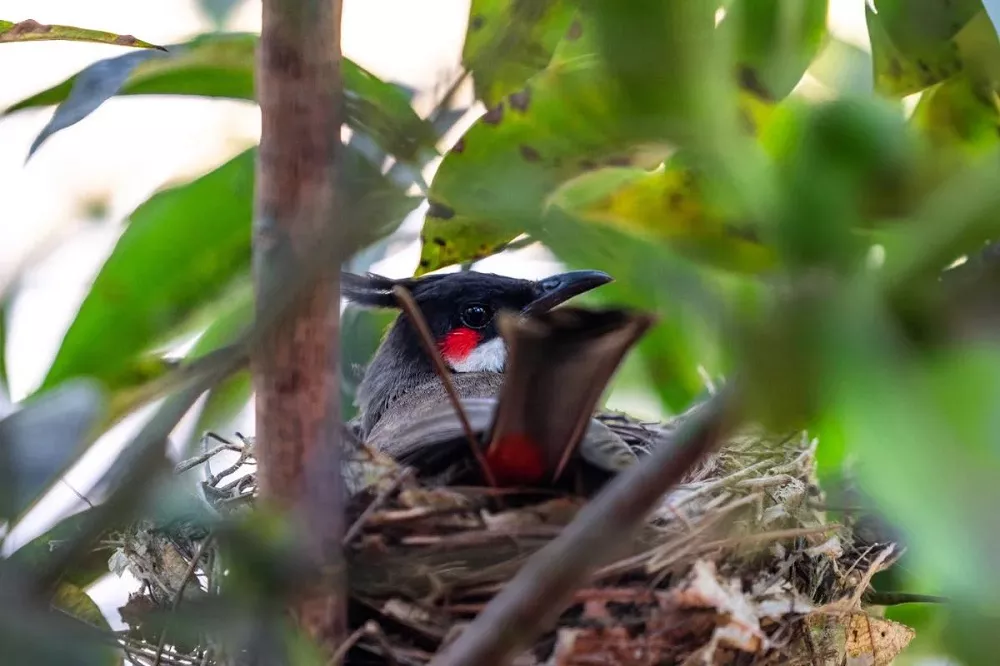
The breeding season varies by region but generally occurs during the warmer months when food is abundant.
Courtship
Males attract females through singing, crest displays, and short chases. Pairs often remain together throughout the breeding season.
Nest Building
The nest is a small, neat cup made from twigs, grass, roots, and leaves. It is usually placed in a shrub or small tree, 1–3 meters above the ground.
Eggs and Incubation
- Clutch size: 2–4 eggs
- Egg color: Pale pinkish or cream with reddish-brown spots
- Incubation period: About 12–14 days
Both parents participate in incubation and chick care.
Raising the Chicks
Chicks hatch helpless and featherless. Parents feed them insects and soft fruits. The young birds fledge after about 10–14 days but may remain with their parents for some time afterward.
How Long Do Red-Whiskered Bulbuls Live?
In the wild, most individuals live:
8–12 years
In protected conditions, some may live even longer.
Natural Predators
Common predators include:
- Snakes
- Raptors
- Crows
- Domestic cats
- Tree-climbing mammals
Their vigilance and alarm calls help reduce predation risk.
Migration and Movement
The Red-whiskered Bulbul is generally a resident bird, meaning it does not undertake long-distance migrations. However, some populations may make short seasonal movements in response to food availability or local climate conditions.
Conservation Status
According to the International Union for Conservation of Nature (IUCN), the Red-whiskered Bulbul is classified as Least Concern. Its population is large and widespread, and the species adapts well to human-altered landscapes.
Interesting Facts About the Red-whiskered Bulbul
- The “whisker” is not a whisker. The red patch behind the eye is actually a feather patch, not facial hair.
- Excellent seed dispersers. After eating fruits, bulbuls spread seeds across wide areas, helping plants reproduce.
- Adaptable city dwellers. They thrive in urban gardens and parks, making them one of the most commonly seen birds in many Asian cities.
- Strong pair bonds. Breeding pairs often stay together and cooperate closely in raising chicks.
- Introduced populations can become invasive. In places like Hawaii, Red-whiskered Bulbuls have established wild populations and may compete with native birds for food.
How to Attract Red-whiskered Bulbuls to Your Garden
If you live within their range, you can encourage these delightful birds to visit your garden.
Tips for a Bulbul-Friendly Garden
- Plant fruiting shrubs and trees such as figs, guava, and berries.
- Grow flowering plants that produce nectar, like hibiscus and bottlebrush.
- Provide fresh water in a shallow bird bath.
- Avoid pesticides to keep insect populations healthy.
- Create dense shrubbery for shelter and nesting sites.
With the right habitat, Red-whiskered Bulbuls may become regular visitors, filling your garden with movement and song.
Red-whiskered Bulbul vs. Similar Species
Birders sometimes confuse the Red-whiskered Bulbul with other bulbul species. Here’s a quick comparison:
| Species | Key Difference |
|---|---|
| Red-whiskered Bulbul | Black crest, white cheeks, red patch behind eye and under tail |
| Red-vented Bulbul | Darker overall plumage, no red whisker patch, red vent only |
| White-eared Bulbul | Yellow vent, white ear patch, lacks tall crest |
| Black-crested Bulbul | Yellow underparts and entirely dark head with crest |
The red patch behind the eye is the most reliable field mark for identifying the Red-whiskered Bulbul.
Conclusion
The Red-whiskered Bulbul (Pycnonotus jocosus) is a striking, intelligent, and highly adaptable songbird that has won the admiration of bird enthusiasts around the world. With its distinctive crest, bright red facial markings, cheerful calls, and remarkable adaptability, it is one of the most recognizable birds found in gardens and woodlands across Asia.
Frequently Asked Questions (FAQ)
1. Is the Red-whiskered Bulbul a good singer?
Yes. It has a pleasant, varied song with whistles and bubbling notes, making it one of the more musical garden birds in its range.
2. Can Red-whiskered Bulbuls live in cities?
Absolutely. They adapt very well to urban parks, gardens, and suburban neighborhoods with trees and shrubs.
3. What fruits do Red-whiskered Bulbuls like most?
They especially enjoy figs, berries, guava, papaya, and banana, but they will eat many kinds of soft fruits.
4. Are Red-whiskered Bulbuls endangered?
No. They are currently listed as Least Concern by the IUCN due to their large and stable population.
5. How can I identify a Red-whiskered Bulbul quickly?
Look for the tall black crest, white cheeks, and the bright red patch behind the eye — these features are distinctive and easy to spot.
 Facebook
  Instagram
  Youtube
 English
  Spanish