
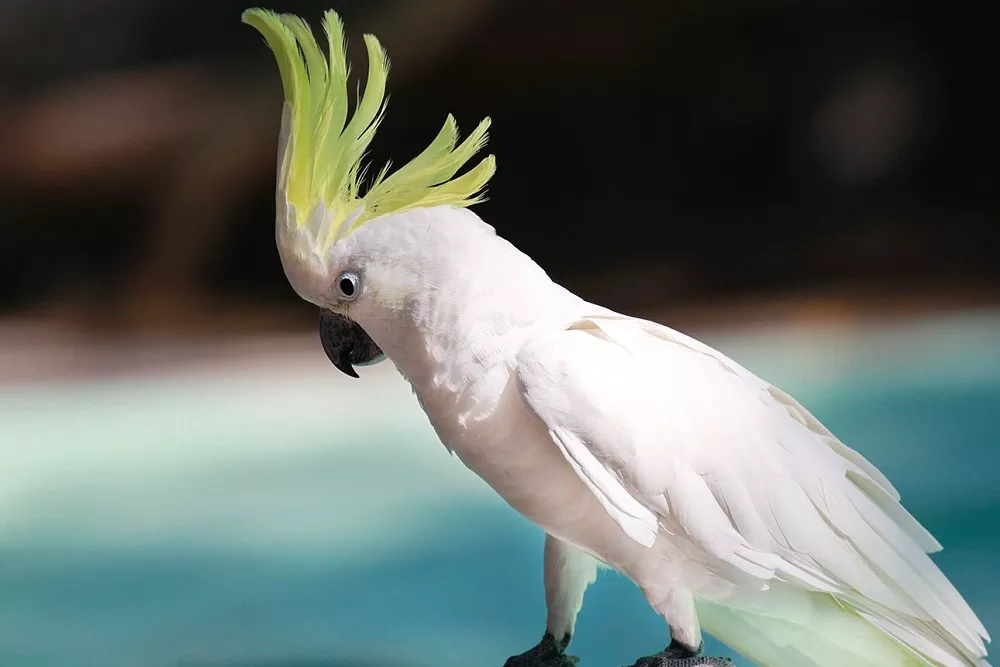
The Sulphur-Crested Cockatoo (Cacatua galerita) is one of the most recognizable parrots in Australia and nearby regions. Known for its bright yellow crest, powerful beak, and remarkable intelligence, this large cockatoo has a highly adaptable diet that allows it to survive in forests, woodlands, grasslands, and even urban environments.
So, what does a Sulphur-Crested Cockatoo eat?
Sulphur-Crested Cockatoos are omnivorous parrots with a mainly plant-based diet. They primarily eat seeds, nuts, fruits, flowers, buds, roots, and plant materials. They may also consume insects and small animal matter when available. Their strong beaks allow them to crack hard seeds and nuts that many other birds cannot access.
What Do Sulphur-Crested Cockatoos Eat in the Wild?
In their natural habitats across Australia, New Guinea, and nearby islands, Sulphur-Crested Cockatoos are opportunistic feeders. They do not rely on a single food source but instead consume whatever nutritious foods are available.
1. Seeds and Grains
Seeds are one of the most important parts of the Sulphur-Crested Cockatoo’s diet.
They commonly eat seeds from:
- Native grasses
- Eucalyptus trees
- Acacia plants
- Casuarina trees
- Agricultural crops
Their large, curved beaks are specially designed for breaking open hard seed shells. They can remove the outer layer of seeds with impressive precision using their tongue and powerful jaw muscles.
Seeds provide essential nutrients, including:
- Protein
- Healthy fats
- Minerals
- Energy
During dry seasons, seeds become especially important because they are often available when other foods are scarce.
2. Nuts
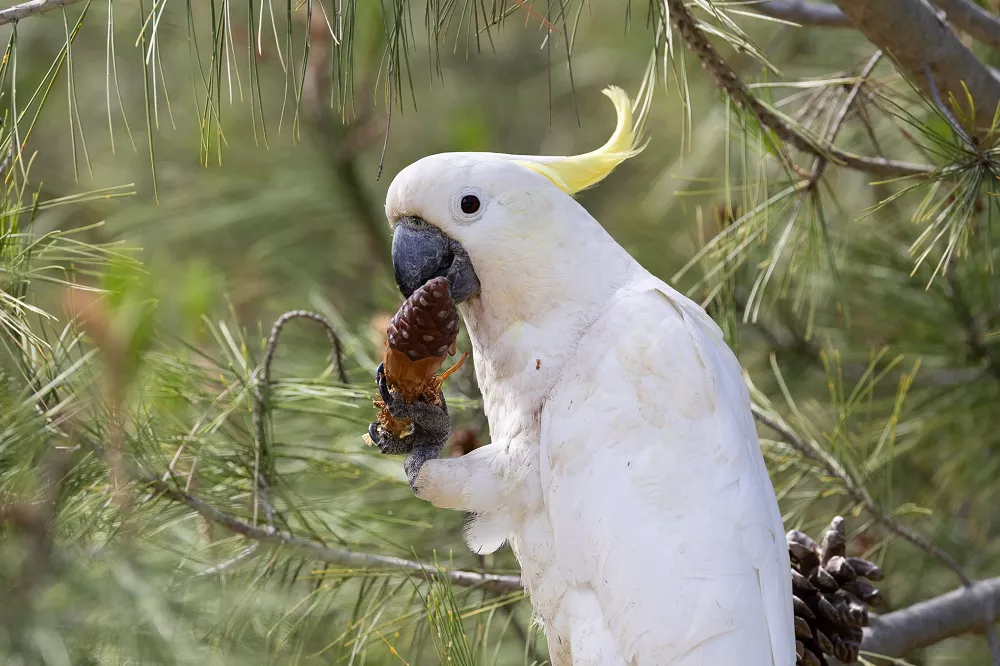
Sulphur-Crested Cockatoos are famous for their ability to crack tough nuts.
They eat various types of nuts, including:
- Native tree nuts
- Almonds
- Other hard-shelled seeds
Their strong beaks can easily break open shells that protect the nutritious kernels inside.
Nuts provide:
- High energy content
- Fat for maintaining body temperature
- Essential fatty acids
This is particularly important for wild birds that spend many hours flying and searching for food.
3. Fruits and Berries
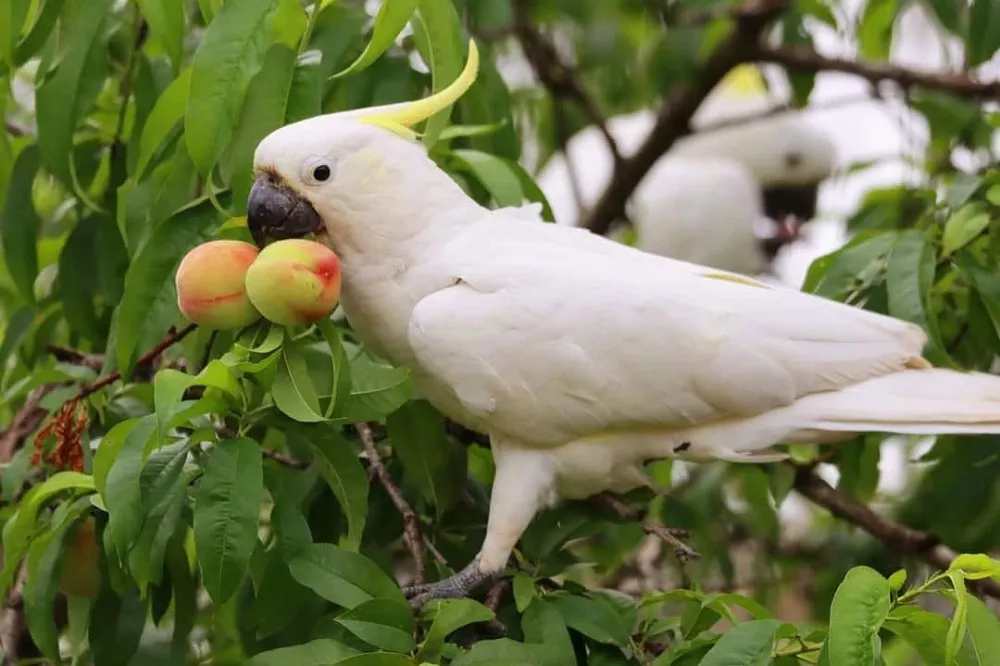
Fruits are another important food source for Sulphur-Crested Cockatoos.
They consume:
- Native fruits
- Berries
- Apples
- Figs
- Other seasonal fruits
Fruits provide:
- Natural sugars for quick energy
- Vitamins
- Water content
In forests, these cockatoos often move between trees searching for ripe fruit. Their feeding behavior also helps spread seeds, contributing to forest regeneration.
4. Flowers and Nectar
Sulphur-Crested Cockatoos also feed on flowers, especially when seeds and fruits are less available.
They may eat:
- Eucalyptus flowers
- Banksia flowers
- Native flowering plants
Unlike hummingbirds or honeyeaters, cockatoos are not specialized nectar feeders. Instead, they use their strong beaks to tear apart flowers and access nectar, pollen, and soft plant tissues.
Flowers provide:
- Carbohydrates
- Trace minerals
- Seasonal nutrients
5. Tree Buds, Leaves, and Plant Shoots
Plant materials form an important part of their natural diet.
They often eat:
- Young leaves
- Tree buds
- Soft bark
- Fresh shoots
Their powerful beaks allow them to remove bark and reach nutritious inner plant tissues.
However, they usually prefer young and softer plant parts because they are easier to digest.
6. Roots and Underground Plant Parts
Sulphur-Crested Cockatoos sometimes dig into the ground to find underground food sources.
They may eat:
- Roots
- Tubers
- Bulbs
- Underground plant shoots
Their strong feet and beaks help them search through soil and leaf litter.
This behavior is especially common in areas where surface food is limited.
7. Insects and Small Animal Matter
Although Sulphur-Crested Cockatoos are mainly herbivorous, they are not strict vegetarians.
They occasionally eat:
- Insects
- Beetle larvae
- Small invertebrates
Young birds may benefit from additional protein during growth periods.
Animal-based foods are only a small part of their diet compared with seeds and plants.
Do Sulphur-Crested Cockatoos Eat Human Food?
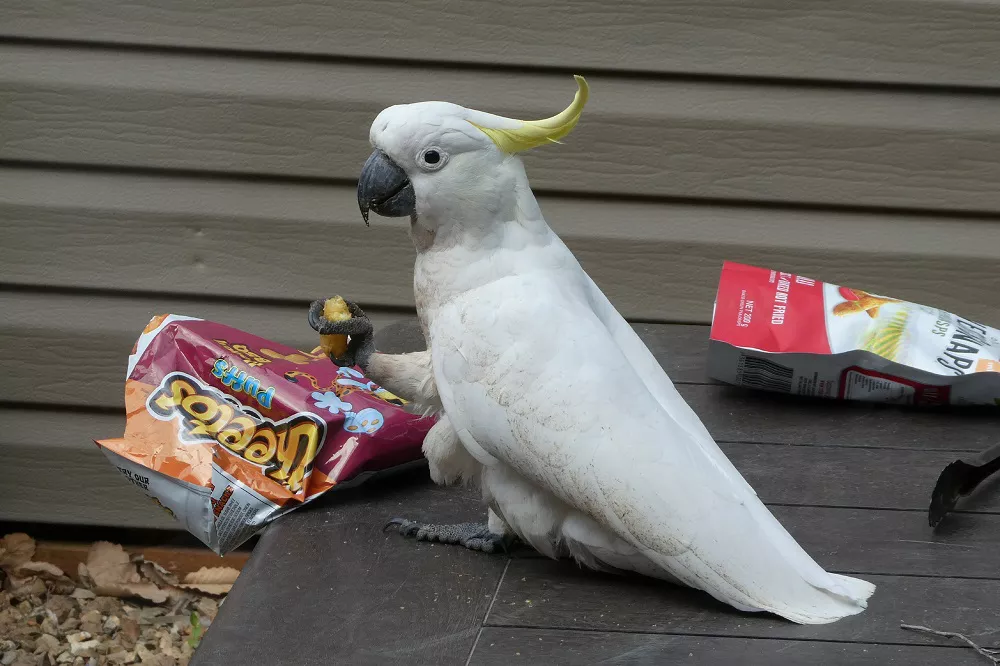
In urban areas, Sulphur-Crested Cockatoos often interact with humans and may eat human-related foods.
They are sometimes attracted to:
- Bread
- Nuts from gardens
- Fruit trees
- Agricultural crops
- Food scraps
However, many processed human foods are unhealthy for them.
Foods such as:
- Salty snacks
- Chocolate
- Sugary foods
- Alcohol
- Processed foods
can be dangerous and should never be intentionally fed to wild cockatoos.
What Do Pet Sulphur-Crested Cockatoos Eat?
A captive Sulphur-Crested Cockatoo requires a balanced diet that is different from a wild bird’s natural feeding pattern.
A healthy pet diet usually includes:
High-quality pellets
Commercial parrot pellets should form the foundation of their diet because they provide balanced nutrition.
Fresh vegetables
Good vegetable choices include:
- Carrots
- Broccoli
- Spinach
- Pumpkin
- Sweet potatoes
- Green beans
Fresh fruits
Suitable fruits include:
- Apples (without seeds)
- Bananas
- Berries
- Mango
- Papaya
Fruits should be offered in moderation because they contain natural sugars.
Nuts and seeds
Nuts can be excellent treats, including:
- Walnuts
- Almonds
- Hazelnuts
However, too many high-fat foods can lead to obesity.
Foods Sulphur-Crested Cockatoos Should Avoid
Some foods are toxic or harmful to cockatoos.
Avoid feeding:
- Chocolate
- Avocado
- Alcohol
- Caffeine
- Onion and garlic
- Salty foods
- Fried foods
- Artificial sweeteners
A proper diet is essential because cockatoos can live for many decades and nutritional problems may develop slowly.
How Do Sulphur-Crested Cockatoos Find Food?
Sulphur-Crested Cockatoos are highly intelligent foragers.
They use several techniques:
Strong beaks
Their powerful bills allow them to:
- Crack seeds
- Open nuts
- Remove bark
- Break fruit skins
Excellent memory
They can remember locations of reliable food sources and return to them later.
Social feeding
These cockatoos often feed in groups. One bird may watch for danger while others search for food.
Group feeding improves safety and allows them to discover new food sources.
How Much Do Sulphur-Crested Cockatoos Eat?
The amount a Sulphur-Crested Cockatoo eats depends on:
- Body size
- Activity level
- Season
- Food availability
Wild birds may spend several hours each day searching for and eating food.
Because they are large parrots with high intelligence and energy needs, they require a nutrient-rich diet.
Conclusion
Sulphur-Crested Cockatoos have a diverse and adaptable diet that mainly consists of seeds, nuts, fruits, flowers, and plant materials. Their powerful beaks and intelligence allow them to access many different food sources across forests, grasslands, and urban environments.
While they occasionally eat insects and other small invertebrates, plants remain the foundation of their nutrition. Whether living in the wild or as pets, providing a balanced diet is essential for maintaining their health, longevity, and natural behaviors.
Frequently Asked Questions
Do Sulphur-Crested Cockatoos eat meat?
No. Sulphur-Crested Cockatoos mainly eat plants, seeds, fruits, and nuts. They may occasionally eat insects or larvae, but animal foods are only a small part of their diet.
Do Sulphur-Crested Cockatoos eat sunflower seeds?
Yes, they can eat sunflower seeds, but they should not rely on them as a main food source. Sunflower seeds are high in fat and can cause nutritional imbalance if overfed.
Do Sulphur-Crested Cockatoos eat bananas?
Yes. Bananas can be a suitable fruit for pet Sulphur-Crested Cockatoos when given in moderation.
What is a Sulphur-Crested Cockatoo’s favorite food?
Wild birds often prefer energy-rich foods such as seeds, nuts, fruits, and flower materials. Individual preferences vary depending on habitat and food availability.
 Facebook
  Instagram
  Youtube
 English
  Spanish