
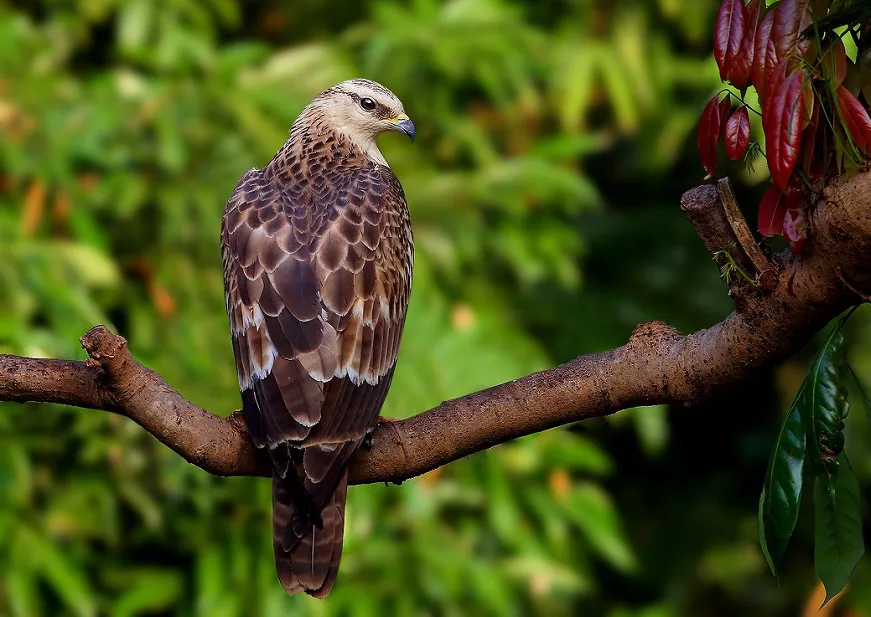
The Crested Honey Buzzard is one of the most interesting birds of prey in Asia. It is famous for its unusual diet, elegant flight, and snake-like head. Unlike many raptors that hunt mammals or fish, this species specializes in feeding on bee and wasp larvae, making it one of the most unique birds in Asia’s forests.
In this article, We will explore its appearance, habitat, behavior, diet, migration, breeding habits, conservation status, and identification tips.
What Is a Crested Honey Buzzard?
The Crested Honey Buzzard is a medium-sized bird of prey found across much of Asia. Its scientific name is Pernis ptilorhynchus. It belongs to the Accipitridae family, which also includes hawks, kites, and eagles.
This bird is also called the Asian Honey Buzzard in some regions.
Quick Facts
| Feature | Details |
|---|---|
| Common Name | Crested Honey Buzzard |
| Scientific Name | Pernis ptilorhynchus |
| Family | Accipitridae |
| Bird Type | Bird of prey |
| Diet | Bee and wasp larvae, pupae, comb, honey |
| Range | Asia, the Indian subcontinent, and Southeast Asia |
| Habitat | Forests, woodland, hilly areas, open glades |
| Size | 52–68 cm (20–27 in) in length |
| Wingspan | 115–155 cm |
| Weight | 750–1490 g |
| Conservation Status | Least Concern |
Physical Description
Size and Appearance
The Crested honey buzzard is a medium-to-large raptor with a body length ranging from approximately 57 to 72 cm (22 to 28 inches). Its wingspan can reach up to 166 cm (65 inches), giving it a graceful appearance during flight.
Plumage Variations
One of the most interesting features of this species is its highly variable plumage. Individuals may appear:
- Dark brown
- Light brown
- Grayish
- Nearly black in some regions
The underside often shows barred or striped patterns, while the tail typically has dark bands.
Distinctive Features
Key identifying traits include:
- A small crest on the head
- Long neck and narrow head
- Broad wings with rounded tips
- Yellow eyes in adults
- Scale-like facial feathers that protect against bee stings
Its hawk-like silhouette can sometimes resemble an eagle when soaring high above forests.
Habitat and Distribution
Geographic Range
This species is found across a wide area of Asia, including the Russian Far East, China, Japan, Korea, Southeast Asia, Indonesia, and the Indian subcontinent.
Preferred Habitat
This species prefers forested and woodland habitats, especially places with open spaces nearby, and it can occur from sea level to about 1,800 m.
In some regions it is migratory, breeding in northern areas and wintering farther south, while in other parts of Asia it may remain resident year-round.
Migration Patterns
Migration is one of the most spectacular aspects of this species. Large numbers migrate through:
- Taiwan
- Thailand
- Malaysia
- Japanese islands
During migration seasons, thousands of individuals may soar together in large kettles.
Best Seasons to Observe Migration
| Region | Best Migration Period |
|---|---|
| Japan | September–October |
| Taiwan | March–April and September |
| Thailand | October–November |
| Malaysia | Autumn migration |
Behavior and Diet
The crested honey buzzard is a diurnal predator that hunts by day. Its diet is unusual for a bird of prey: it feeds mainly on larvae, pupae, and comb from social bees and wasps, though it may also take cicadas, small reptiles, frogs, and occasionally small birds.
Using strong claws and specialized scales around the face, the bird can safely raid wasp nests with minimal injury.
Hunting Techniques
These birds often glide silently over forests while searching for nests. Once located, they dig into the ground or tear apart tree cavities to access larvae.
Social Behavior
Crested honey buzzards are usually solitary or found in pairs. However, during migration, they may gather in large groups called kettles.
Vocalizations
They are generally quiet birds, but breeding adults may produce high-pitched whistles or mewing calls.
Breeding and Life Cycle
Nesting Habits
Breeding season varies by region but usually occurs during spring and summer. Nests are typically built:
- High in tall trees
- Using sticks and leafy branches
- Near forest canopies
- Eggs and Incubation
Females usually lay 1–2 eggs. Both parents participate in incubation, which lasts around 30–35 days.
Chick Development
After hatching:
- Chicks remain in the nest for several weeks.
- Parents provide food and protection.
- Young birds fledge after approximately 40–45 days.
Juveniles may stay near their parents for some time before becoming independent.
Conservation Status
The crested honey buzzard is listed as Least Concern on the IUCN Red List, which means it is not currently considered globally threatened. However, local pressures still exist, including indiscriminate shooting in some regions. Like many birds of prey, it can also be affected by habitat loss, disturbance, and changes to forest ecosystems. Continued habitat protection and monitoring help support healthy populations across its range.
Interesting Facts About the Crested Honey Buzzard
Here are some fascinating facts.
- It specializes in eating bee and wasp larvae.
- It has protective feathers against insect stings.
- It can migrate thousands of kilometers.
- Its head shape resembles a pigeon.
- It often raises a small crest when alert.
- Juveniles can look very different from adults.
- It spends long periods soaring high above forests.
- Large migrations attract birdwatchers from around the world.
Conclusion
The Crested honey buzzard is one of Asia’s most remarkable birds of prey. From its specialized diet of bee larvae to its impressive migratory behavior and striking appearance, this raptor demonstrates the incredible diversity found in the natural world.
 Facebook
  Instagram
  Youtube
 English
  Spanish